VI. Embryology

Key focus of this chapter: male and female reproductive system

This chapter focuses on male and female reproductive systme and gives concise summaries of the important things about fertilization, embryonic development, function of extraembryonic membranes in the shelled eggs, and placenta in mammal.

A. Male reproductive system

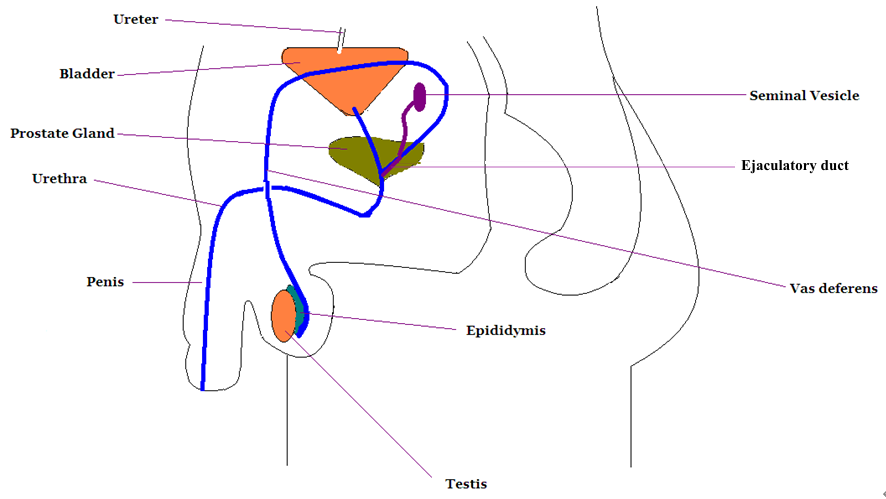
1. Anatomy

Male reproductive system

Functions

Testis

Seminiferous

Tubules

• Production of sperms

• Spermatogonia

Leydig cells (Interstitial cells)

• Stimulated by luteinizing hormone (LH) to synthesize androgen and testosterone

Sertoli cell

• Nurturing and controlling sperm development

Epididymis

• Place for maturation and storage of sperm

Prostate gland

• Neutralizing the acidity of the vaginal tract and seminal fluid by secreting slightly alkaline milky fluid

• Enhancing motility and life of sperm

Seminal vesicle

• Secreting a fluid, which becomes part of semen used for mucus and sperm nutrition

Vas deferens

• Duct for expulsion of sperm

Ejaculatory duct

• Joining ducts of seminal vesicle and vas deferens

Urethra

• Duct of semen and urine

Male and female reproductive system 01

2. The passage of sperm

3. Sperm

  • Acrosome

– containing enzyme to penetrate eggs during fertilization

  • Nucleus
  • Mitochondrion
  • Flagellum

– movement of sperm

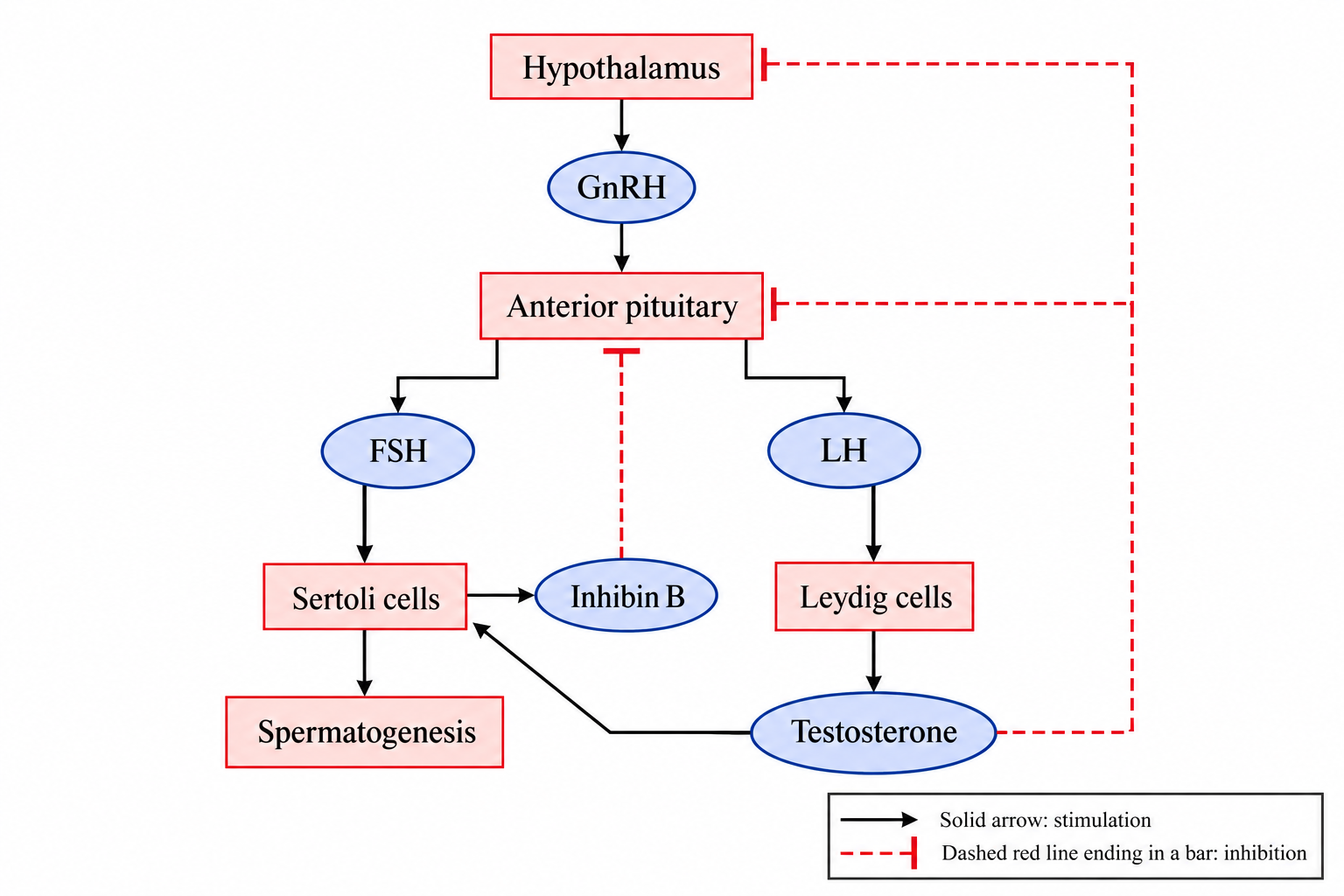
4. Hormone regulation

B. Female reproductive system

1. Anatomy

Male and female reproductive system 02

Female reproductive system

Functions

Follicle

• Female egg cell, which consists of an oocyte and follicle cells layer in the ovary

Ovary

• Place of oogenesis, which is the process of developing of mature ova

Ovulation

• Follicle ruptures and releases an egg (Ovum)

• Ruptured follicle becomes corpus luteum

Corpus luteum

• Gland of ruptured follicle, which release estrogens and progesterone

Oviduct (Fallopian tube)

• Place of fertilization or passage of egg

Uterus

• Implantation of the fertilized egg 

2. Passage of an ovum

3. Hormone regulation

  • FSH

– stimulates the development of sperm and egg.

– causes the primary follicle growth.

  • LH

– stimulates testes and ovaries.

– LH surge causes follicle to undergo ovulation and convert into corpus luteum.

  • Estrogen

– prepares uterine lining growth for the implantation of the zygote.

– development of female secondary sex characteristics.

  • Progesterone

– promotes uterine lining growth for the implantation of the zygote.

** Estrogen and progesterone inhibit FSH and LH secretion.

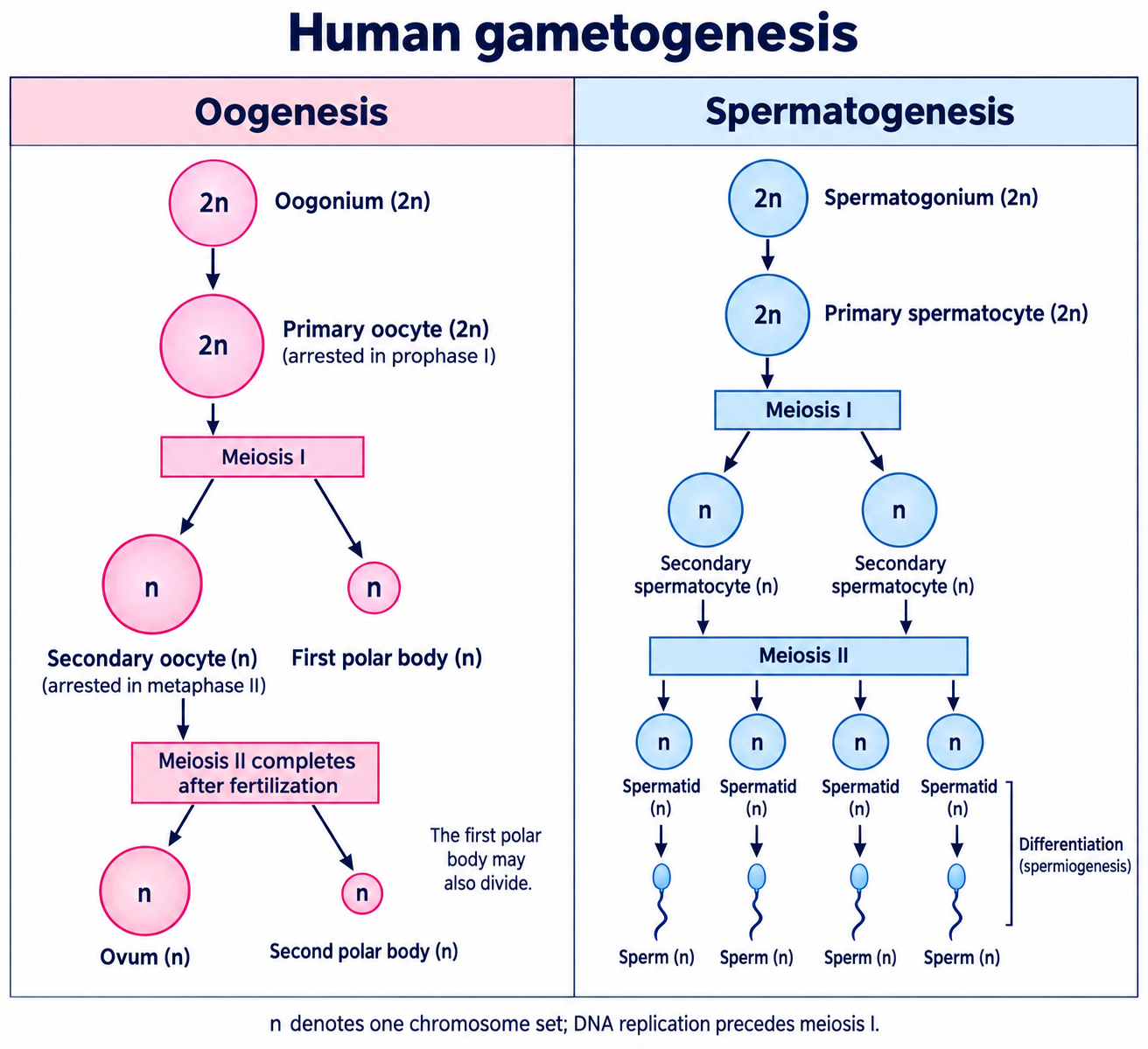
4. Comparison of oogenesis with spermatogenesis

a. Reproduction of oogenesis

  • Produces one functional ovum and polar bodies
  • Unequal distribution of the cytoplasm

b. Reproduction of spermatogenesis

  • Produces four functional spermatozoa
  • Cytoplasm equally distributed

C. Fertilization

1. External fertilization of sea urchin

a. Process of fertilization

  • ① Contact – Sperm head contacts to the egg’s jelly coat.
  • ② Acrosomal reaction – Hydrolytic enzymes in acrosome fuse jelly coat and sperm head approaches to the vitelline layer by sperm binding receptors.
  • ③ Depolarization – Membrane potential change by fused plasma membrane causes the fast block to polyspermy as soon as sperm nucleus is inserted.
  • ④ Insertion of sperm nucleus into egg.
  • ⑤ Cortical reaction – Releasing the cortical granule transforms the vitelline layer into fertilization envelope and causes a slow block to polyspermy.

b. Function of each part

Parts

Functions

Acrosome

• Containing hydrolytic enzyme to fuse jelly coat of sea urchin

Jelly coat

• Envelope of eggs

• Providing material for the sperm to contact on surface of eggs

Vitelline layer

• Mashed matrix molecules outside of plasma membrane and inside of jelly coat

• Place for sperm binding receptors

Sperm binding receptor

• Binding sperm head to contact at vitelline layer

Cortical granules

• Causing cortical reaction to block polyspermy

2. Internal fertilization of mammals

a. Process of fertilization

  • ① Approaching – sperm approach the zona pellucida of egg.
  • ② Acrosomal reaction – hydrolytic enzymes in acrosome fuse zona pellucida and sperm head approaches plasma membrane of egg.
  • ③ Fusing the plasma membrane of egg.
  • ④ Insertion of sperm nucleus into egg.
  • ⑤ Cortical reaction – the releasing of cortical granule hardens the zona pellucida and causes a slow block to polyspermy.

b. Function of each part

Parts

Functions

Acrosome

• Containing hydrolytic enzyme to fuse zona pellucida

Zona pellucida

• Extracellular matrix of egg

• Sperm receptor

Cortical granules

• Causing cortical reaction of slow block to polyspermy

c. Twins

  • Identical twins – a zygote fertilized by one egg and one sperm divides into two identical embryos
  • Fraternal twins – two eggs fertilized by two separate sperms become twin

d. Cell differentiation

  • Becoming more specialized cell types in function and structure
  • Single zygote becomes specialized system of tissues in multicellular organism

D. Embryonic development

1. Description of each stage

Stages

Description

Cleavage
(Zygote cell division)

Morula

• Forming a solid ball of cells

Blastula

• Forming a hollow ball of cells
• Consists of blastocoel (fluid-filled cavity)

Gastrulation

• Process of invagination becomes dorsal lip

• Forming three germ layers (Ectoderm, mesoderm, endoderm) and primitive gut

• U-shaped structure

• Archenteron – becomes primitive gut

• Blastopore
- protostome becomes mouth

- deuterostome becomes anus

• Involution – surface cells of embryo roll over into interior of embryo

Organogenesis

• Becoming different rudiments of organs from three germ layers

• Neurulation - developmental stages of notochord and hollow neural tube

• Induction – process of becoming many different types of embryonic cells
• Forming neural crest, somites, notochord, neural tube

2. Three germ layers

Ectoderm

Mesoderm

Endoderm

• Epidermis of skin

• Sensory receptor of epidermis

• Nervous system

• Lens of eyes

• Teeth

• Adrenal medulla

• Circulatory system

• Excretory system

• Reproductive system (except germ cells)

• Lymphatic system

• Connective tissue

 (Dermis of skin)

• Skeletal system

• Muscular system

• Adrenal cortex

• Respiratory system

• Digestive tract and system

• Urinary bladder

** Totipotent: a single cell is capable of developing into all differentiated adult cells

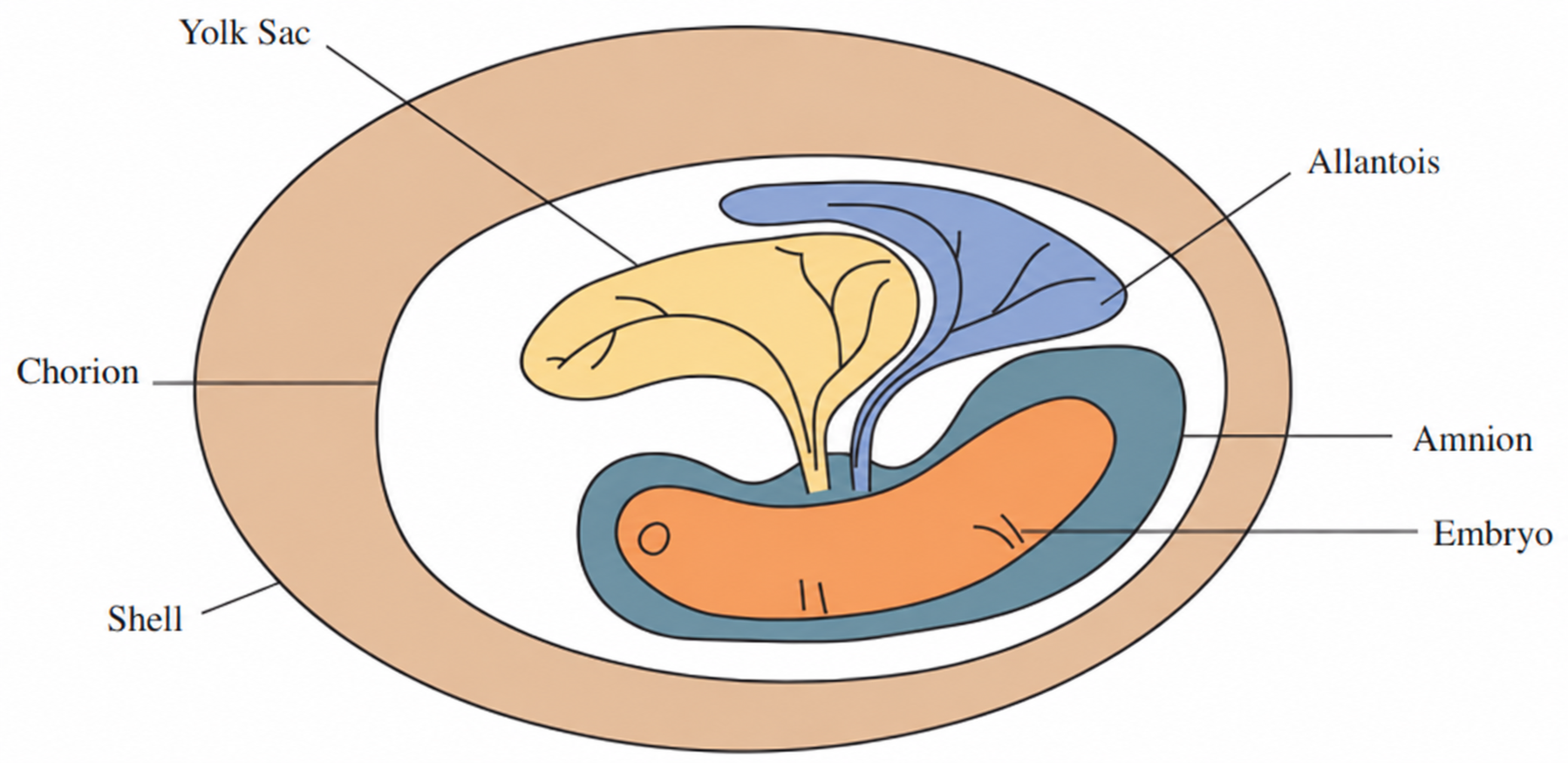
E. Functions of extraembryonic membranes in the shelled eggs

Classification

Functions and features

Amnion

• Membranous sac for protecting an embryo from mechanical shock and dehydration

• Not present in amphibians

Chorion

• Membrane for exchanging oxygen and carbon dioxide between embryo and outside membrane

Allantois

• Disposal sac for liquid waste from embryo and function in respiration

• Becomes placenta in mammal

Yolk sac

• Provides nutrients to embryo

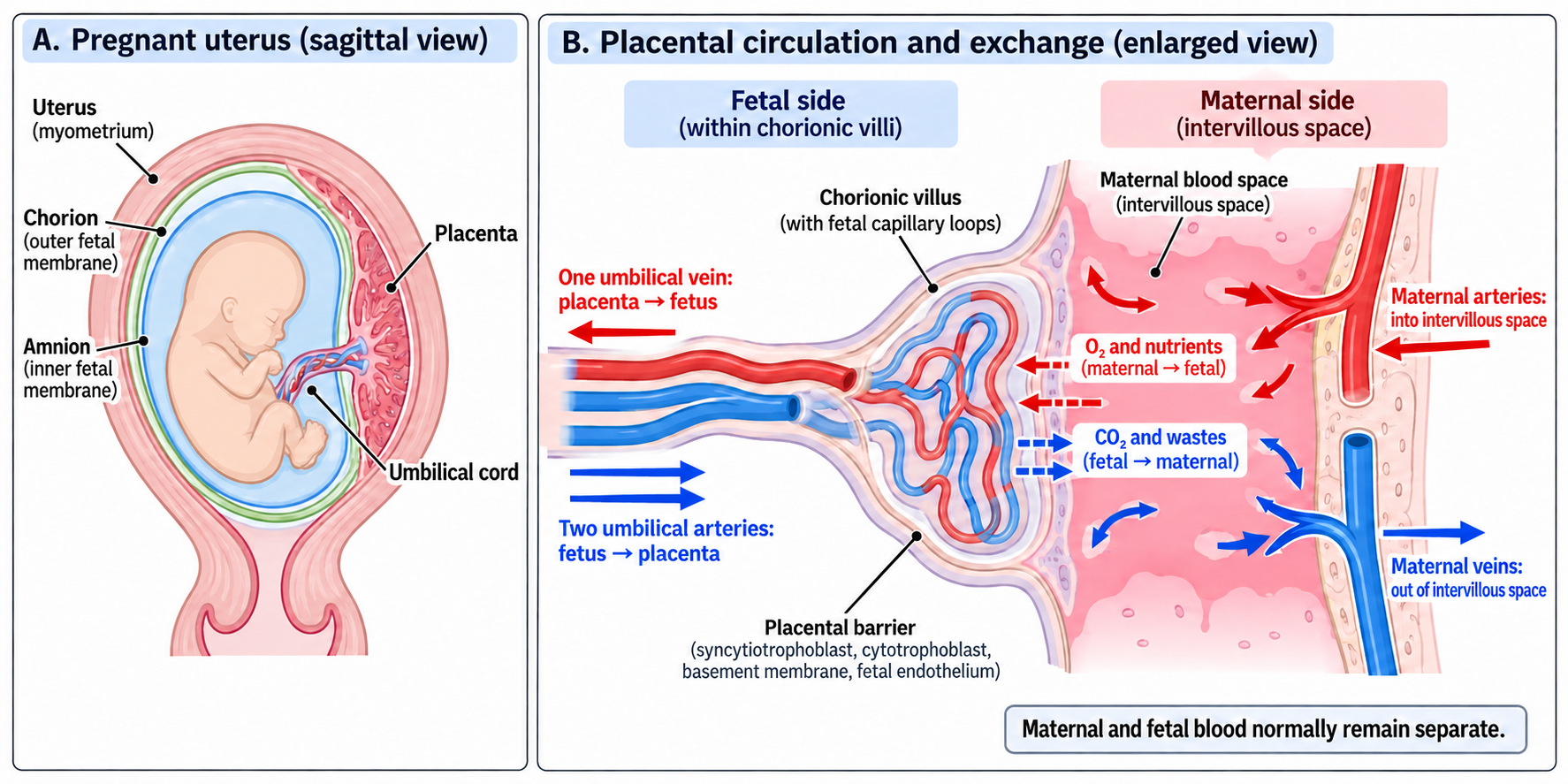
F. Placenta in mammal

: connection between fetus and maternal tissues to exchange food and waste materials.

1. Placental circulation

: maternal placenta provides nutrients and oxygen to fetus and accepts waste product and carbon dioxide from fetus.

2. Function of fetal placenta

  • Umbilical vein – accepting oxygen and nutrients from maternal arteries
  • Umbilical arteries – sending carbon dioxide and wastes to maternal veins

G. Postnatal development

  • After birth the infant acquires adult hemoglobin.
  • Pressure of left atrium increases.
  • Pressure of right atrium and pulmonary arteries decrease.
  • Allometric growth – different growth rates of different body parts.