IV. Stoichiometry and Solution

Key focus of this chapter: percent yield of chemical reactions

This chapter focuses on percent yield of chemical reactions and gives concise summaries of the important things about mole, empirical and molecular formula, balance equation, concentration, precipitation, acid-base neutralization, redox reaction, oxidation-number, net ionic equation, and balance redox reaction in more detail.

A. Density, D

  • Qs/ What is the density when 2g of an unknown compound fills a 5mL of mass cylinder?

B. Percentage of composition

1. Molecular mass

: sum of the all atomic mass in one molecule.

  • Ex/ Molecular mass of H2O → 1×2+16 = 18 amu (atomic mass unit) or g/mol
  • Ex/ Molecular mass of Fe(ClO)3 → 56 + (35+16)×3 = 209 amu or g/mol

2. Percentage of mass composition

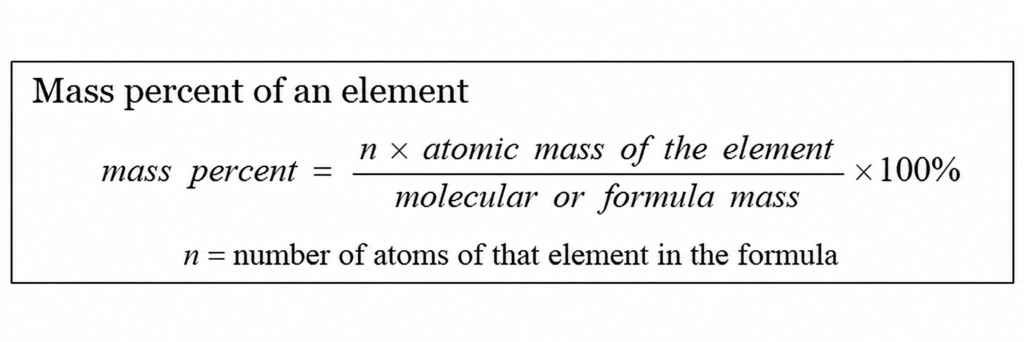
: mass percent of each atom is expressed with percent composition.

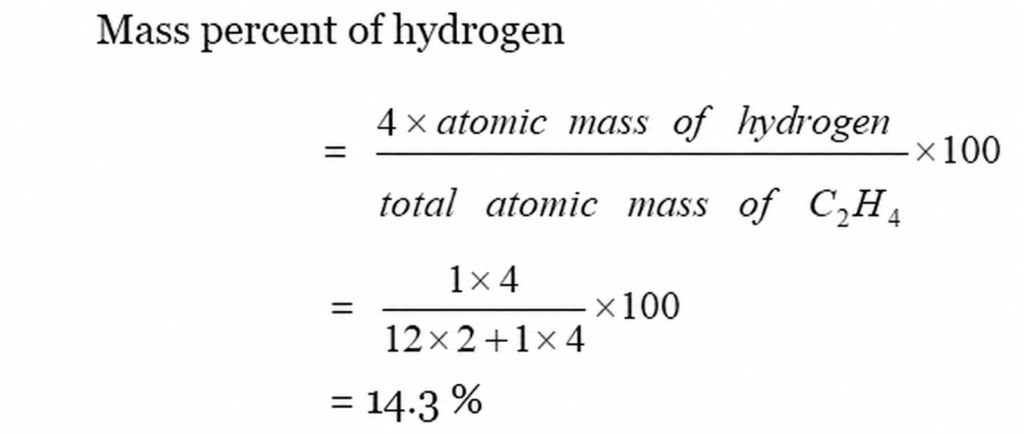
  • Qs/ What is the mass percent of hydrogen in C2H4?

C. Mole

  • Mole: special unit for numbers of molecules.
  • Avogadro’s law: every substance has the same number of molecules per mole at same temperature, pressure, and volume.
  • Avogadro’s number: 6.02×10²³ atoms per mole at STP (0oC, 1 atm, 22.4L)
  • Ex/ Moles of an atom in a compound

1 mol

4 mol

3 mol

4×3 = 12 mol

2 mol

4×2 = 8 mol

40×3+14×2

= 148 g/mol

4(40×3+14×2)

= 592g/mol

  • Ex/ Atomic numbers and grams of atom in a compound

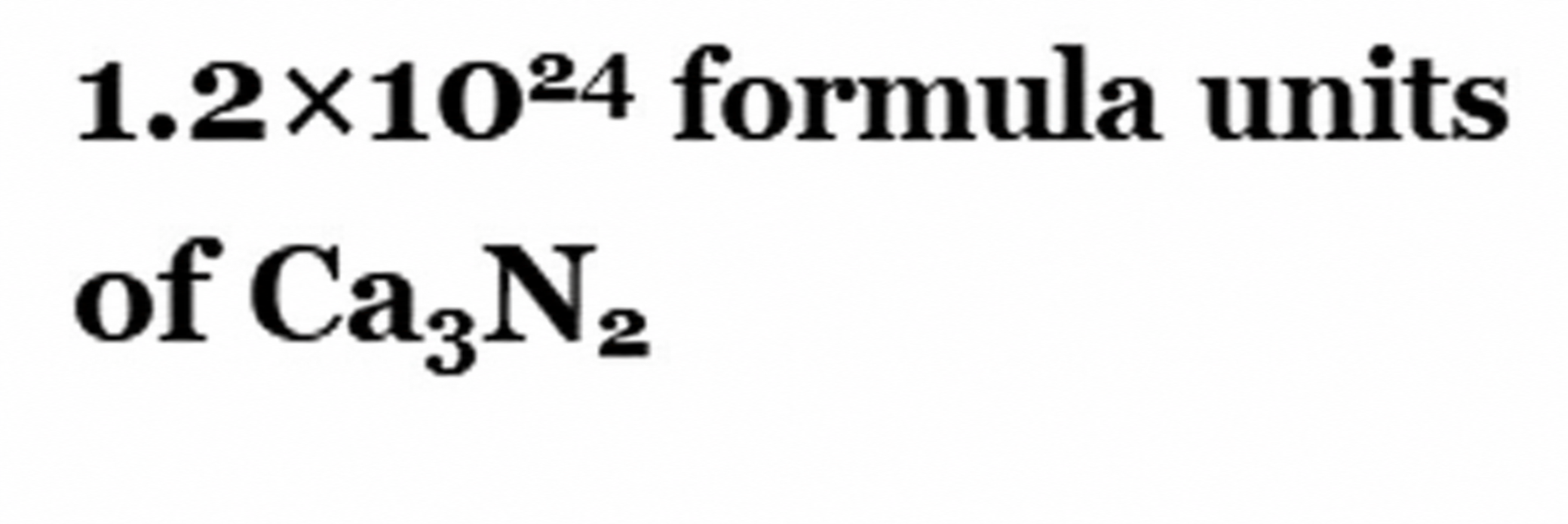
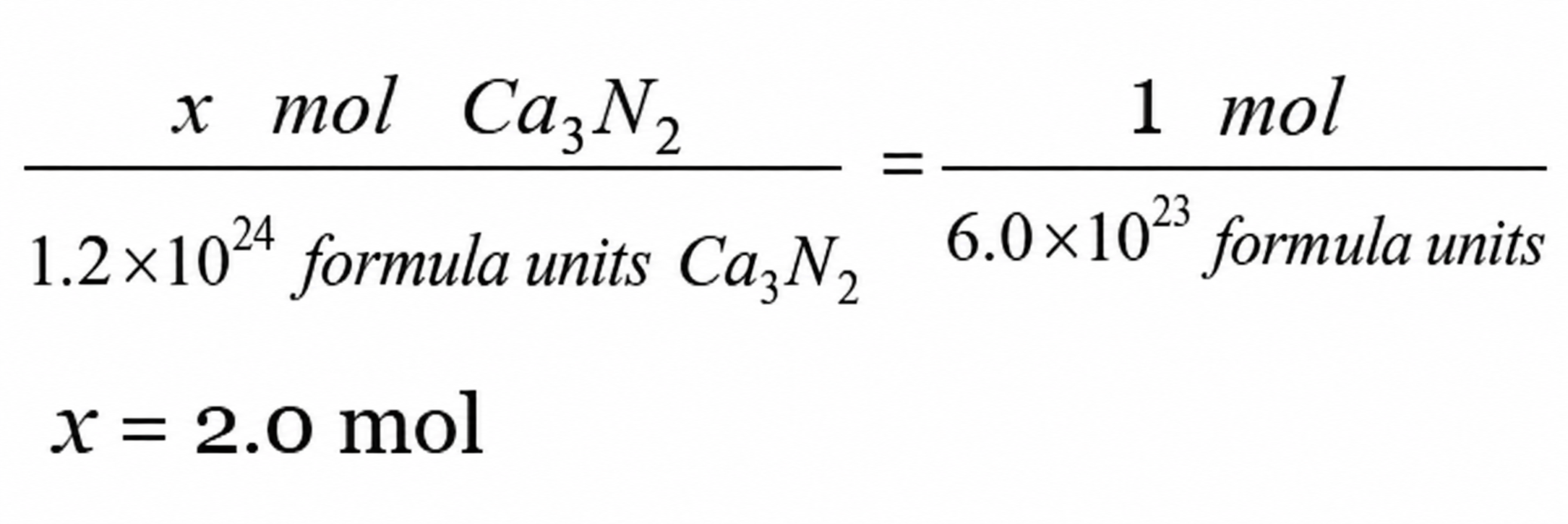
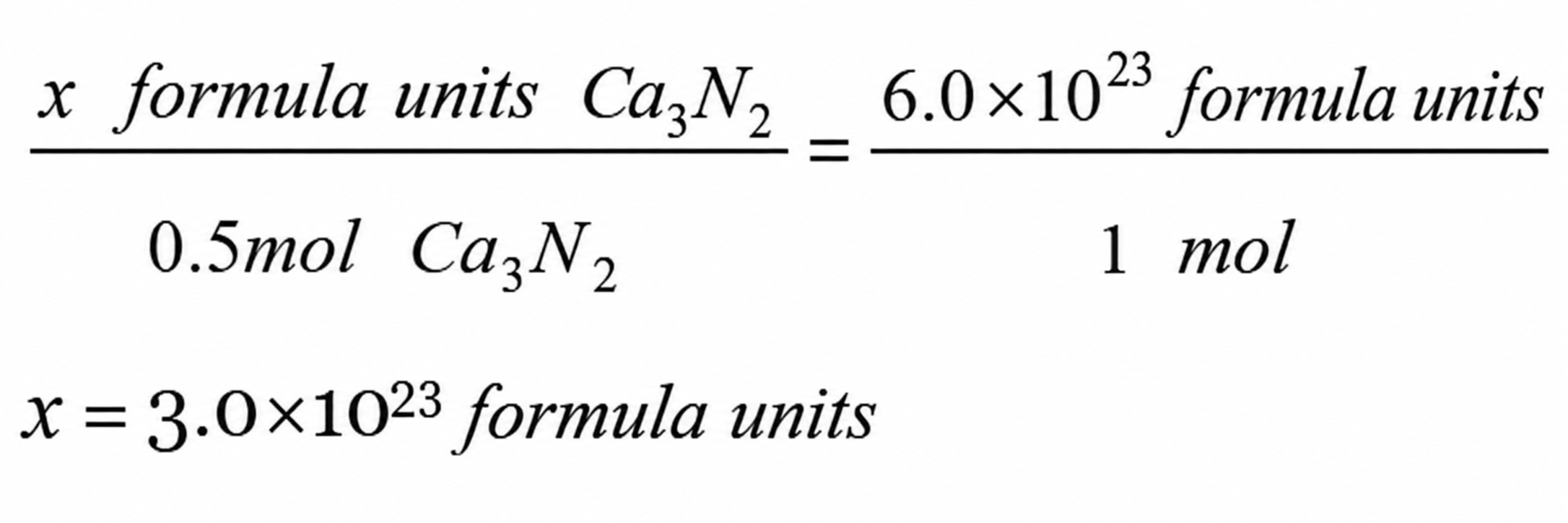
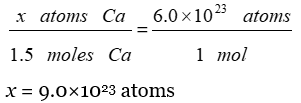
Compound

Mole of

Calcium

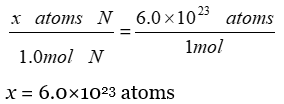
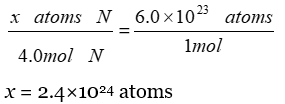
Nitrogen

Atoms of

Calcium

Nitrogen

Grams  of

74g

Calcium

40g/mol × 1.5 mol Ca = 60g

40g/mol × 6.0 mol Ca = 240g

Nitrogen

14g/mol × 1.0 mol N = 14g

14g/mol × 4.0 mol N = 56g

D. Empirical and molecular formula

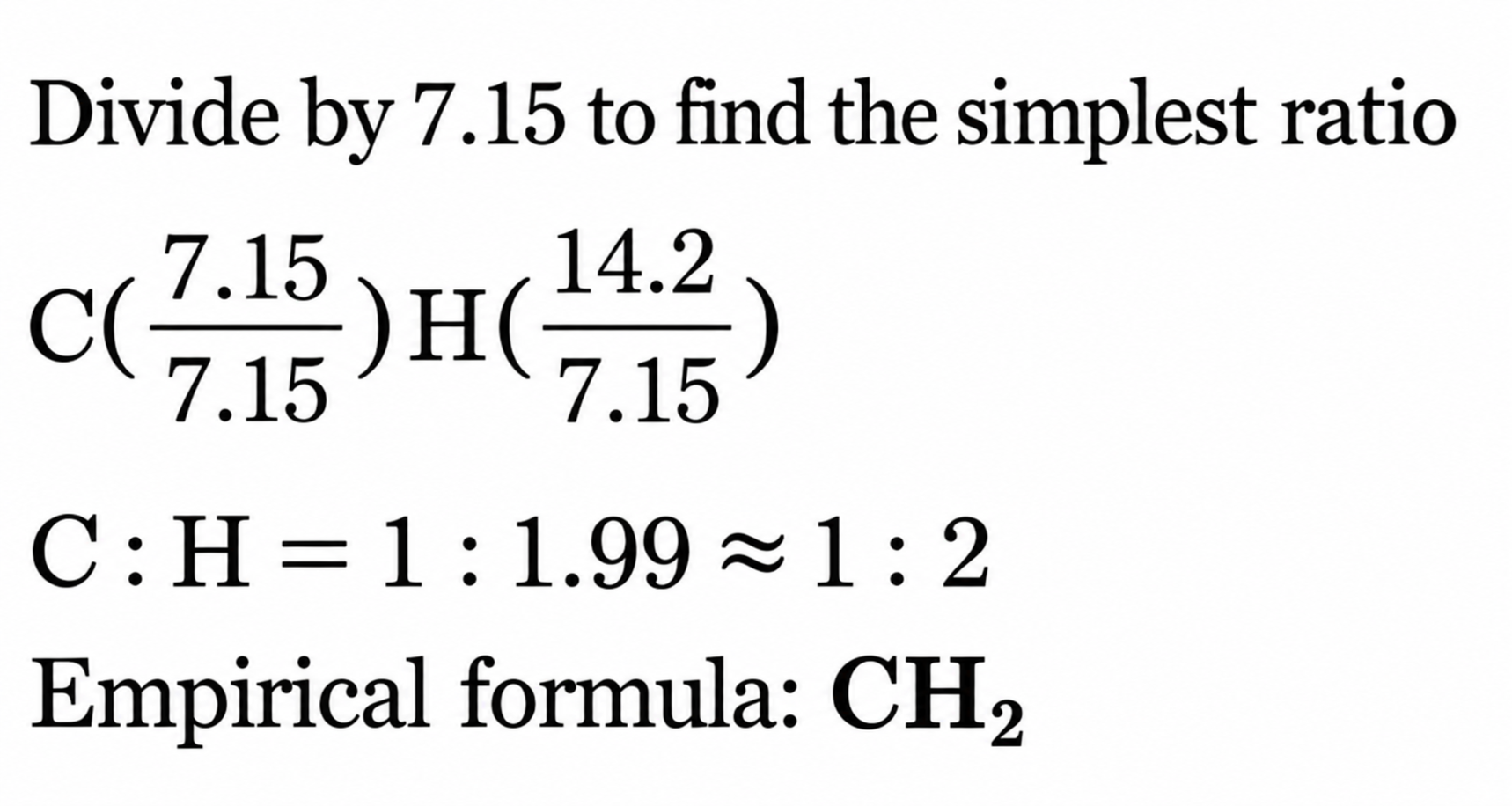
  • Empirical formula: the simplest ratio of the atoms in a compound.
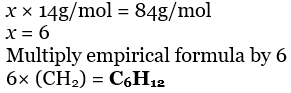
  • Molecular formula: the actual number of the atoms in a compound.

Unknown

compound

186g P, 240g O,

M.W= 284g/mol

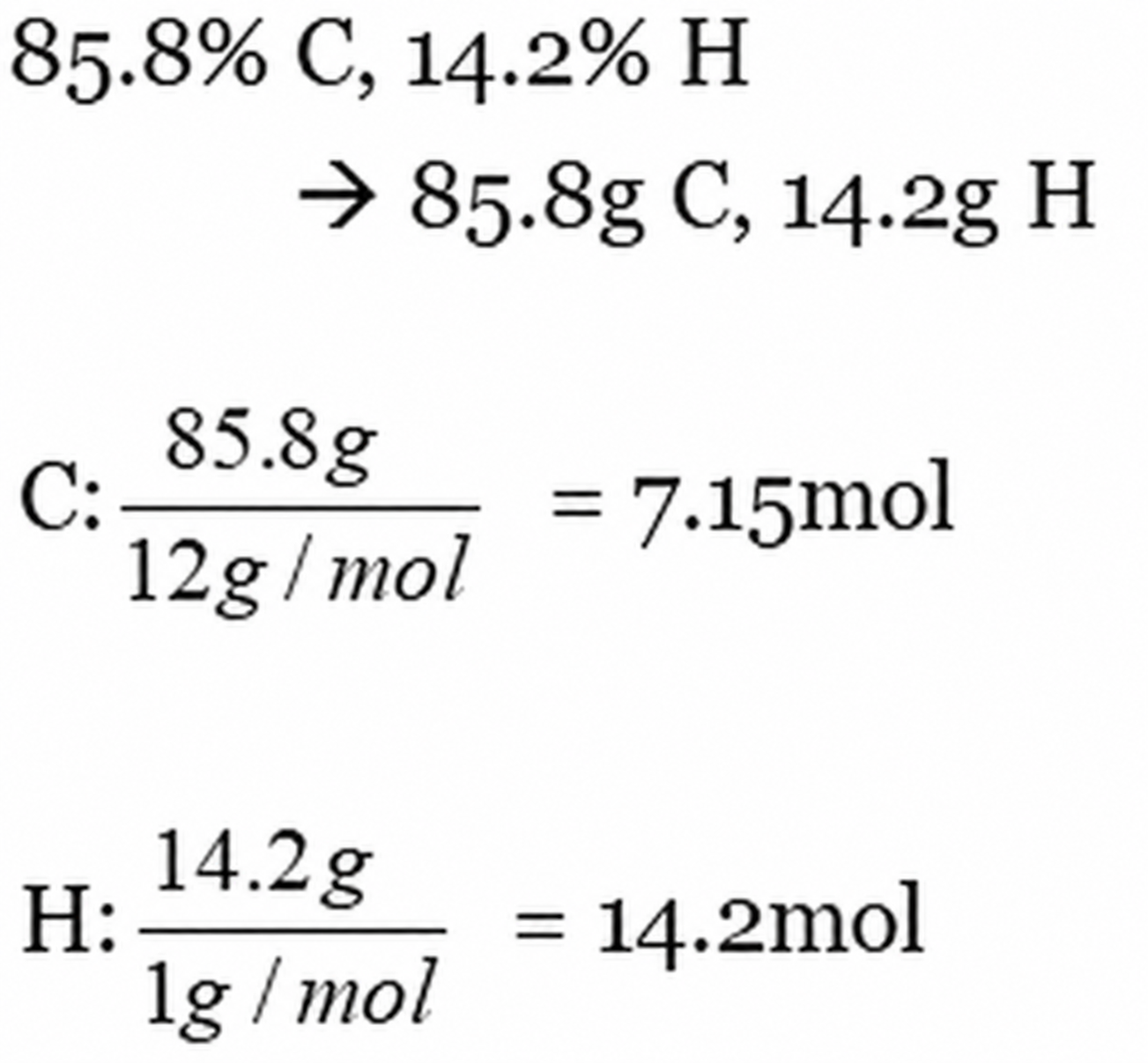
85.8% C, 14.2% H,

M.W= 84g/mol

M. W. of each atom

P = 31g/mol

O = 16g/mol

C = 12g/mol

H = 1g/mol

Moles of each atom

Relative mol numbers

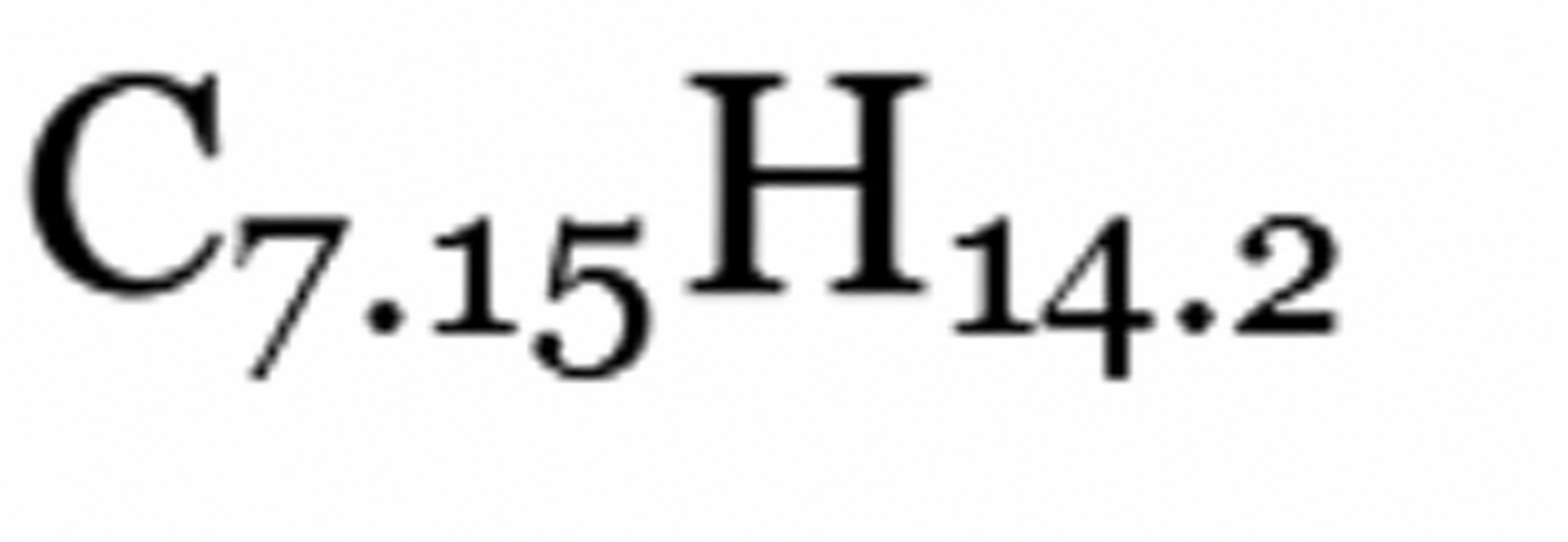
Empirical formula

M.W. of Empirical formula

Molecular formula

E. Balance equation

: make equal numbers of atoms between reactant and product by balancing coefficients.

  • Start with the most complex compound first.
  • Qs/ Write a balanced chemical equation for the unbalanced reaction.

      Fe2O3(s) + C(s)  →   Fe(s) + CO2(g) 

Balanced for Fe

Balanced for O

Balanced for C

Multiply by 2 to make the simplest ratio

F. Combustion

: burning of a fuel (CH4, C2H6, C3H8, or C4H10) with O2, producing CO2 and H2O

     Fuel(g) + O2(g)  →  CO2(g) + H2O(l)

  • Qs/ Write the balanced equation from the reaction of burning methane gas in air.

Sol/ Combustion equation:  CH4(g) + O2(g)  →   CO2(g) + H2O(l)

     Balanced equation:   CH4(g) + 2O2(g)  →  CO2(g) + 2H2O(l)

G. Yields of chemical reaction

1. Limiting reactant

: one reactant is used up in a reaction, limiting the amounts of the other reactants that are used.    

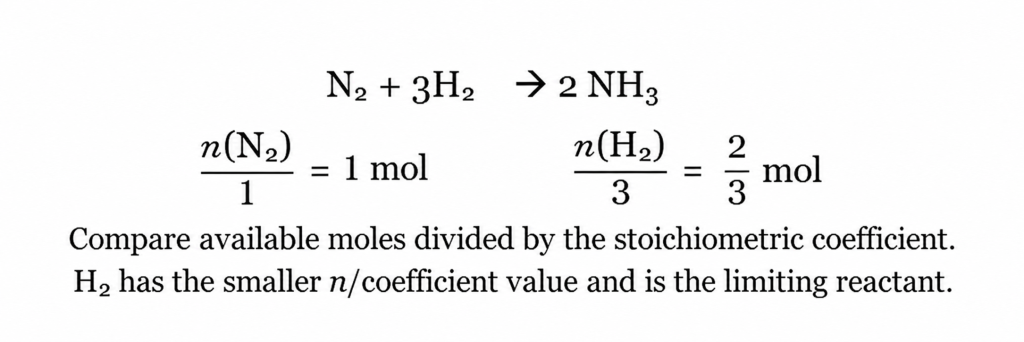
  • Qs/ Identify the limiting reactant when the reaction is started with 1 mol N2 and 2 mol H2.

     N2 + 3H2  →  2 NH3

Sol/ To solve, determine which reactant is smaller in terms of moles.

1) Figure out moles of each reactant from the information given 1 mole N2 , 2 moles H2

2) Balance the reactants. Cross and multiply each side reactant by the coefficient of the original reactant (1, 3).

Limiting reactant for percent yield of chemical reactions

3) Determine which reactant is really smaller in terms of moles (in this case, the H2).

This is the limiting reactant.

2. Percent yield

  • Actual yield: yield from an actual chemical reaction
  • Theoretical yield: yield from a chemical equation

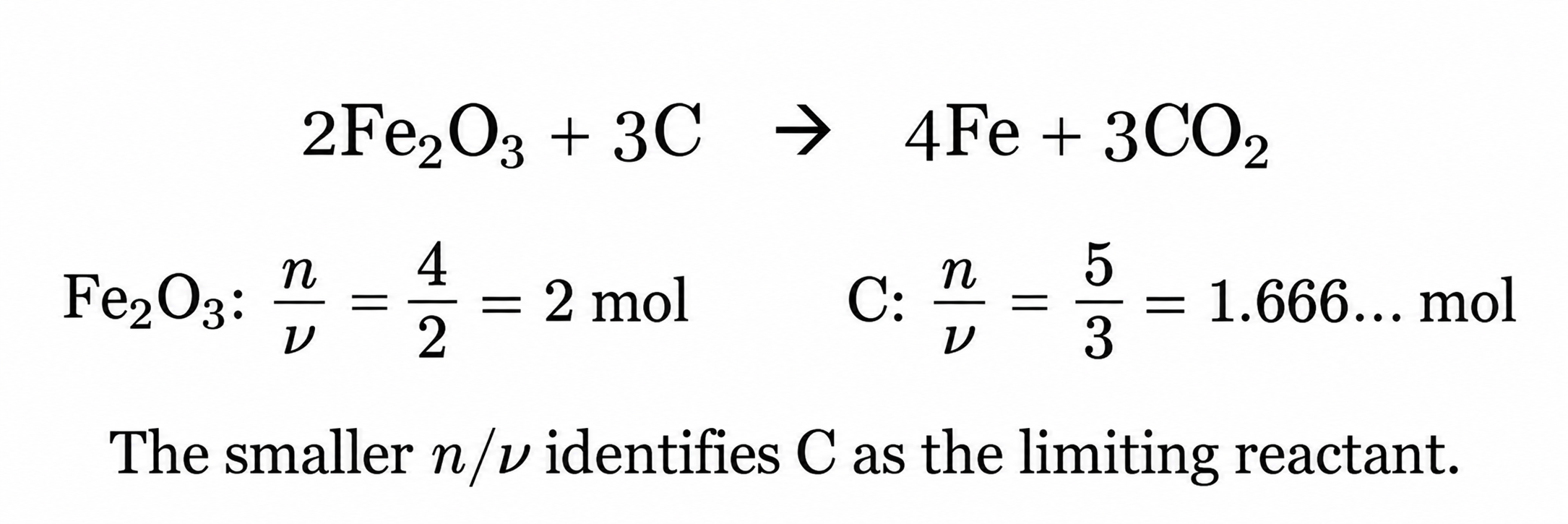
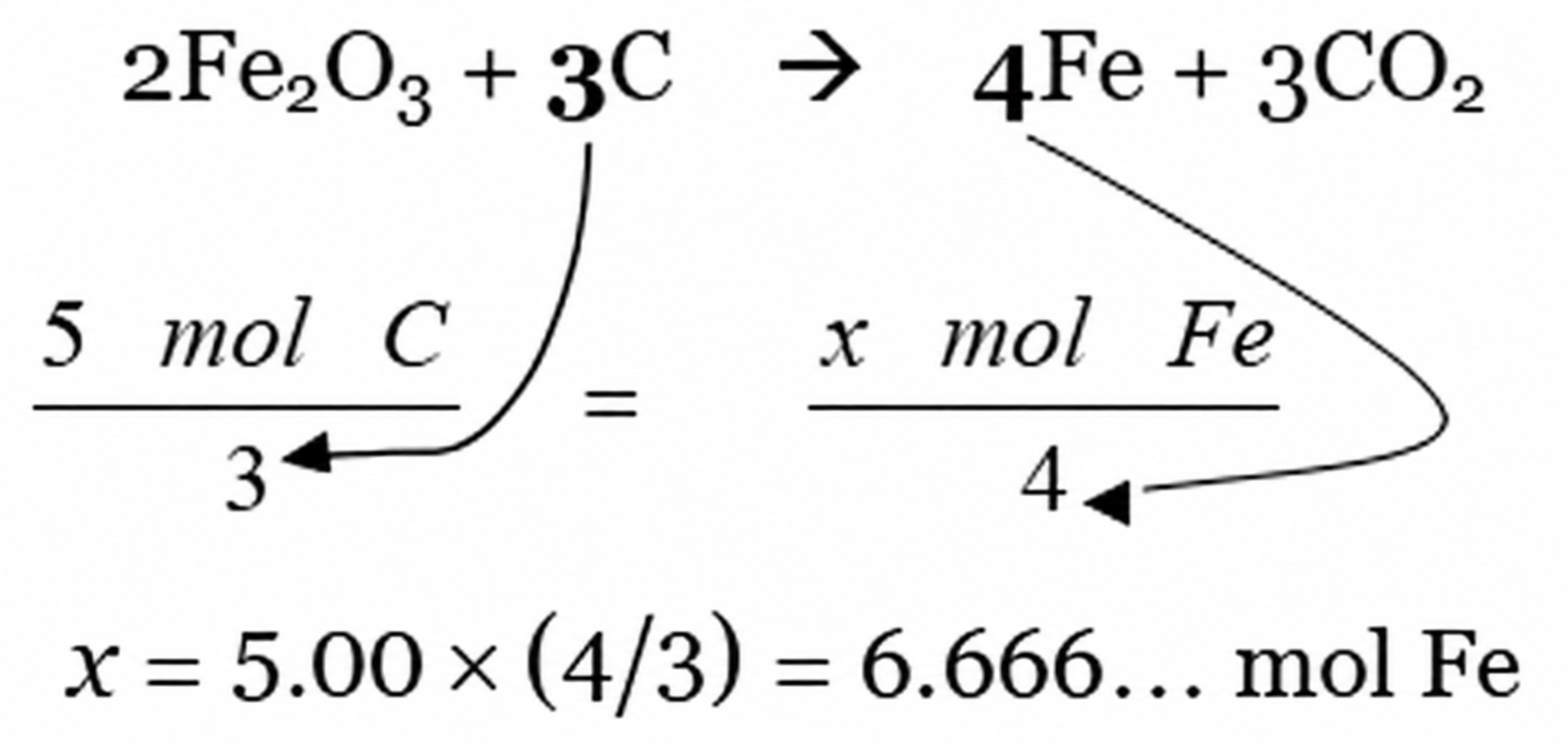
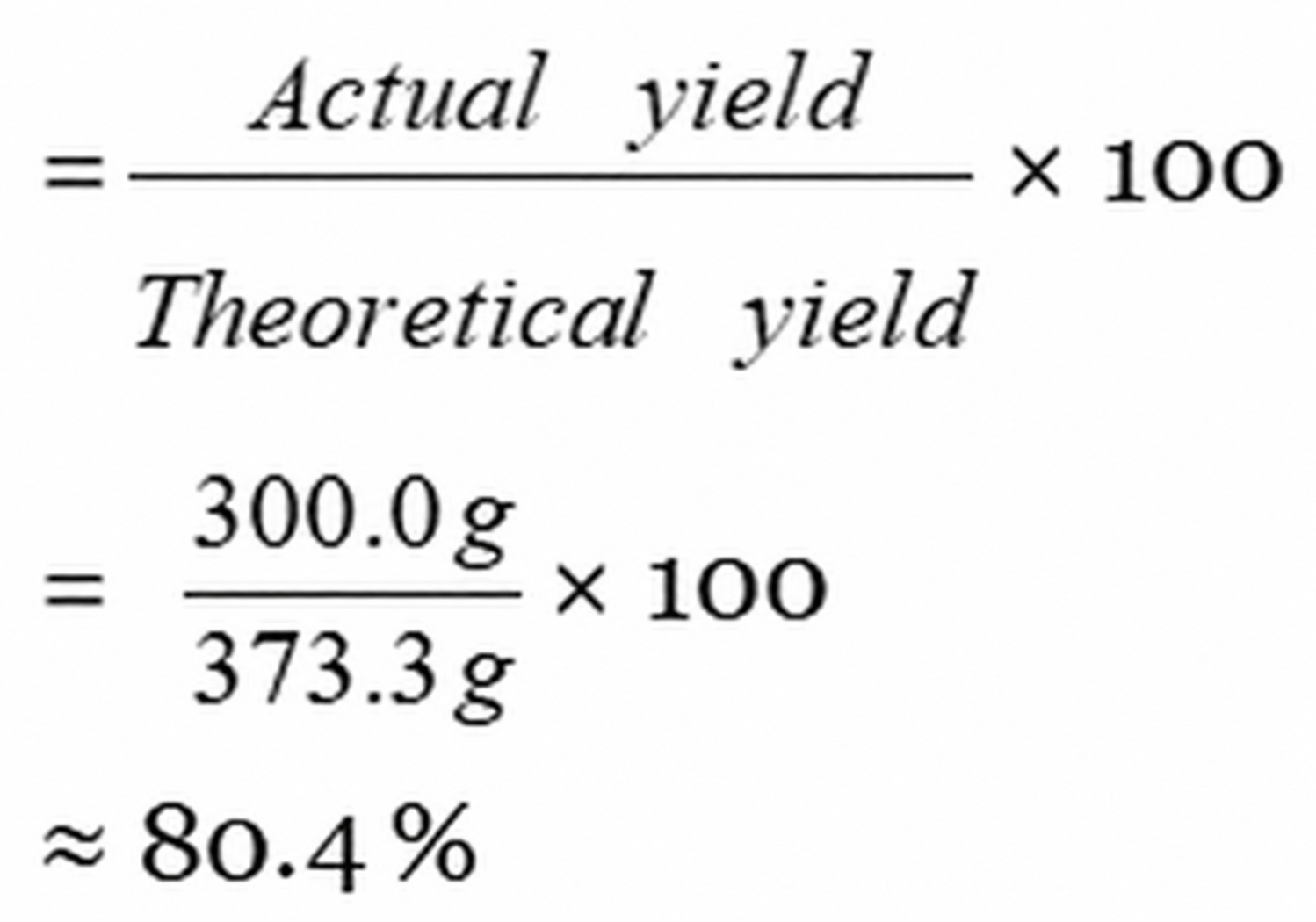
Qs/ When 640.0 g Fe2O3 reacts with 60.0 g C, the actual yield of Fe is 300.0g. Calculate the percent yield of Fe from the reaction.

     2Fe2O3(s) + 3C(s)  →  4Fe(s)  + 3CO2(g) 

     Sol/

M.W. of each compound

M.W. of each compound

Fe2O3: 56×2+16×3 = 160 g/mol

C: 12 g/mol

Fe: 56 g/mol

Moles of each reactant

Limiting reactant

Moles of product

Theoretical yield of

Fe

56 g/mol Fe × 6.7 mol Fe = 375.2 g

Percent yield of Fe

H. Concentration

1. Solute, solvent, and solution

Classification

Features

Solute

• Dissolved in solvent

• Minor substance in solution

• Can be solid, liquid, or gas

Solvent

• Can dissolve solute

• Major substance in solution

• Can be liquid

Solution

• Solute + solvent

2. Concentration

Classification

Features

Mass percent

(mass %)

Molarity (M)

Molality (m)

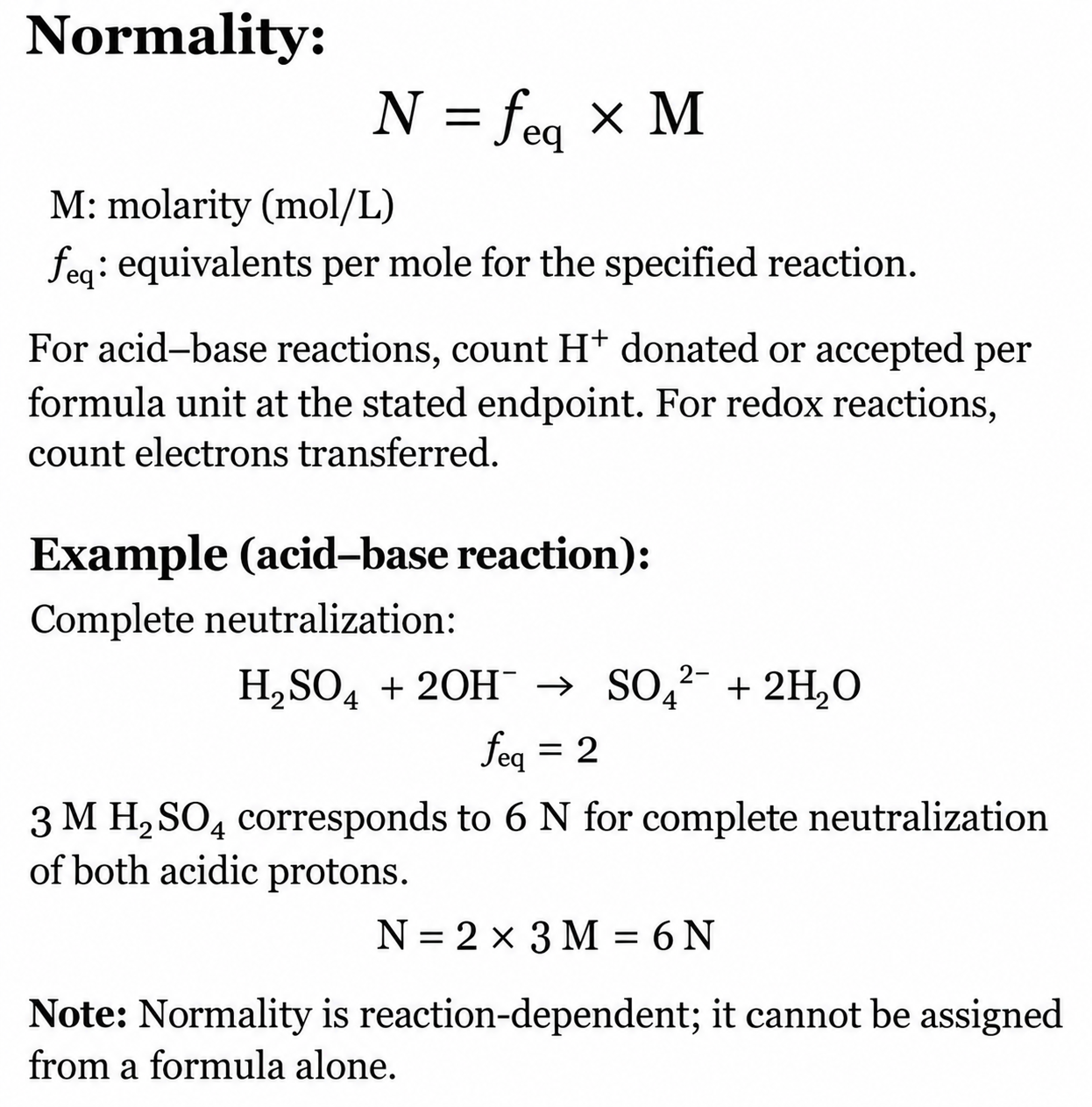
Normality (N)

(=normal concentration)

(=concentration including charge ions)

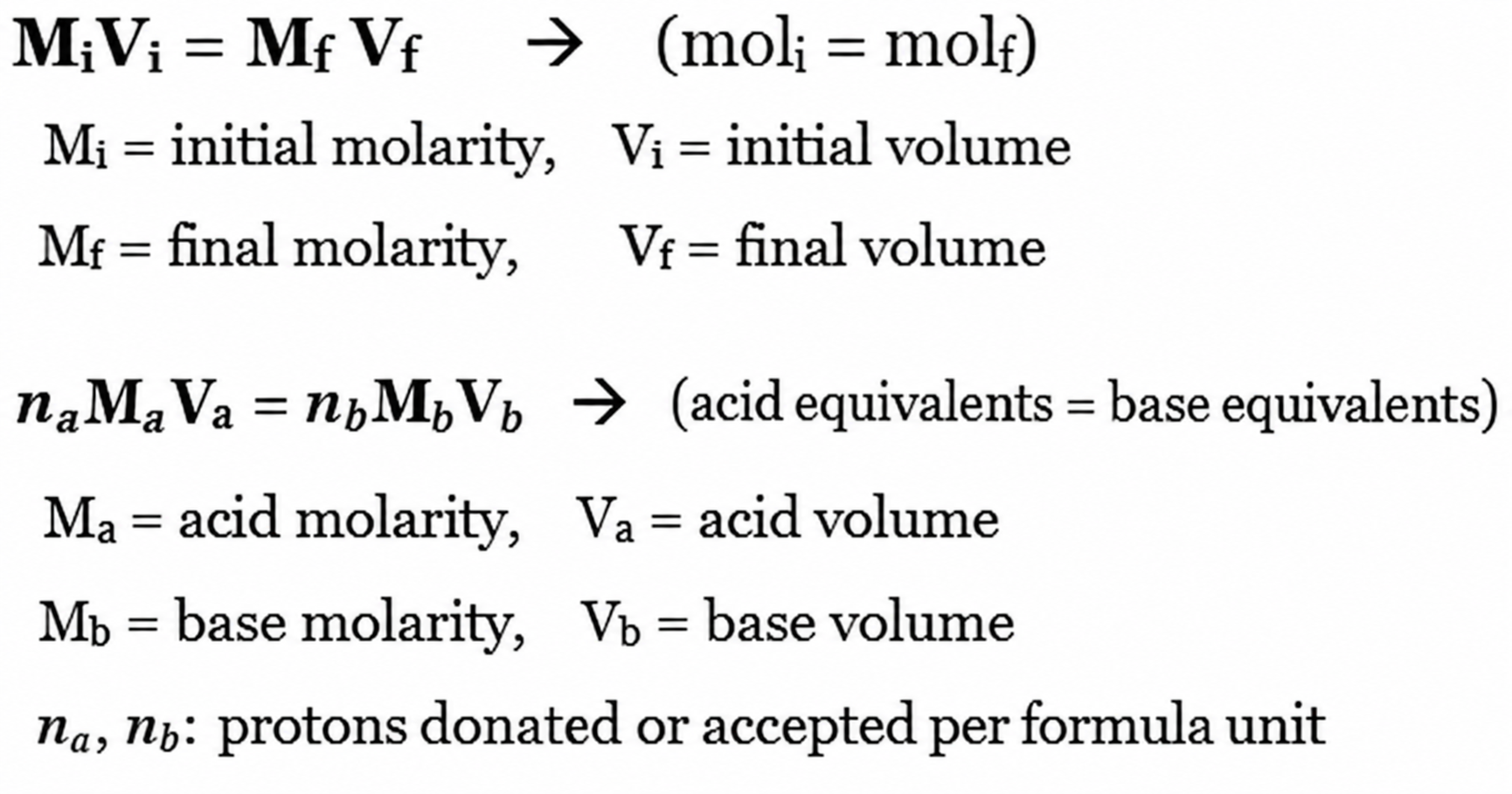
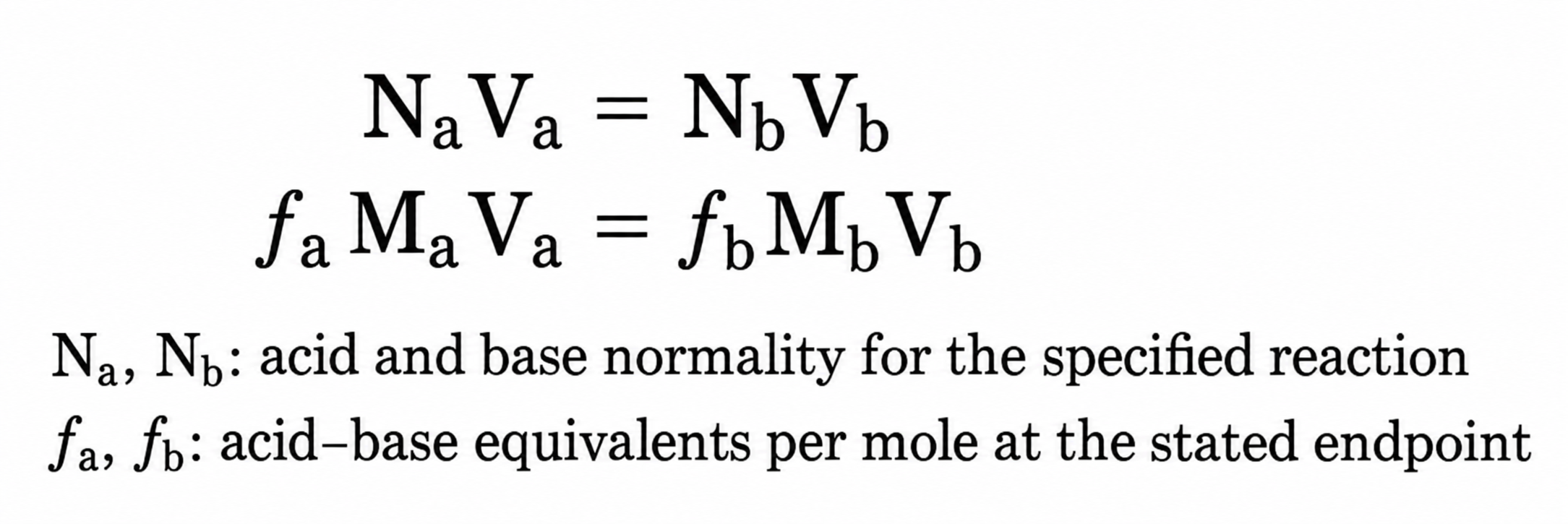
MV = MV

(dilution or

 neutralization)

NV = NV

(neutralization)

  • Qs/ Calculate the mass percent when 30g of NaCl is dissolved in 70g of water. 
  • Qs/ Calculate the molarity (M) when 800g of NaOH is in 4 L of a solution.
  • Qs/ Calculate the molality (m) when 800g of NaOH are added to 5kg of water.
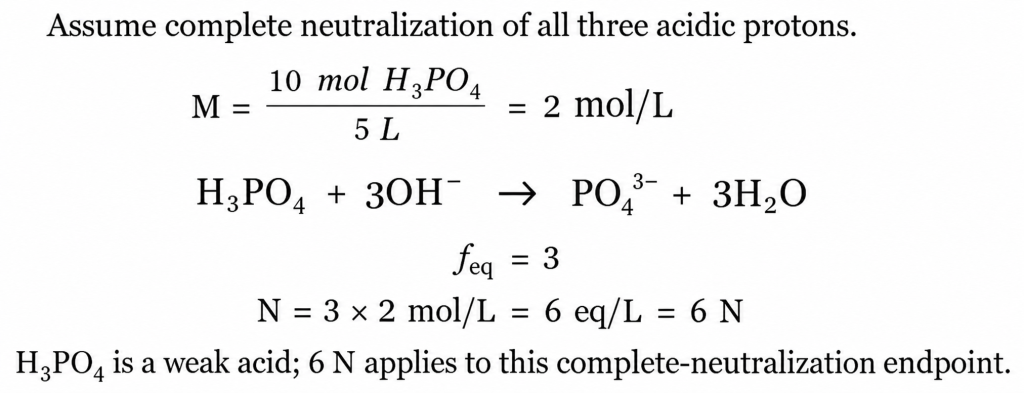
  • Qs/ Calculate the normality when 10 mol H3PO4 is in 5L of a solution.
  • Qs/ How many mL of 4M HCl should be prepared to neutralize 30mL of 8M KOH?  
  • Qs/ How many mL of 8M HBr should be prepared to neutralize 40mL of 3M Ba(OH)2?

I. Aqueous reaction

Classification

Features

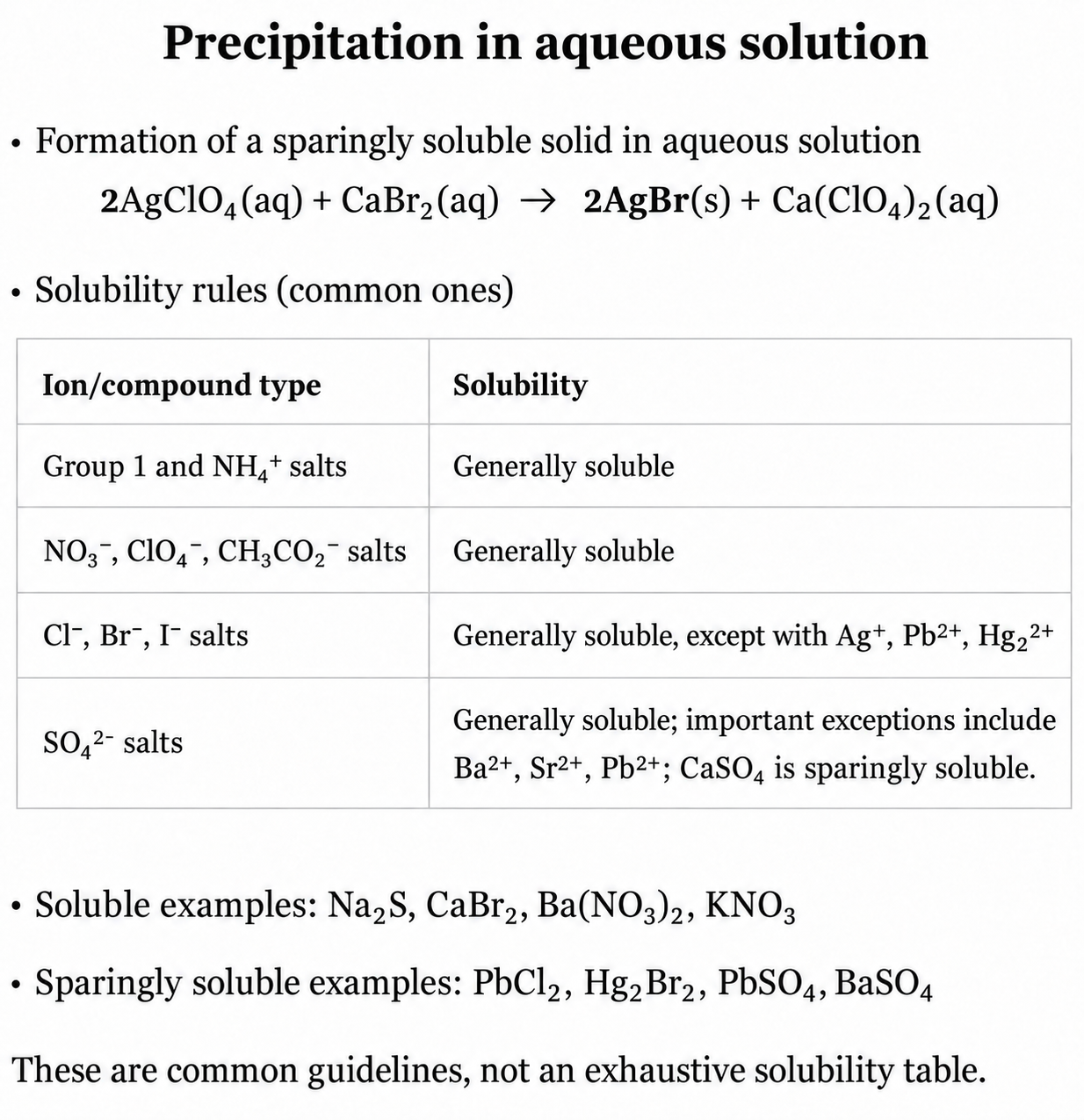
Precipitation

Acid-base neutralization

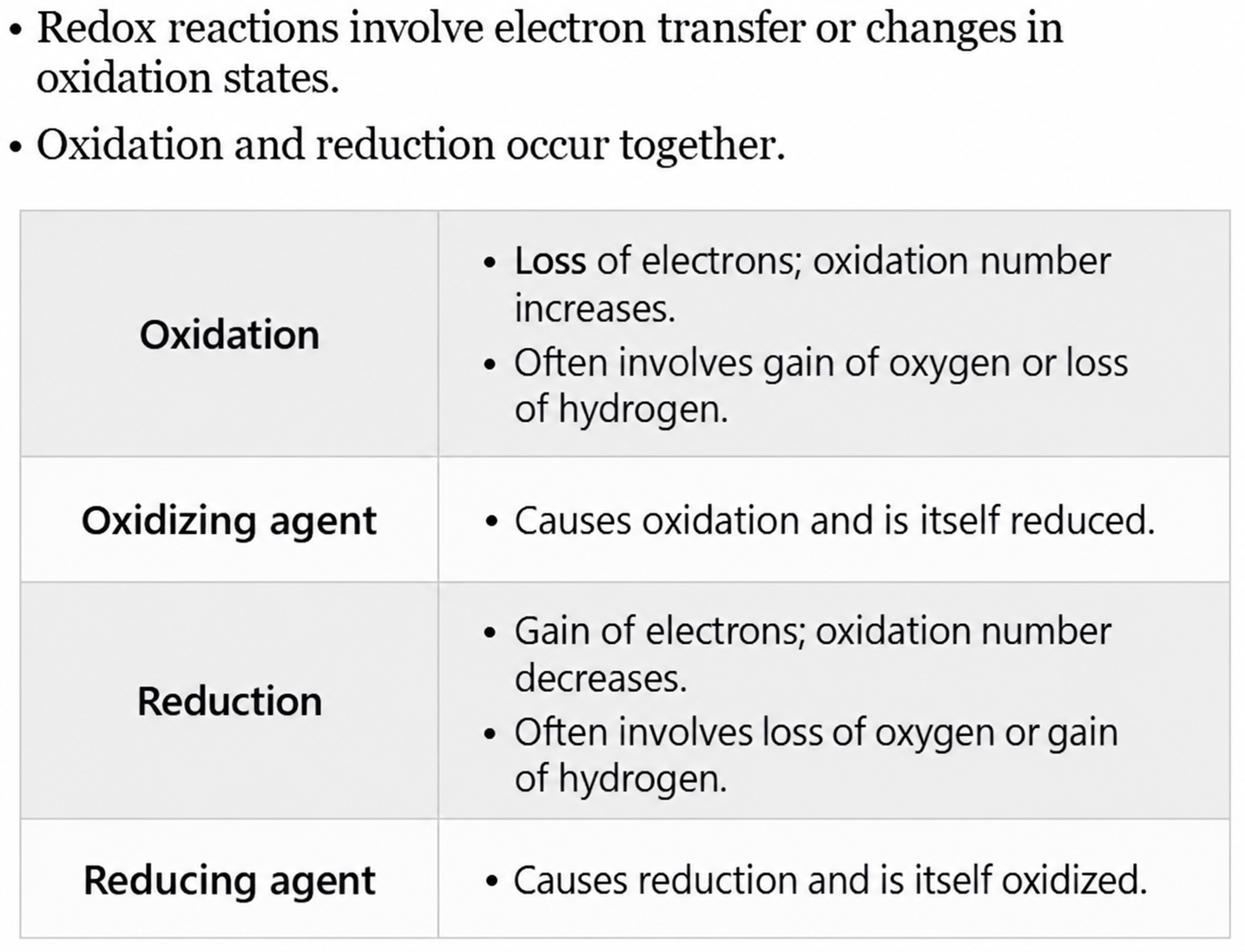
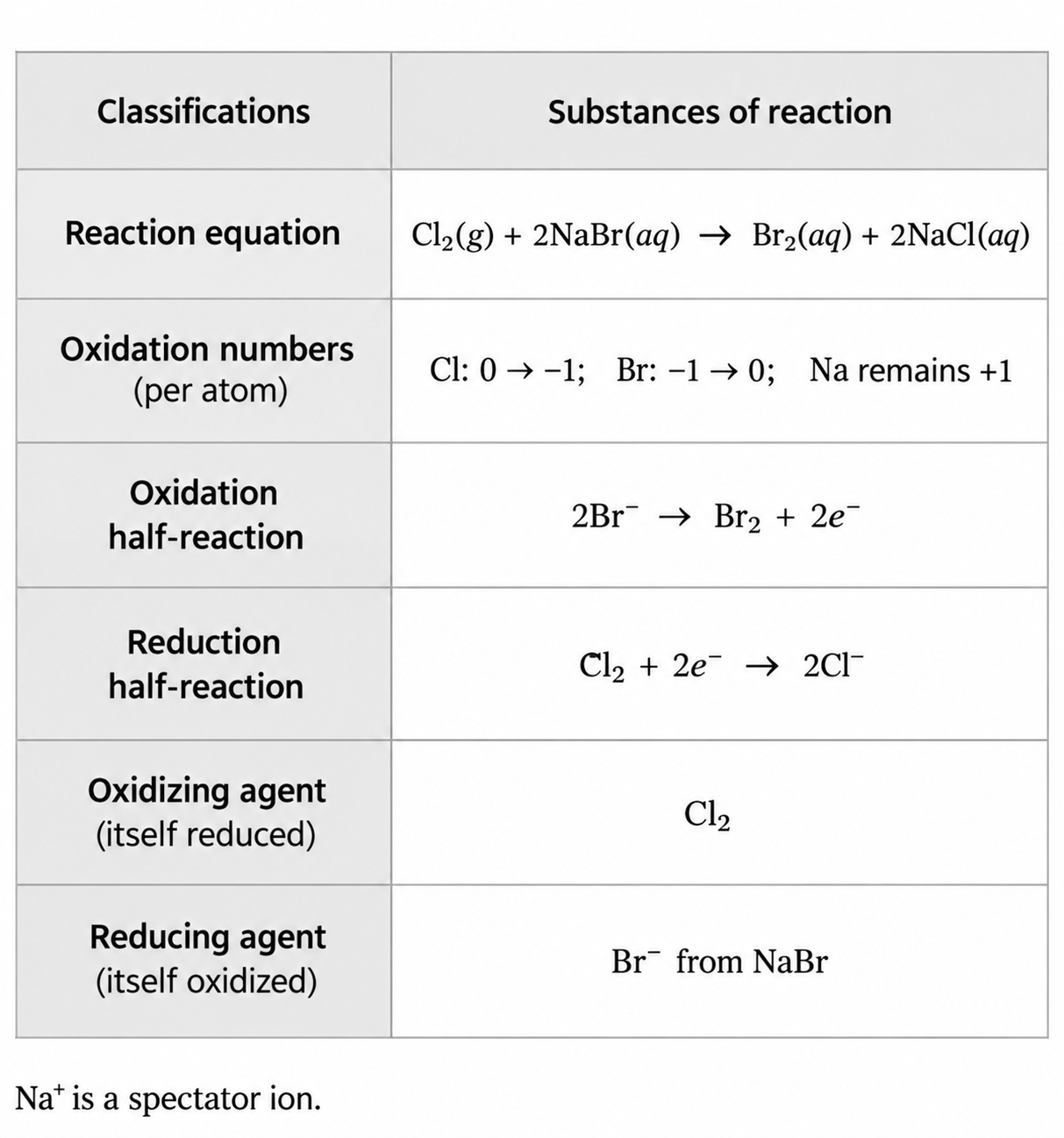
Redox reaction

J. Oxidation-number

: identify the atom state in a molecular compound whether it is neutral, electron-rich, or electron poor.

Classifications

Oxidation-number

Elemental state atoms

Ionic state atoms

Atoms in

polyatomic

ion or molecule

H

O

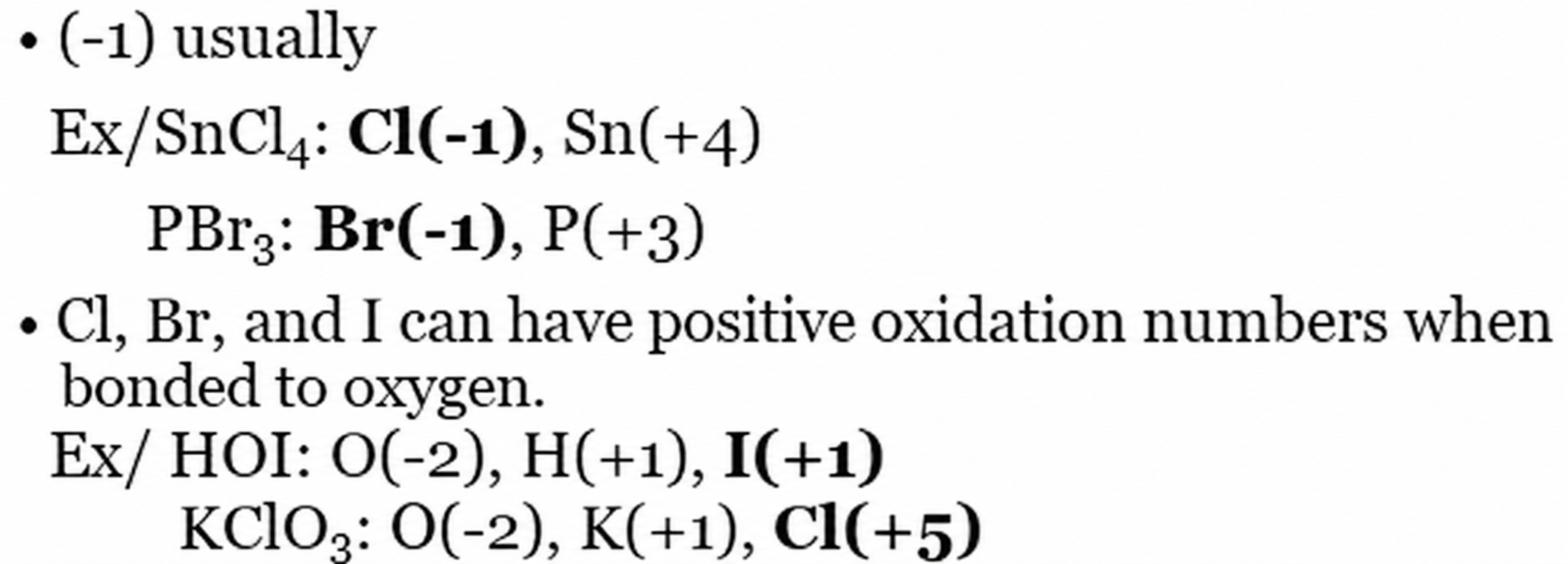
Halogens

Total oxidation number of compound

Natural compound

Ionic compound

K. Net ionic equation

1. Precipitation

  • Qs/ Write the net ionic equation for the following reactant.

         Pb(NO3)2(aq) + 2NaI(aq)  →

Processing

Equation

Dissociation

Reaction equation

Completed ionic

 equation

Net ionic equation

2. Acd-base neutralization

  • Qs/ Write the net ionic equation for the following reactant.

          HNO3(aq) + KOH(aq)  →

Processing

Equation

Dissociation

Reaction equation

Complete Ionic

 equation

Net Ionic equation

3. Redox reaction

  • Qs/ Write the net ionic equation for the following reactant.

           2HCl(aq) + Zn(s)  →

Processing

Equation

Dissociation

Reaction equation

Complete ionic

 equation

Net ionic equation

L. Balance redox reaction (half-reaction method)

  • Qs/ Write the balanced redox reaction for the following equation.

        NO2(aq)  +  I(aq)  →  I2(s)  +  NO(g)

Processing

Equation

Separation into oxidation and reduction

Balance atoms except H, O

Balance O by adding H2O

Balance H by adding H+

Balance charges by adding electrons

Multiply by coefficient to cancel electrons

Cancel electrons

    and balance redox reaction