X. Electrochemistry

Key focus of this chapter: reduction potential

This chapter focuses on reduction potential and gives concise summaries of the important things about reduction half-reaction, electrochemical cells, standard free-energy change, and quantitative electrolysis in more detail.

A. Reduction half-reaction, Eo (V)

: magnitude of ability to accept electrons by comparing with the standard hydrogen electrode

     (2H+(aq) + 2e  →  H2(g)    Eo = 0 V)

 1. Standard electrode potential

Meaning

Easily release electrons rather than 

hydrogen →  oxidation

Easily accept electrons rather than 

hydrogen  →  reduction

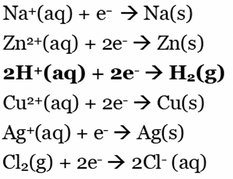
Reduction half-reaction

Strength oxidation

    (Anode)

Strength reduction

   (Cathode)

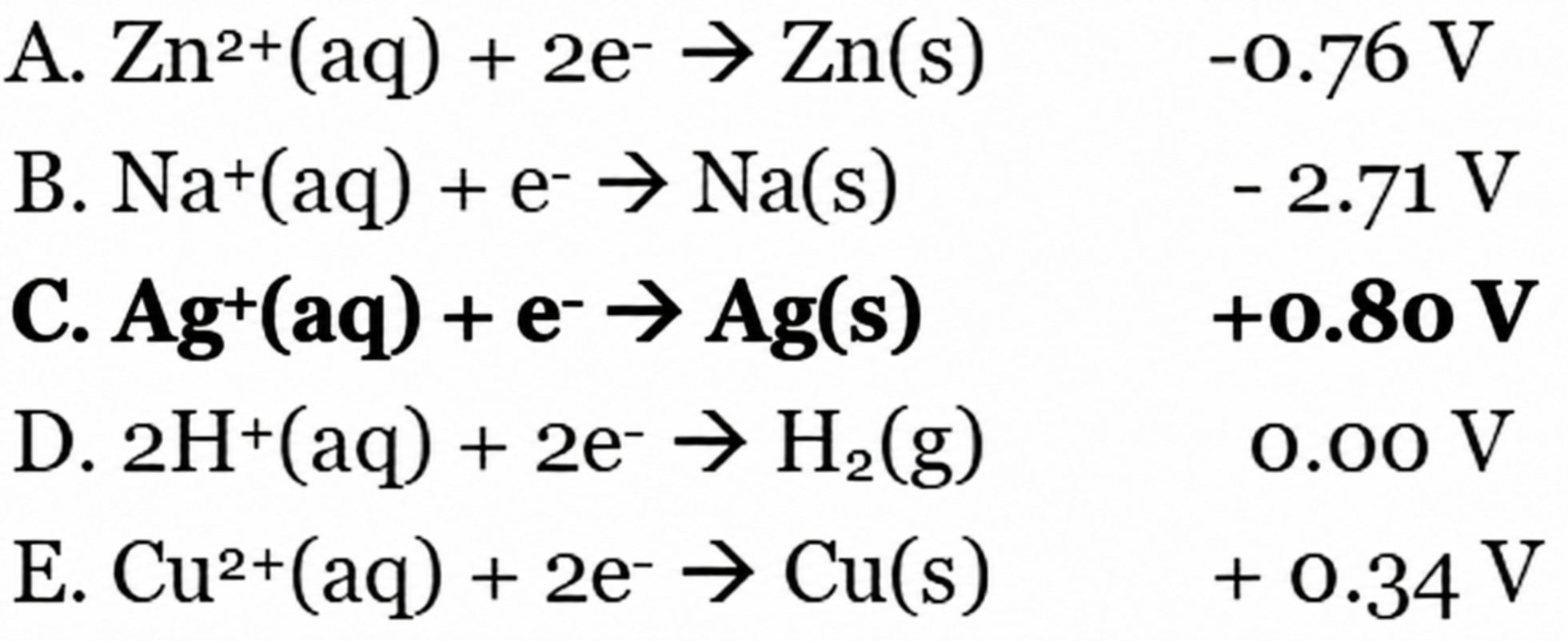
  • Qs/ Which of the following represents the reaction for the strongest reduction in a galvanic cell?

ANS: C

The strong reduction means the strong ability to accept electron(s). Therefore, the most positive standard reduction potential is + 0.80V

2. Anode and cathode

Meaning

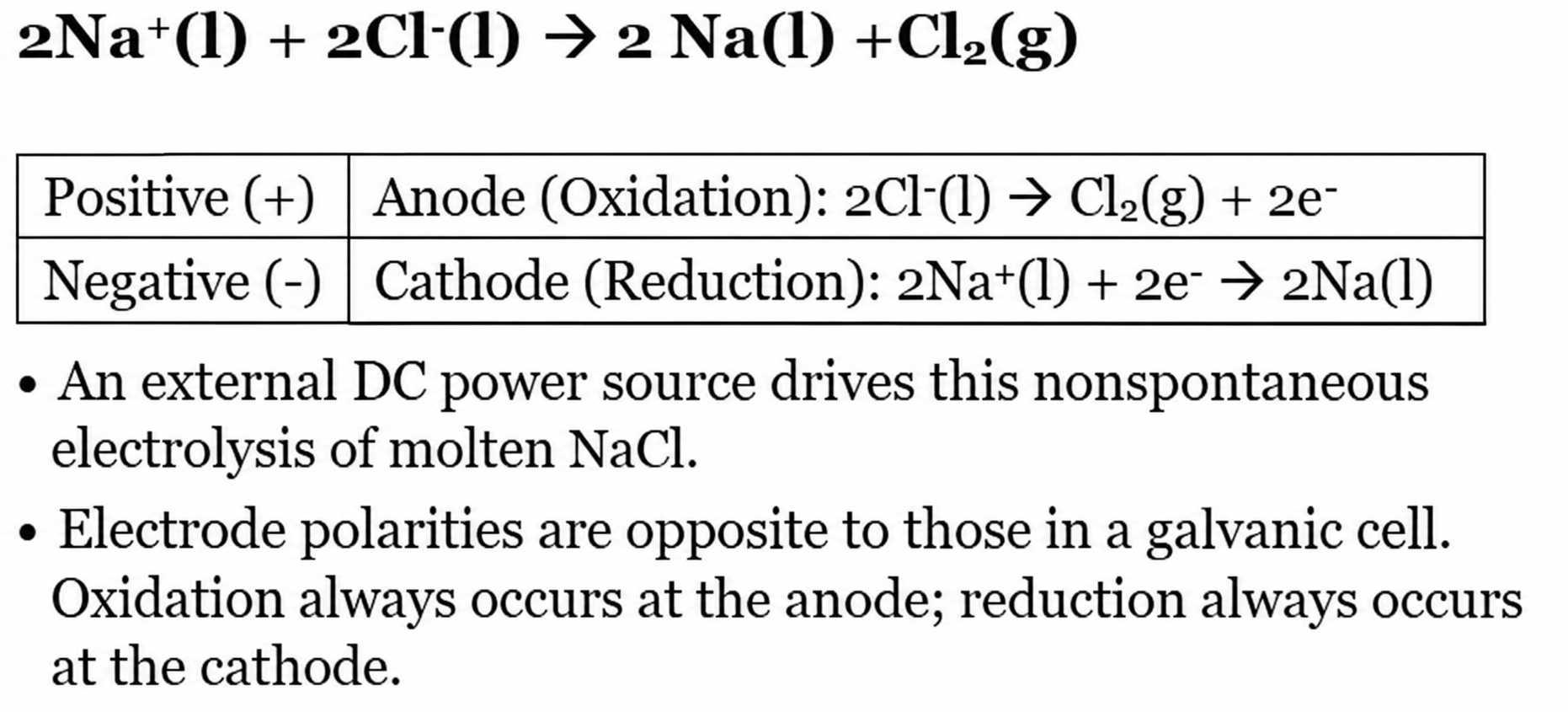
Galvanic cells

Electrolytic cells

Anode

Releasing electron (oxidation)

Negative (-)

Positive (+)

Cathode

Accepting electron (reduction)

Positive (+)

Negative (-)

B. Reduction petential in cells

1. Electromotive force (E.M.F.)

: the difference of electric potential force between anode and cathode

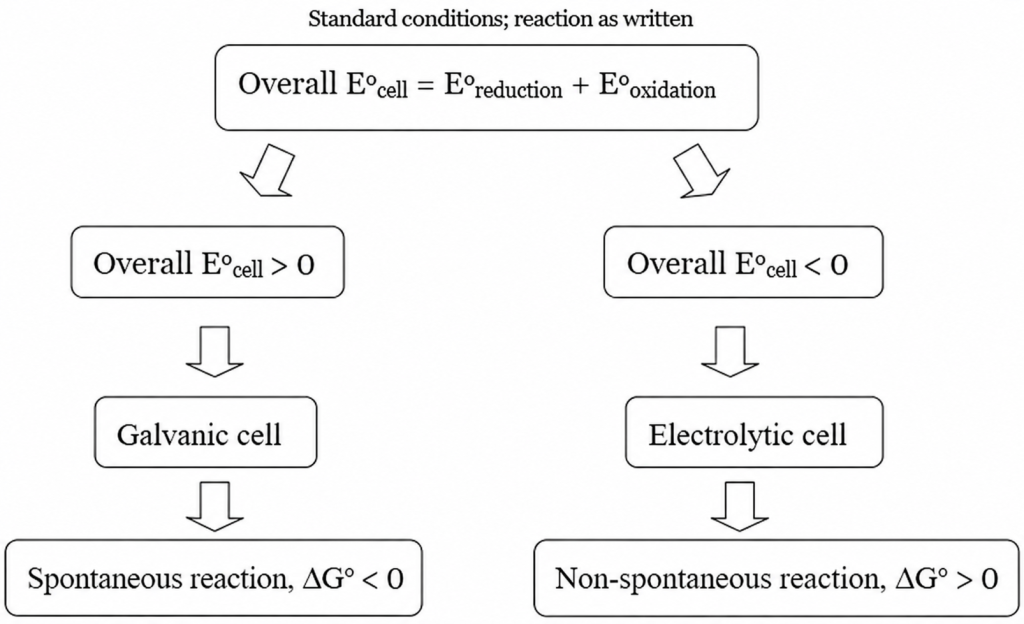
  • The decision of spontaneous or non-spontaneous reaction by the value of overall Eocell from Eoreduction + Eooxidatio.  
spontaneous or non-spontaneous reaction of reduction potential

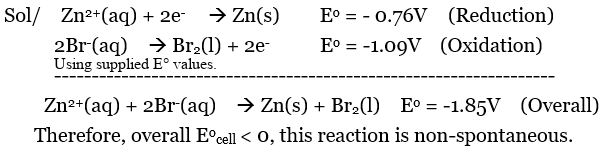
• Qs/ Determine if the reaction is a spontaneous or non-spontaneous reaction.

2. Shorthand notation

  • Ex/ Shorthand notation from the spontaneous reaction between Cu(s) and Ag(s).

Processing

Reactions

Reduction half-reaction

Oxidation and reduction

Multiply coefficient to cancel electrons

Shorthand notation and meaning for galvanic cell

Shorthand notation

Meaning for galvanic cell

C. Electrochemical cells

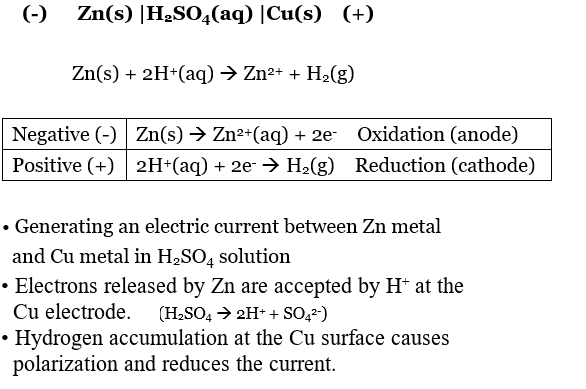
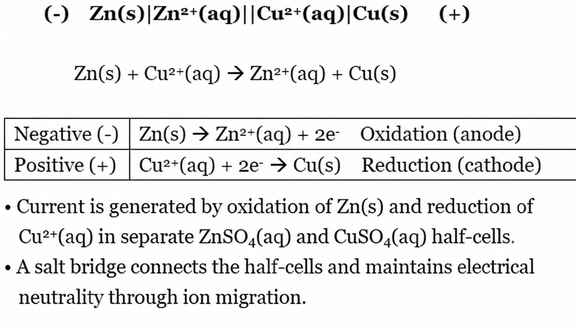
: generating an electric current by reaction between oxidation and reduction.

Cell type

Features

Voltaic cell

Daniell cell

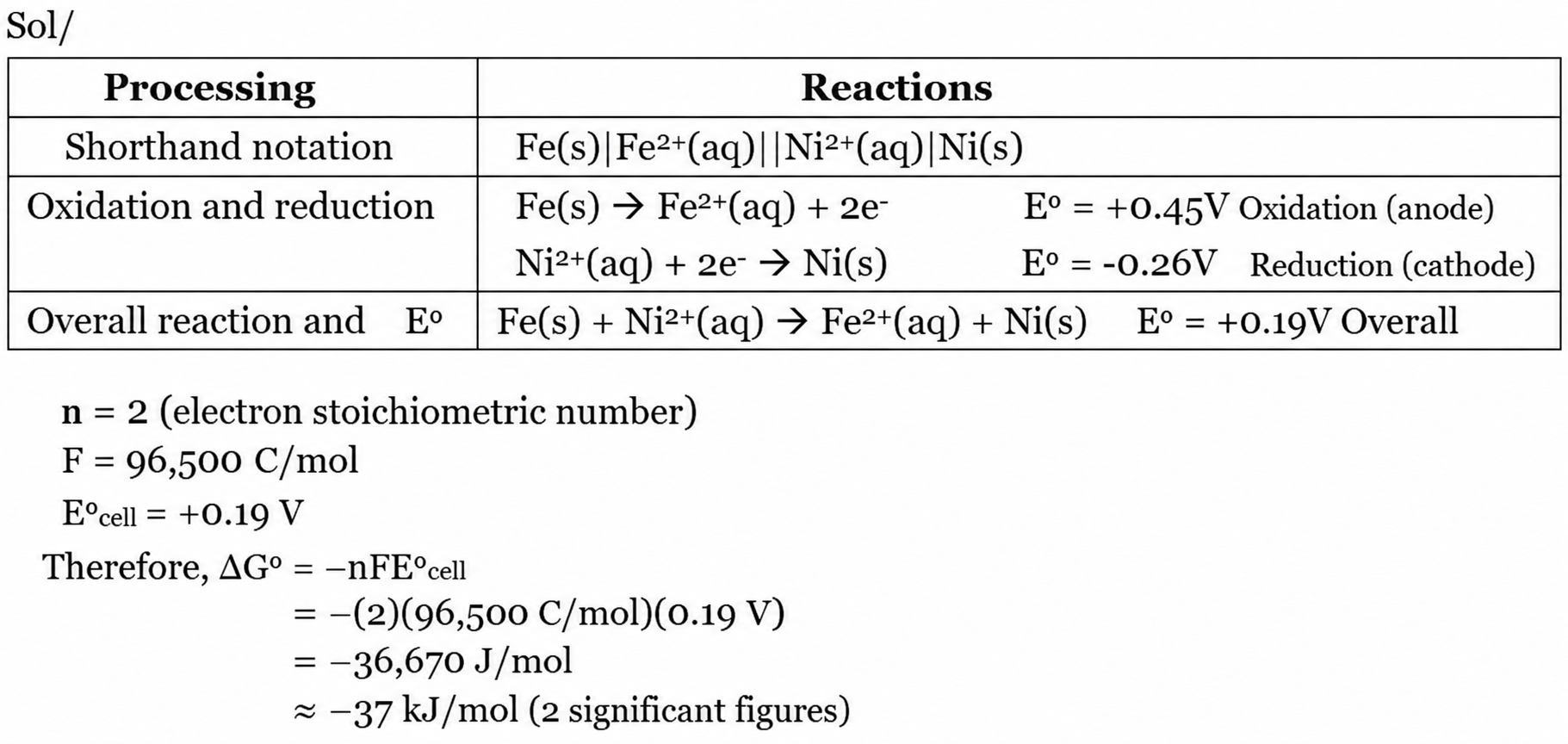
D. Standard free-energy change

Qs/ Calculate the standard free-energy change, ΔG, from the reaction.  

E. Quantitative electrolysis

1. Charge, C

2. Faraday, F

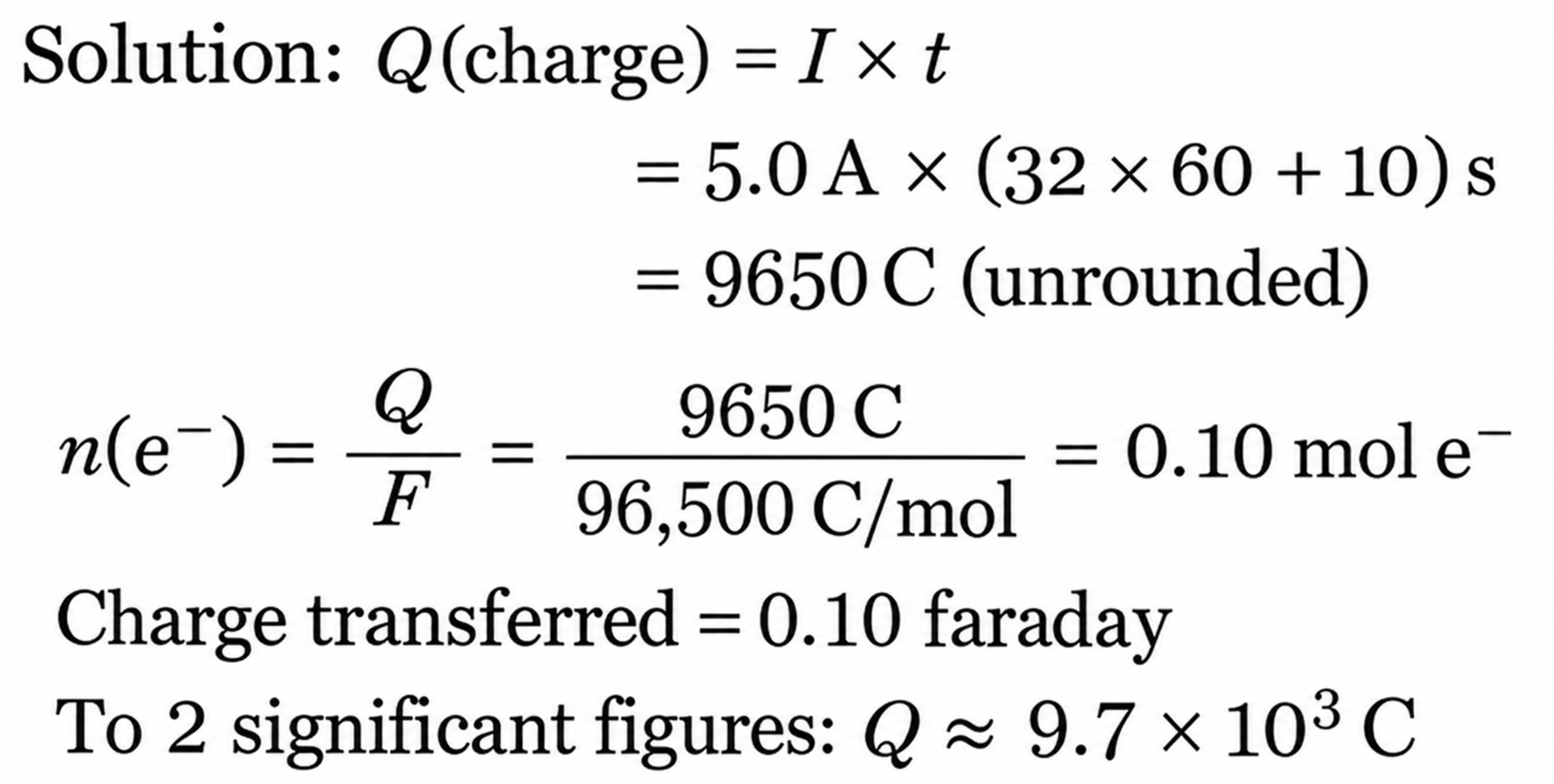
Qs/ Calculate Faraday when a direct current of 5.0 A is passed through an aqueous solution of AgNO3 for 32 minutes and 10 seconds. 

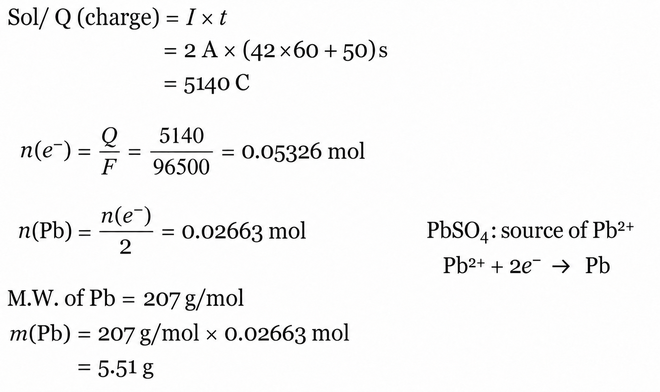
Qs/ How many grams of Pb are produced from a lead storage battery when this battery is charged for 42 minutes and 50 seconds with a constant current of 2A?

     PbSO4(s) + H+(aq) + 2e  →   Pb(s) + HSO4(aq)