
IV. Bacteriology questions
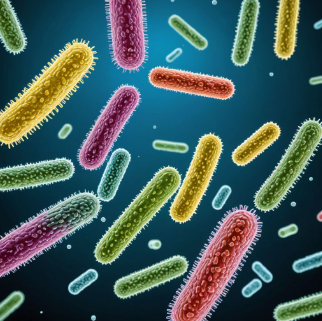
Bacteriology questions
There are a total of 32 bacteriology questions, which are important content-oriented in the summary part of this chapter. Click the ‘Answer’ button to see the corresponding answers and explanations, and click the ‘Go back’ button to slove the next questions.
1. Which of the following is correct statement?
A. Gram-negative bacteria have lipopolysaccharides.
B. Gram-positive bacteria often possess outer plasma membranes.
C. Gram-negative bacteria do not possess peptidoglycan.
D. Gram-positive bacteria do not possess plasma membranes.
E. Gram-positive and gram-negative bacteria do not have cell walls.
2. The following statements are true about the lysogenic cycle EXCEPT _______________.
A. It is a multiplication of bacteriophage.
B. It is called the alternate cycle.
C. The releasing stage involves killing host bacterial cells.
D. The reproduction stage involves prophage reaction.
E. There is a dividing bacterial stage.
3. Cell surface of bacteria contains _____________, which is a kind of network composed of modified sugar and amino acids.
A. Peptidoglycan
B. Lipopolysaccharide
C. Plasma membrane
D. Protein capsid
E. Plasmid
4. Which of the following is a common characteristic of viruses and bacteria?
A. Capsids
B. Ribosomes
C. Genomes of nucleic acid
D. Binary fission
E. Self reproduction
5. Which of the following shows the correct order of general steps of viral multiplication?
A. Penetration → assembly → synthesis → release
B. Penetration → synthesis → assembly → release
C. Assembly → replication → uncoating → penetration
D. Uncoating → assembly → synthesis → release
E. Attachment → penetration → release → synthesis
6. Streptococcus causes pneumonia disease in humans. What kinds of relationship can be shown between this bacterial pathogen and humans?
A. Commensalisms
B. Mutualism
C. Competition
D. Parasitism
E. Predation
7. Which of the following is NOT related to trp operon?
A. Tryptophan
B. coli bacteria
C. Metabolizing lactose
D. Operon off by corepressor
E. Synthesize enzyme by operon on
8. Which of the following does NOT apply to prions?
A. Infectious proteins
B. Affection of brain or neural tissues
C. Composed of DNA or RNA
D. PrPsc
E. Mad cow disease (BSE)
9. Which of the following is NOT a function of bacterial cell walls?
A. Selective barrier
B. Excretion of wastes
C. Uptake of nutrients
D. Protection of bacterial cells against hypotonic environments
E. All are correct
10. Vancomycin and penicillin block the synthesizing peptide cross-bridges, thereby weaken the peptidoglycan outside the cell membrane. Which of the following is affected by these drugs?
A. Fungi
B. Archaea
C. Gram-positive bacteria
D. Gram-negative bacteria
E. C and D
11. How do bacterial populations acquire genetic variation?
A. Mutation
B. Transformation
C. Conjugation
D. Transduction
E. All of the above
12. Which of the following is NOT related to adenoviruses?
A. RNA viruses
B. Nucleic acids covered by capsids
C. Respiratory diseases
D. Naked viruses
E. Glycoprotein spikes
13. Spherical cluster shapes of bacteria are called __________ .
A. Staphylococci
B. Streptobacilli
C. Streptospiral
D. Diplococci
E. Diplobacilli
14. Which of the following is NOT related to microbes?
A. Pathogens
B. Supporting life of organisms
C. Breakdown of organic materials
D. Recycling of nutrients
E. All are correct
15. Which of the following is the pathogen that causes Creutzfeldt-Jakob disease (CJD)?
A. Viroid
B. Virus
C. Bacteria
D. Prion
E. Protist
16. Which of the following organisms do NOT have cell walls?
A. Plants
B. Fungi
C. Viruses
D. Oomycetes
E. Bacteria
17. How do animal viruses differ from bacteriophages?
A. They attach to host cell walls by tail fibers.
B. They can synthesize in the host nucleus.
C. Only nucleic acids enter into the host cell.
D. Envelopes can be derived from the host cell membrane.
E. B and D
18. All of the following are phage T4 EXCEPT _____________.
A. Only infection bacteria
B. Tail fiber
C. Virulent phage
D. Virus containing DNA
E. Lysogenic cycle
19. The molecular compositions of bacterial cell walls differ from the plant cell walls. This is an example of _____________.
A. Adaptive radiation
B. Homologous structures
C. Analogous structure
D. Divergent evolution
E. Competition
20. All of the following are found in bacterial cells EXCEPT _____________ .
A. Cytoplasm
B. Lysosomes
C. Nucleoids
D. Ribosomes
E. Cytoskeleton
21. Prokaryotic organisms have innate movements toward or away from a stimulus. This is called _____________ .
A. Kinesis
B. Taxis
C. Migration
D. Flagellum
E. Signal
22. Which of the following statements about bacteria are true?
I. One of reasons for genetic variation is meiosis. II. A community of microorganisms is called a biofilm. |
A. II only
B. I and II
C. II and III
D. II, III, and IV
E. All of the above
23. __________ are only composed of RNA molecules without protein capsids and usually affect plant diseases.
A. Prions
B. Viroids
C. Viruses
D. Bacteria
E. Protists
24. Which of the following are enveloped viruses?
A. Adenoviruses
B. Influenza viruses
C. Bacteriophages
D. Tobacco mosaic viruses
E. Papillomaviruses
25. What would happen if some mutation hindered synthesizing allolactose(inducer)?
A. Transcription of lac operon’s gene would be reduced.
B. β-Galactosidase, permease, and transacetylase would be produced continuously.
C. Transcription of trp operon’s gene would be increased.
D. Tryptophan(corepressor) would be produced continuously.
E. B and C
26. Choose the INCORRECT fact about capsids.
A. Subunits are capsomers.
B. They enclose bacterial nucleic acid.
C. They are made of proteins.
D. They have different types of shapes.
E. They enable the transfer of genomes into host cells.
27. Which of the following is a virus synthesizing DNA from RNA?
A. DNA virus
B. Retrovirus
C. RNA virus
D. Phage T4
E. Tobacco mosaic virus
28. Which of the following statements is (are) correct about facultative anaerobes?
A. They cannot grow in an anaerobic environment.
B. They cannot grow in an area where O2 is present.
C. E. coli bacteria belong to this category of microbes.
D. They can survive in both aerobic and anaerobic environments.
E. C and D
29. Which of the following correctly describes bacteriophages?
A. They are bacteria.
B. Life cycle is mostly lysogenic phage.
C. They infect coli bacteria.
D. They contain RNA.
E. They are animal viruses.
30. Indirect transport of DNA from one bacterium to another by bacteriophages is called ___________ .
A. Transduction
B. Penetration
C. Conjugation
D. Transformation
E. Binary fission
31. Choose correct statement(s) about how viruses differ from bacteria.
I. Viruses lack organelles and cell walls. II. Viruses need a host cell to reproduce. III. Viruses are not living organisms. IV. Viruses use conjugation to share genetic materials with others. |
A. I only
B. I and II
C. I, II, and III
D. I, II, and IV
E. All of the above.
32. All of the following are DNA viruses EXCEPT _____________.
A. Animal viruses
B. Synthesis of new genomes from viral DNA
C. Adenoviruses
D. HIV
E. Transcription and translation
Answers
1. A
Gram-negative bacteria only have lipopolysaccharides and outer membranes. Both gram-positive and negative bacteria have peptidoglycan, plasma membranes, and cell walls.
3. A
Peptidoglycan is a component of the bacterial cell wall. Lipopolysaccharide is a kind of lipid attached to the polysaccharide at the outer membrane of the bacterial cell wall. Protein capsids cover viral nucleic acids. Plasmids are bacterial circular DNA and used for horizontal gene transfer.
4. C
Both viruses and bacteria have genetic material of nucleic acid. The protein capsid is one characteristic of viruses but ribosomes, binary fission, and self reproduction are involved in bacteria.
5. B
General steps of viral multiplication:
Approaching → penetration → synthesis → assembly → release.
6. D
The pathogens of streptococcus are positively affected and the host, the human, is negatively affected. Predation is the relationship between predator and prey.
7. C
Trp operon regulates repressible enzyme synthesis for making tryptophan (corepressor) in E. coli bacteria. When tryptophan is bound to an inactive repressor, the inactive repressor becomes an active repressor for operon off. Metabolizing lactose is a reaction in lac operon.
8. C
All are correct except C. Viruses are composed of DNA or RNA covered by a protein coat. Prions are only composed of infectious proteins.
10. C
Gram-positive bacteria is most vulnerable to reaction by these antibiotics because peptidoglycan of gram-positive bacteria is placed outside the cell membrane.
11. E
Mutation and genetic recombination (transduction, transformation, conjugation) are factors of bacterial genetic variation.
13. A
Arrangement of prefixes: dipole (pair), staphylo (clusters), strepto (chains)
Arrangement of shapes: bacilli (rod shaped), cocci (spherical), spiral (helical)
14. E
One of the benefits of microbes is supporting the life of organisms such as obtaining Vitamin K by harboring bacteria in the human large intestine.
15. D
Prions, mis-folded proteins, affect brains or neural tissues of mammals and cause Mad Cow Disease (BSE), Creutzfeldt-Jakob disease (CJD), and scrapie disease in sheep.
16. C
Viruses are not living organisms and have no cell walls. The cell walls of plants and oomycetes are composed of cellulose. Fungi cell walls are made of chitin and bacterial cell walls are made of membranes and peptidoglycan.
17. E
Bacteriophages attach to host cell walls by tail fibers and they put only nucleic acids into the host cells (bacteria) to synthesize at cytoplasm.
18. E
Bacteriophage T4, which is composed of polyhedral head, tail sheath, and tail fiber, infects only E.coli bacteria. This virus contains DNA and has only lytic cycle called virulent phage. Bacteriophage lambda has both lytic and lysogenic cycles.
19. C
Analogous structure means similar function but different structures between two different organisms. Bacterial cell walls are made of peptidoglycan and plant cell walls are composed of cellulose.
20. B
All are found in bacterial cells except B. Lysosomes are found in most eukaryotic animal cells.
21. B
E.coli bacteria have positive chemotaxis, thereby they move toward the stimulus. Kinesis is a simple change of rate of stimulus response. Migration is genetically programmed movement in a population. Flagellum is a structure for movement of prokaryotic organisms.
22. C
Since bacteria are asexual organisms they do not use the meiosis process and sexual reproduction. I and IV are false statements.
24. B
Adenoviruses, Tobacco mosaic viruses, and Papillomaviruses are naked viruses. Bacteriophages do not have envelopes also.
25. A
When the allolactose binds to an active repressor, the active repressor becomes an inactive repressor. Therefore, increased transcription of lac operon’s gene produces three enzymes (β-Galactosidase, permease, and transacetylase) continuously. However, when the allolactose is mutated, active repressor is bounded at operator and then RNA polymerase stops working.
26. B
Capsids enclose viral nucleic acid and transfers its viral nucleic acid into the host cells.
27. B
Retroviruses have the most complicated reproductive cycle. They synthesize new genomes by reverse transcriptase, which synthesize DNA from viral RNA. DNA virus synthesizes new genomes from viral DNA. RNA virus synthesizes new genomes from viral RNA such as Tobacco mosaic virus. Phage T4 contains DNA and synthesizes new genomes from incorporation phage DNA with bacterial DNA.
28. E
Facultative anaerobes, such as E. coli bacteria, synthesize ATP in an aerobic environment and do fermentation in an anaerobic environment. A is correct for obligate aerobes and B is true for obligate anaerobes.
29. C
Bacteriophages are viruses and have only a lytic phage. They contain DNA and synthesize their genomes at cytoplasm in the host cell. Bacteriophages are not animal viruses.
30. A
Penetration is the process by which viruses enter into a host cell. Conjugation is directly transferring genetic material from one bacterium to another. Transformation is genotypic or phenotypic change by combining foreign DNA. Binary fission is prokaryotic asexual cell division.
31. C
I, II, and III are correct statements. Bacteria directly transfer genetic materials to others by conjugation.