
CH 9. Carboxylic Acids & Derivatives
A. Carboxylic Acid Properties
1. Structures, nomenclature, acidity and synthesis
a. Carboxylic acid framework
- A carboxylic acid contains a carbonyl group directly bonded to a hydroxyl group: R–C(=O)–OH.
- The carboxyl group combines a polarized C=O bond with an O–H bond; its two oxygen atoms share electron density in the conjugate base.
- Acyl compounds have the general framework R–C(=O)–Z, where Z identifies the functional-group family.

b. Parent chain and substituents
- Select the longest parent chain containing the carboxyl carbon; this carbon is C1.
- Replace the parent alkane suffix with -oic acid. For a carboxyl group attached to a ring, use -carboxylic acid.
- Two acid groups may be described with the suffix -dioic acid.

c. Intermolecular association
- Carboxylic acids can donate and accept hydrogen bonds. They often form hydrogen-bonded pairs in nonpolar environments.
- Small carboxylic acids are readily soluble in water; increasing the hydrocarbon portion reduces water solubility.
- Carboxylate salts are ionic and frequently show much greater water solubility than their neutral parent acids.
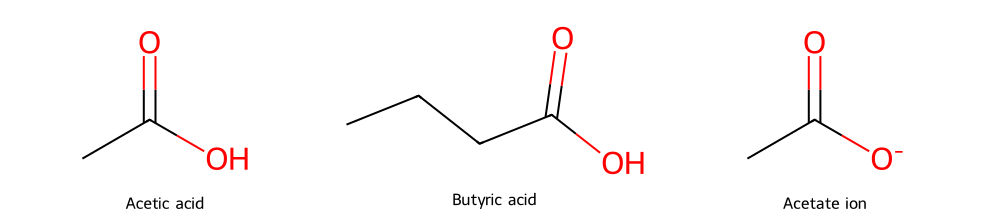
d. Resonance of a carboxylate
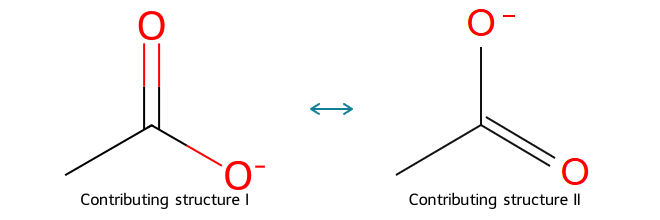
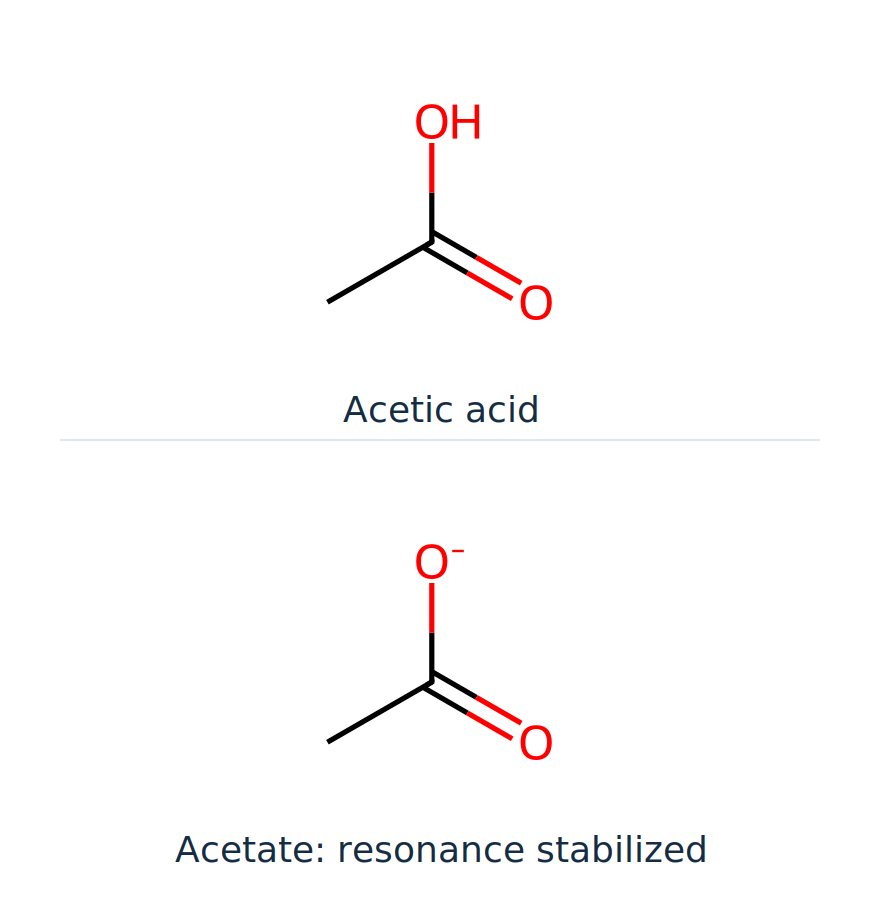
- Loss of H⁺ produces a carboxylate ion (RCO₂⁻) in which the negative charge is delocalized over two oxygen atoms.
- The two major resonance contributors have the same atomic connectivity, while the C–O π bond and negative charge are interchanged.
- This resonance stabilization contributes to the greater acidity of carboxylic acids relative to ordinary alcohols.
e. Inductive electron withdrawal
- Electron-withdrawing substituents stabilize the carboxylate conjugate base and generally increase acidity.
- The inductive effect is stronger when the substituent is closer to the carboxyl group and diminishes with separation.
- For example, chloroacetic acid is appreciably more acidic than acetic acid because the chlorine substituent withdraws electron density.

f. Oxidative conversion
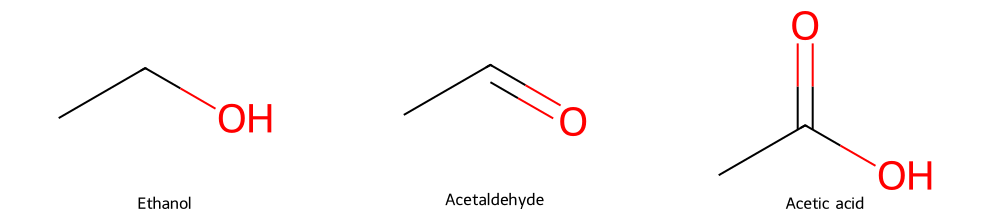
- Primary alcohols can be oxidized to carboxylic acids using sufficiently strong oxidation conditions.
- Aldehydes are readily oxidized to carboxylic acids; secondary alcohols ordinarily oxidize to ketones instead.
- Side-chain oxidation of suitable alkylbenzenes can produce benzoic-acid derivatives.
g. Nitriles and organometallic reagents
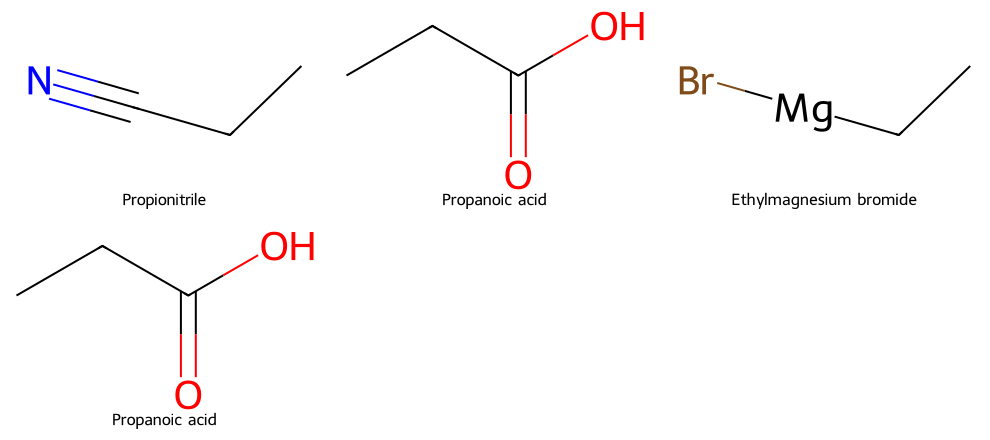
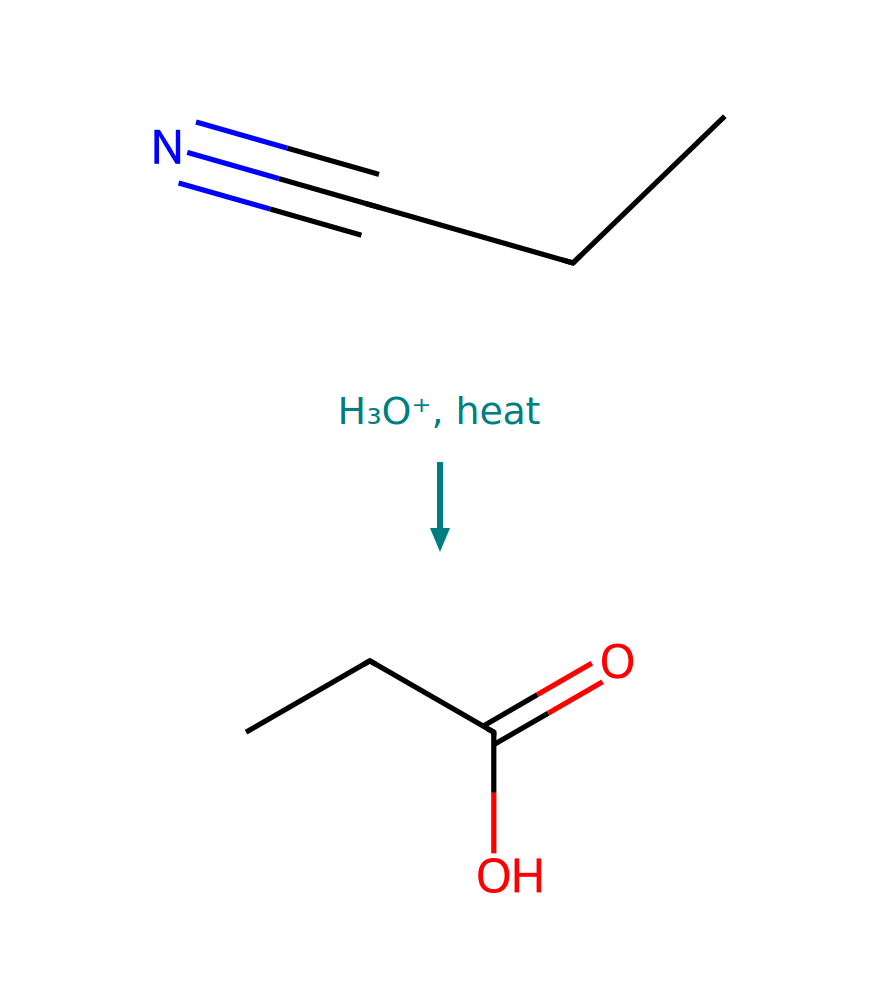
- Acidic or basic hydrolysis of a nitrile ultimately produces a carboxylic acid (after acidic workup where needed).
- Reaction of an appropriate Grignard reagent with CO₂, followed by acidic workup, gives a carboxylic acid with one additional carbon.
- Grignard reagents must be kept away from water and other protic reagents until the workup step.
h. Solubility and salts
- Carboxylic acids form strong hydrogen-bond associations. Small acids are water soluble; a large hydrocarbon framework reduces solubility.
- Base converts an acid to a carboxylate salt; subsequent acidification regenerates the acid. Bicarbonate can deprotonate ordinary carboxylic acids with CO₂ evolution.
B. Nucleophilic Acyl Substitution
1. Addition–elimination and acyl reactivity
a. Acyl family comparison
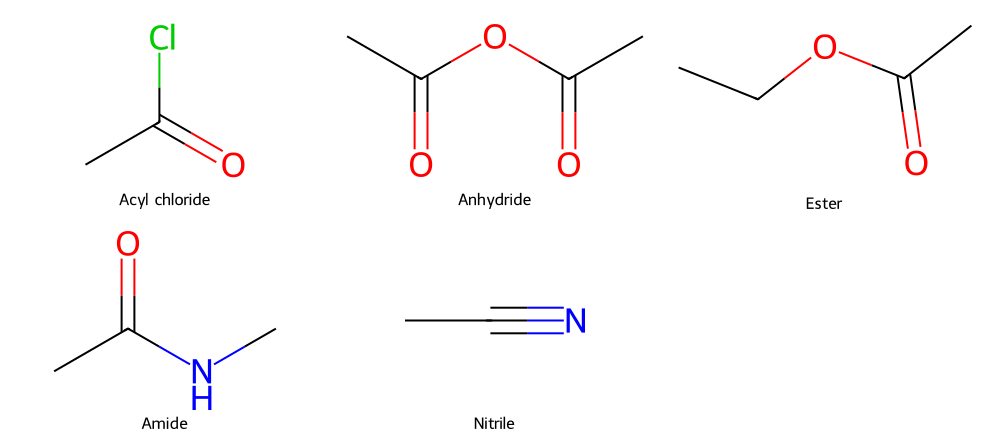
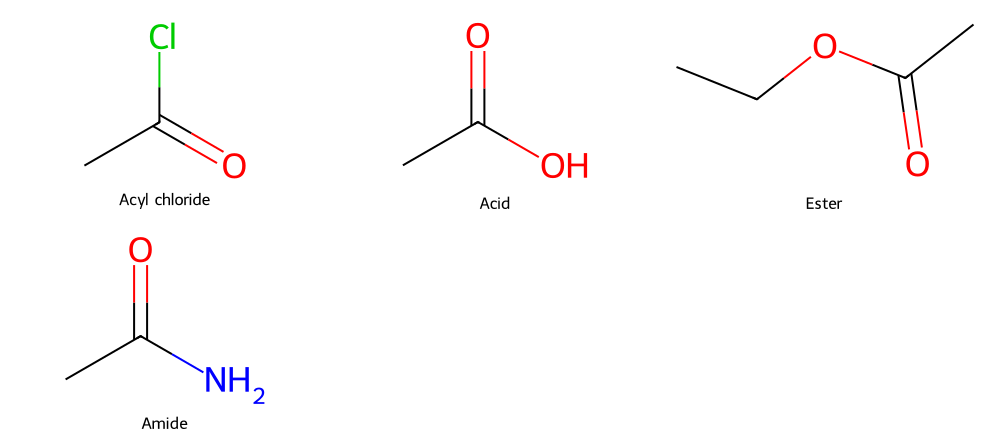
- An acyl halide has Z = halogen (commonly Cl); an anhydride has Z = OC(=O)R; an ester has Z = OR; an amide has Z = NR₂.
- Thioesters contain Z = SR. Nitriles (R–C≡N) are related in synthesis and hydrolysis but do not possess an acyl carbonyl.
- The atoms directly attached to the acyl carbon strongly influence reactivity and leaving-group ability.
b. Addition and elimination
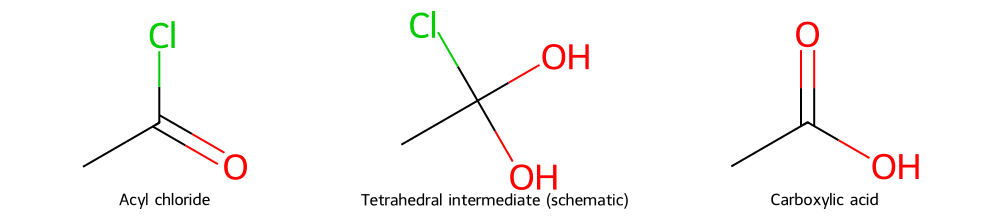
- The acyl carbon is electrophilic because the C=O bond is polarized toward oxygen.
- A nucleophile attacks the carbonyl carbon to form a tetrahedral intermediate; re-formation of C=O can then expel a leaving group.
- This differs from aldehyde/ketone nucleophilic addition: an acyl derivative has a group Z that can leave.
c. Relative tendencies
- A commonly useful reactivity order is acyl chloride > anhydride > ester ≈ carboxylic acid > amide for nucleophilic acyl substitution under comparable conditions.
- Leaving-group ability, resonance donation, reagent identity and reaction conditions all affect whether a conversion is practical.
- Converting a less reactive derivative into a more reactive one generally needs activation rather than a simple exchange.
| Acyl derivative | Common reaction | Typical product |
|---|---|---|
| Acyl chloride | Water / alcohol / amine | Acid / ester / amide |
| Anhydride | Alcohol / amine | Ester / amide |
| Ester | Hydrolysis / hydride / Grignard | Acid / alcohol / tertiary alcohol |
| Amide | Hydrolysis / strong hydride | Acid / amine |
- Leaving-group basicity affects the driving force for acyl substitution.
- Protonation and basic conditions can change the practical reactivity ordering.
d. Recognizing the family
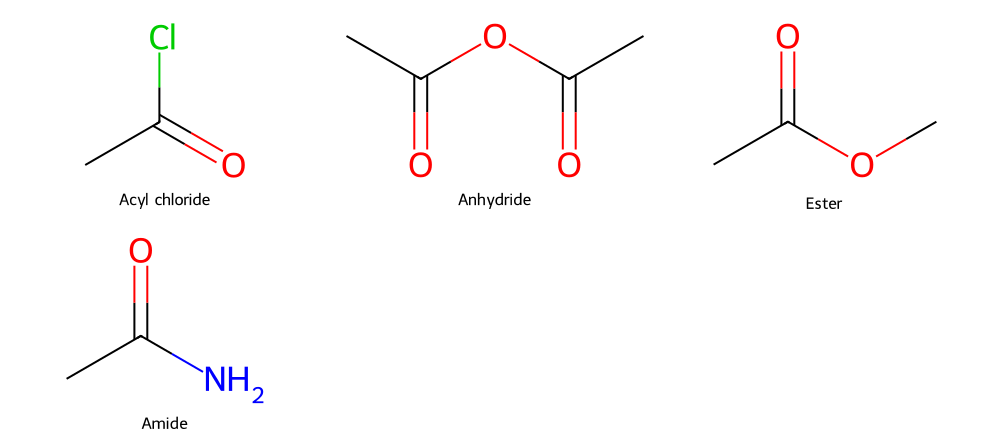
- Acid chlorides, anhydrides, esters and amides contain a substituent attached to an acyl carbon that can act as a leaving group under suitable conditions.
- A lactone is a cyclic ester; a lactam is a cyclic amide. Nitriles are related acid precursors but do not contain a carbonyl group.
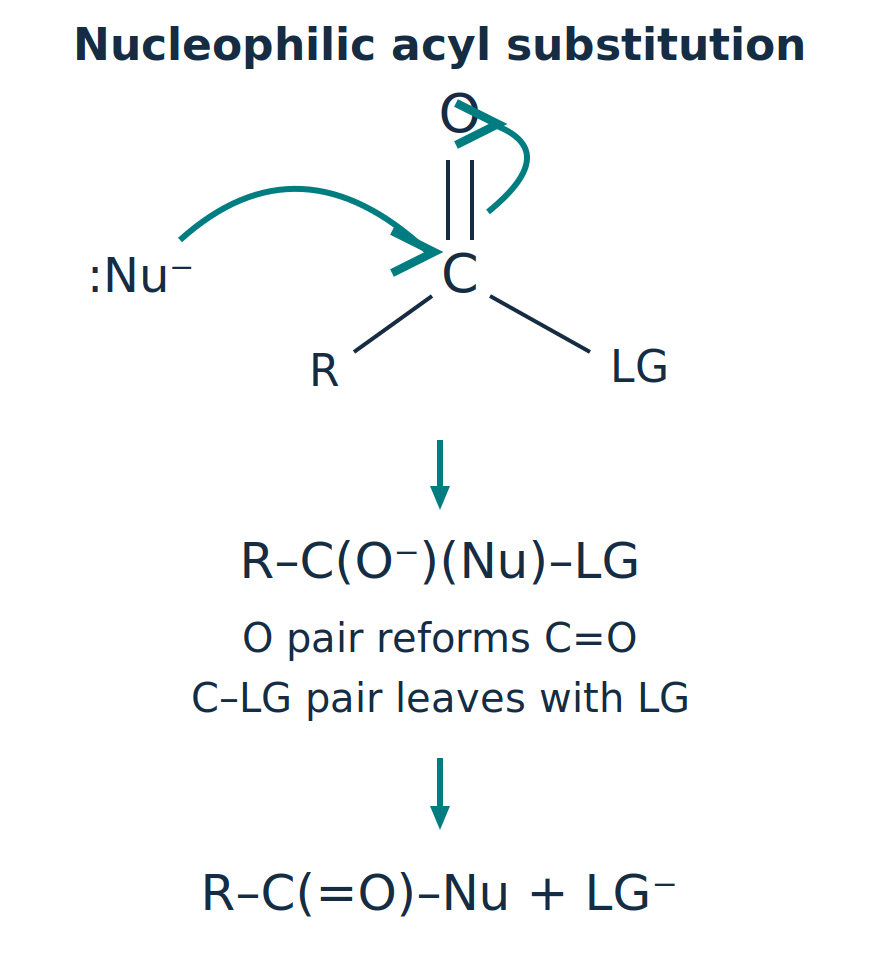
e. Addition–elimination
- Nucleophile addition forms a tetrahedral intermediate. Collapse restores C=O and expels a leaving group; proton transfers depend on the conditions.
- A common neutral derivative reactivity trend is acid chloride > anhydride > ester > amide. Carboxylic acids require separate attention because bases often deprotonate them first.
| Derivative | Group on acyl carbon | General reactivity |
|---|---|---|
| Acid chloride | Cl | High |
| Anhydride | OCOR | High |
| Ester | OR | Intermediate |
| Amide | NR₂ | Lower; strong resonance donation |
C. Acyl Chlorides, Anhydrides, Esters and Amides
1. Preparation, interconversion and reduction
a. Activation and coupling
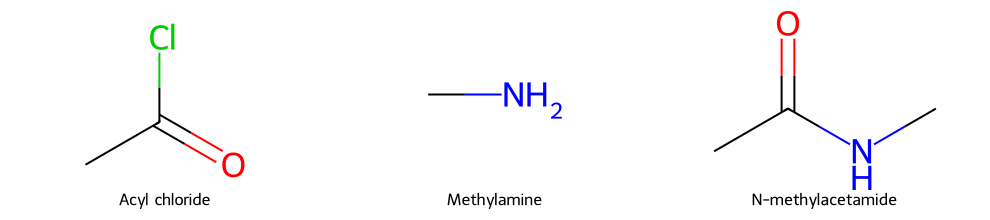
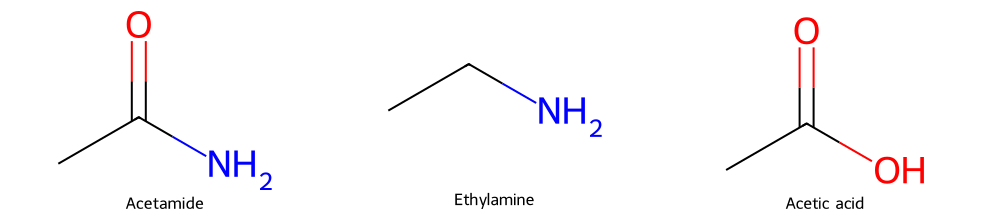
- A carboxylic acid can be activated before reaction with ammonia or an amine to form an amide.
- Directly mixing an amine with a carboxylic acid often gives an ammonium carboxylate salt; activation or dehydrating conditions are typically needed for efficient amidation.
b. Hydride reduction
- Strong hydride reagents such as LiAlH₄ can reduce carboxylic acids to primary alcohols, followed by careful workup.
- Selectivity differs from the milder NaBH₄ reagent, which ordinarily does not reduce simple carboxylic acids under standard conditions.
c. Substitution chemistry
- Acyl chlorides react readily with water to form acids, with alcohols to form esters, and with ammonia or amines to form amides.
- When amines are used, a suitable base or excess amine can neutralize the hydrogen chloride formed.
d. Acyl transfer
- Anhydrides transfer an acyl group to nucleophiles, producing a carboxylic-acid-related by-product.
- Anhydrides are often used for esterification or amide formation when direct reaction of the carboxylic acid is inefficient.

- For anhydride hydrolysis, identify both acyl fragments when determining the products.
e. Resonance and reduction
- The nitrogen lone pair strongly donates into the carbonyl system, making ordinary amides relatively unreactive toward substitution.
- Strong hydride reduction of many amides can furnish amines, rather than alcohols.
- Under sufficiently vigorous acidic or basic conditions, amides can undergo hydrolysis to carboxylic-acid-related products.
| Reagent or conditions | Starting group | Typical change |
|---|---|---|
| H₃O⁺, heat | Ester | Carboxylic acid + alcohol |
| OH⁻, heat; then H₃O⁺ | Ester | Carboxylate, then acid |
| LiAlH₄; workup | Ester | Primary alcohol from acyl fragment |
| Excess RMgX; workup | Ester | Tertiary alcohol (often) |
| LiAlH₄; workup | Amide | Amine |
f. Step-growth bonds
- Polyesters contain repeated ester linkages and can be prepared from suitable bifunctional monomers.
- Polyamides contain repeated amide linkages, as in many synthetic fibers and biological peptide bonds.
- The nature of the monomers and reaction conditions controls chain growth, side products and material properties.

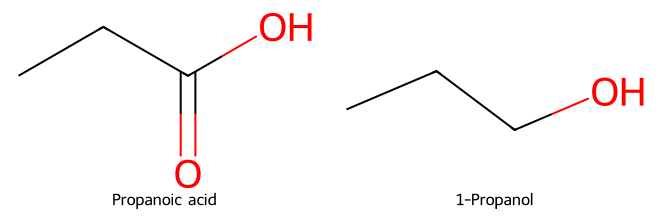
g. Fischer esterification
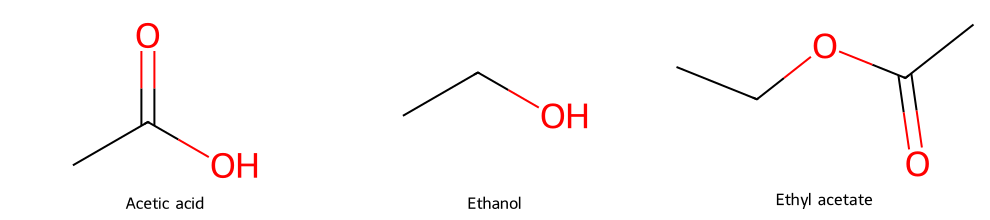
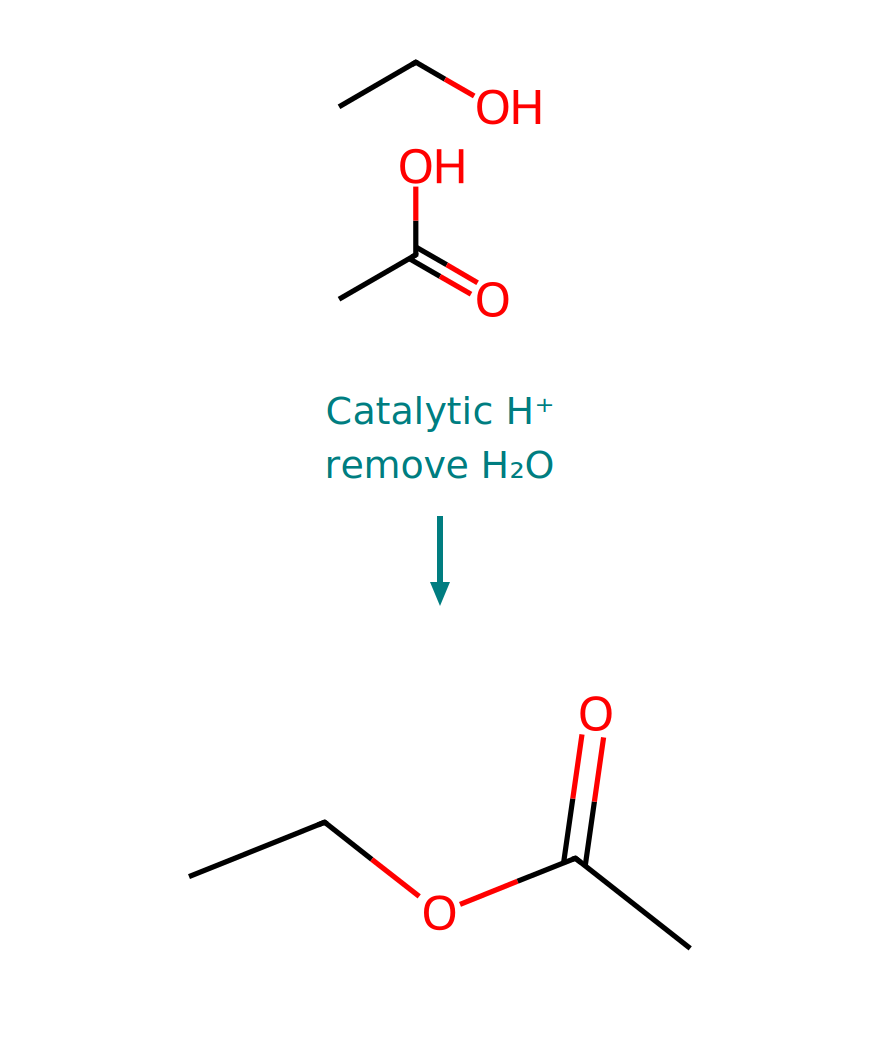
- An acid and alcohol form an ester and water under acid catalysis. Each mechanistic step is reversible; excess alcohol or water removal can favor ester.
- The acid carbonyl oxygen is activated by protonation, alcohol adds, proton transfers prepare water departure, and loss of water restores the carbonyl.
- The alcohol supplies the ester alkoxy oxygen, while the carboxylic acid supplies the acyl carbon skeleton.
h. Activated derivatives
- An acid chloride can give an anhydride, ester or amide with an appropriate nucleophile. A carboxylic acid can be converted to an acid chloride using SOCl₂ or related activating reagents.
- Directly converting a less reactive derivative into a more reactive one usually requires activation rather than simple nucleophile exchange.

i. Ester and amide hydrolysis
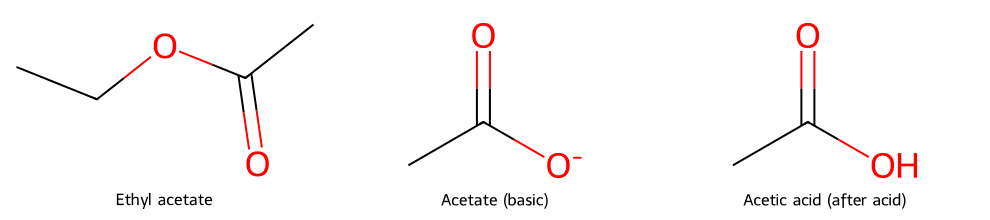
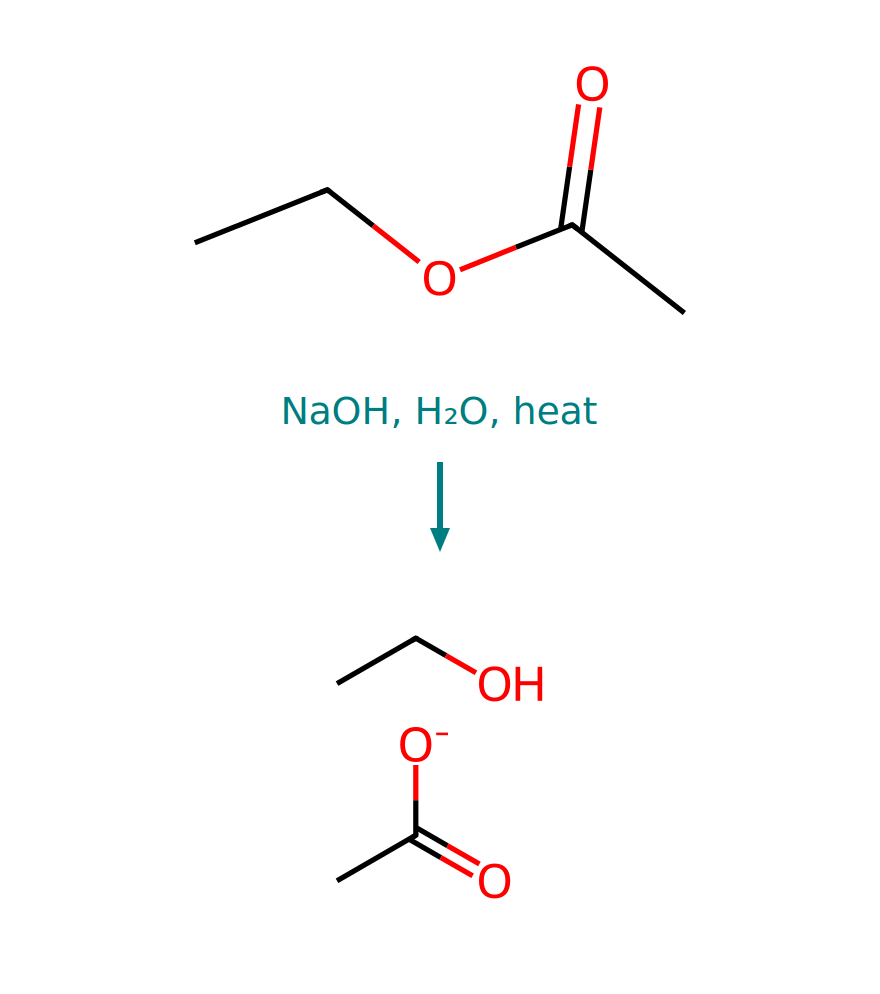
- Acidic ester hydrolysis is reversible. Basic ester hydrolysis gives carboxylate plus alcohol; formation of carboxylate helps drive saponification.
- Amide hydrolysis generally requires stronger acid/base conditions and heat. Acidic workup gives the acid after basic hydrolysis. Transesterification exchanges OR groups under suitable catalysis and equilibrium control.
j. Hydride products
- LiAlH₄ reduces carboxylic acids and esters to primary alcohols; the alcohol-derived portion of an ester is also released after workup. Amides reduce to amines.
- Selected bulky hydrides can stop acid chloride reduction at an aldehyde; controlled DIBAL conditions can convert suitable esters or nitriles to aldehydes after workup. The exact conditions matter.
- Beta-keto acids can decarboxylate readily on heating.
k. Carbon–carbon formation
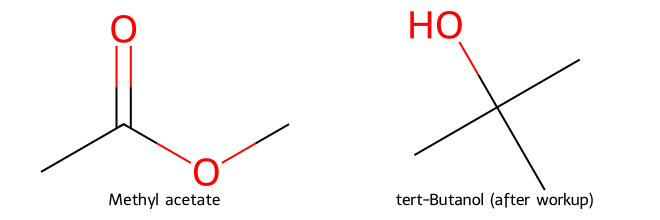
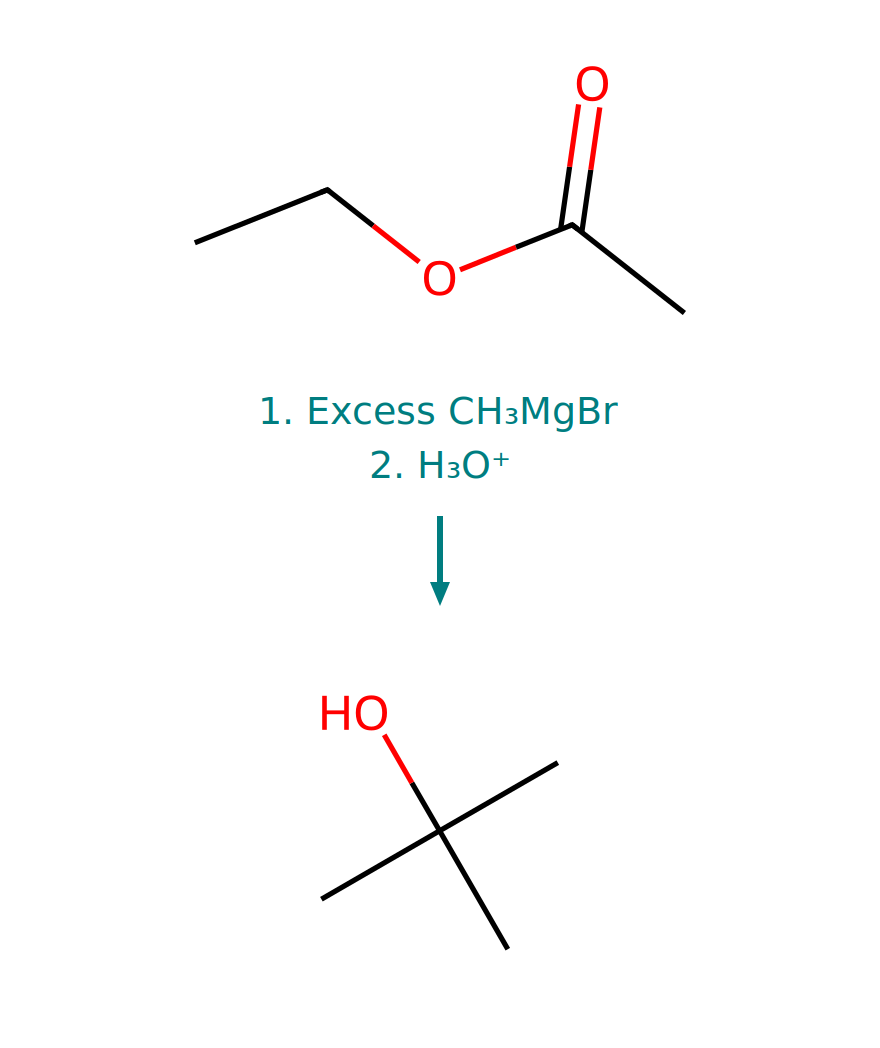
- Esters and acid chlorides commonly react twice with excess Grignard reagent: initial acyl substitution gives a ketone, followed by a second addition to give a tertiary alcohol after workup.
- An organocuprate can convert an acid chloride to a ketone without the usual second addition. Carboxylic acids consume strongly basic organometallic reagents by proton transfer first.
- For an ester, LiAlH₄ gives an alcohol from the acyl portion and releases the alkoxy-derived alcohol after workup. The ketone formed after the first Grignard addition is generally more reactive than the starting ester.
l. Intramolecular acyl substitution
- A hydroxy acid can form a lactone and an amino acid derivative can form a lactam when ring size and conditions permit. Five- and six-membered products are often favorable.
- Ring formation remains an equilibrium and reactivity problem; not every chain cyclizes efficiently. Distinguish carbonyl addition from acyl substitution by whether the final C=O remains.
D. Nitrile Chemistry
1. Hydrolysis, reduction and carbon count
a. Nitrile structure, SN2 homologation and carbon count
- Nitriles contain a C≡N functional group with a linear sp-hybridized carbon.
- A primary alkyl halide can react with cyanide by an SN2 pathway to form a nitrile with one additional carbon.
- Cyanide-related transformations require particularly careful chemical safety controls.
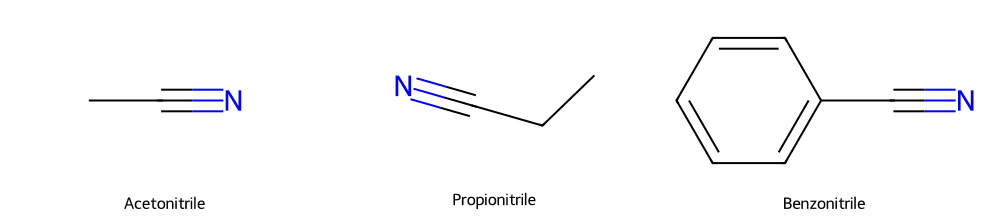
- SN2 substitution with CN⁻ adds one carbon to the alkyl chain; subsequent acidic or basic nitrile hydrolysis gives the carboxylic acid after the appropriate workup.
b. Nitrile chemistry
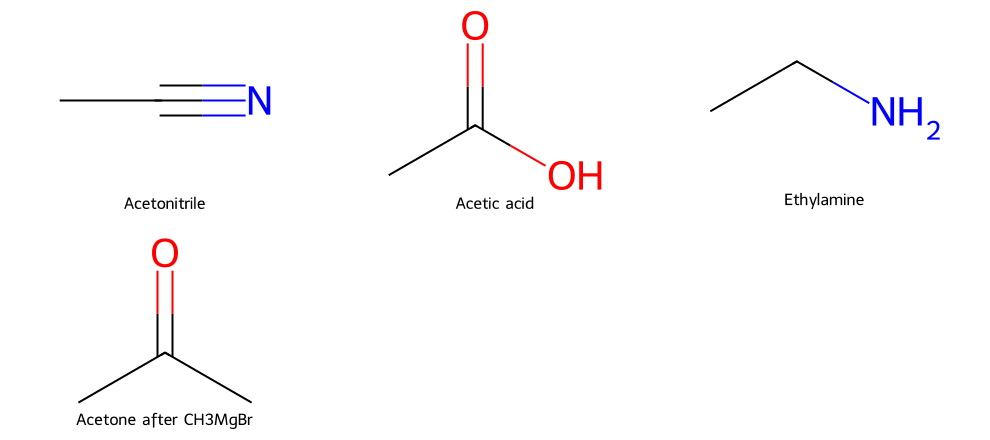
- A nitrile contains C≡N. Hydrolysis gives a carboxylic acid; strong hydride reduction gives a primary amine.
- Grignard addition to a nitrile forms an imine-derived intermediate; hydrolysis produces a ketone. A methyl/primary halide can undergo SN2 with cyanide to extend its carbon skeleton.
E. Claisen Condensation
1. Ester enolates, condensation and decarboxylation
a. Mechanism and product
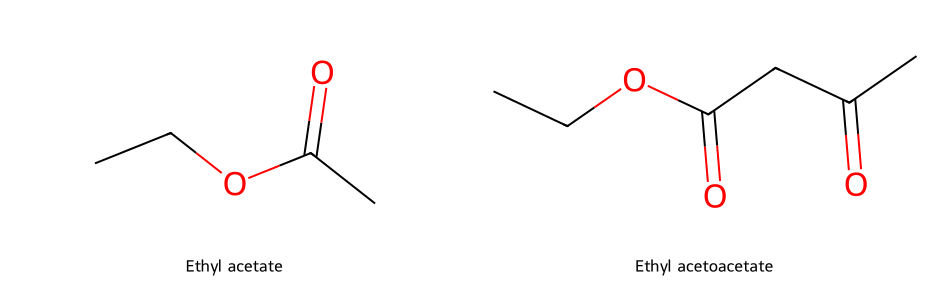
- An ester enolate attacks another ester, then alkoxide elimination restores the carbonyl and yields a β-keto ester framework.
- For the usual self-Claisen process, deprotonation of the β-dicarbonyl product helps drive the equilibrium; acidic workup gives the neutral product.
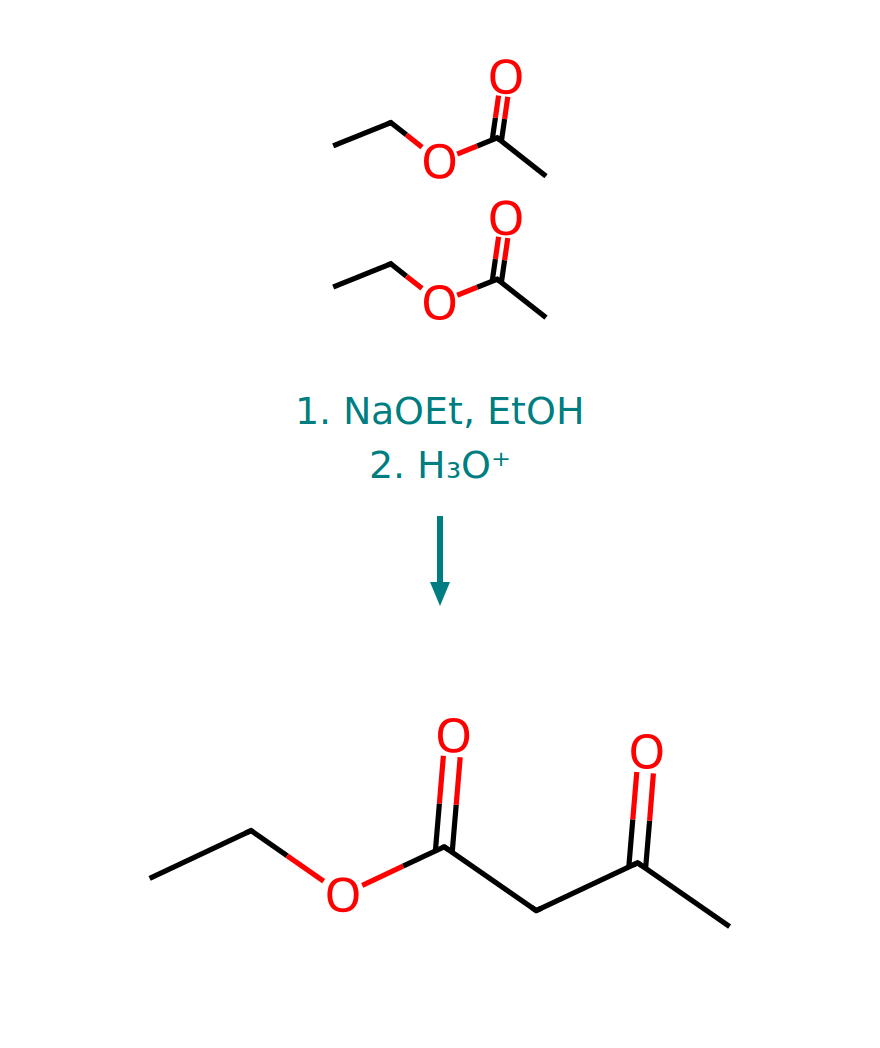
- A matching alkoxide helps avoid transesterification, and suitable α-hydrogens are required for the usual equilibrium-driven process.
b. Matching conditions
- Use an alkoxide base matching the ester OR group to reduce unwanted transesterification. A typical ester donor needs two α-H atoms for the usual driven condensation.
- Crossed Claisen selectivity is improved when the electrophilic ester has no α-H. Intramolecular Claisen condensation is the Dieckmann reaction.
| Reaction | Electrophile | Main initial product |
|---|---|---|
| Aldol addition | Aldehyde/ketone | β-Hydroxy carbonyl |
| Aldol condensation | Aldehyde/ketone | α,β-Unsaturated carbonyl |
| Claisen | Ester | β-Keto ester |
- In crossed reactions, identify the enolate donor and ester electrophile; when both partners can enolize, a single clean product should not be assumed.
c. Comparing alpha substitution, aldol and Claisen carbon accounting
- Alpha substitution retains the original carbonyl group while replacing an alpha substituent.
- An aldol coupling joins the carbon skeletons of two carbonyl partners; for example, two C2 units give a C4 aldol product.
- Claisen condensation of suitable esters also creates a C–C bond, whereas subsequent hydrolysis or decarboxylation can change the product carbon count.

| Reaction | Typical change | Product |
|---|---|---|
| Alpha halogenation | Alpha C–H → C–X | Alpha-halo carbonyl |
| Enolate alkylation | Alpha C–H → C–C bond | Alpha-alkyl carbonyl |
| Aldol addition | Two carbonyl partners join | Beta-hydroxy carbonyl |
| Aldol condensation | Aldol product loses water | Alpha,beta-unsaturated carbonyl |
| Claisen condensation | Ester enolate acylation | Beta-keto ester |
| Species | Nucleophilic site | Typical role |
|---|---|---|
| Enol | Alpha carbon of C=C–OH | Electrophilic substitution |
| Enolate | Alpha carbon / oxygen (ambident) | C–C formation; O-protonation |
| Aldehyde or ketone | Carbonyl carbon (electrophilic) | Aldol acceptor |
| Ester | Carbonyl carbon with leaving group | Acyl substitution |
- The following comparisons connect CH 8 enolate/aldol chemistry with the ester acyl-substitution chemistry developed here. They compare different transformations; the same mechanism should not be assigned to every row.
d. Malonic ester synthesis
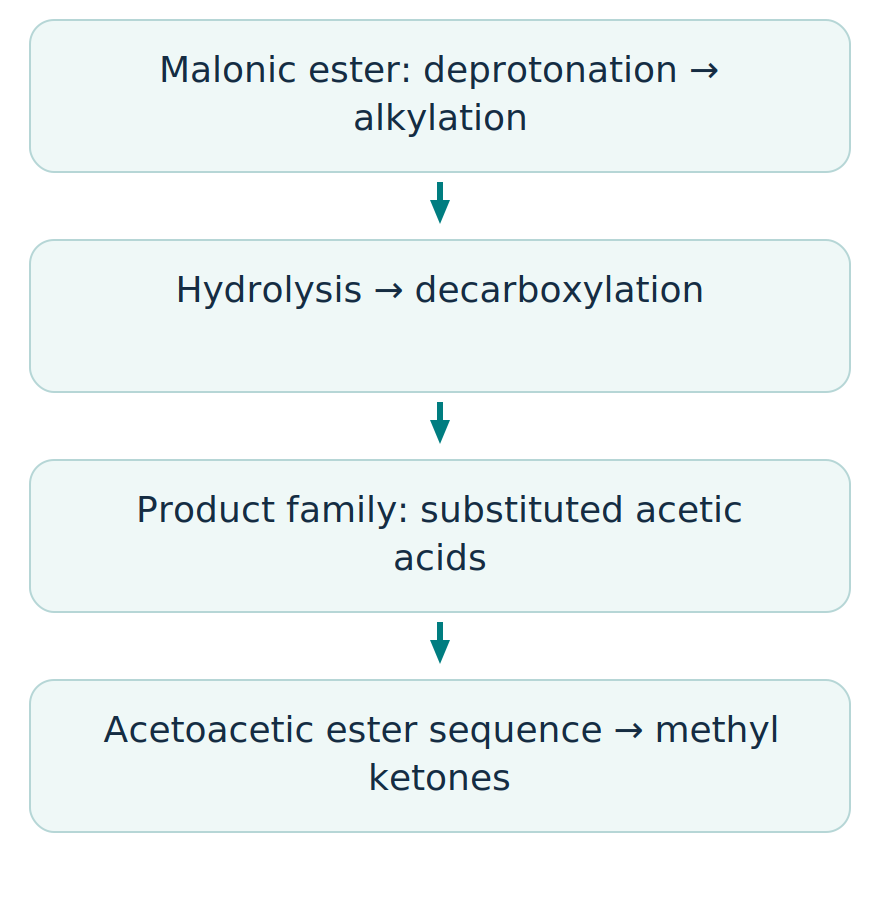
- Deprotonate malonic ester, alkylate with a suitable SN2 electrophile, hydrolyze the esters, then heat to decarboxylate.
- The sequence provides substituted acetic-acid derivatives. Count the retained carbonyl carbon and the carbon lost as CO₂ separately.

e. Acetoacetic ester synthesis
- Alkylation of a β-keto ester followed by hydrolysis and decarboxylation gives a substituted methyl ketone.
- Suitable substrates may undergo more than one alkylation before hydrolysis. Ring synthesis requires appropriate chain length and leaving-group placement.