
CH 10. Amines, Spectroscopy & Structure Determination
A. Amines and Nitrogen Compounds
1. Classification, geometry and nitrogen reactions
a. Amine classification and ammonium ions
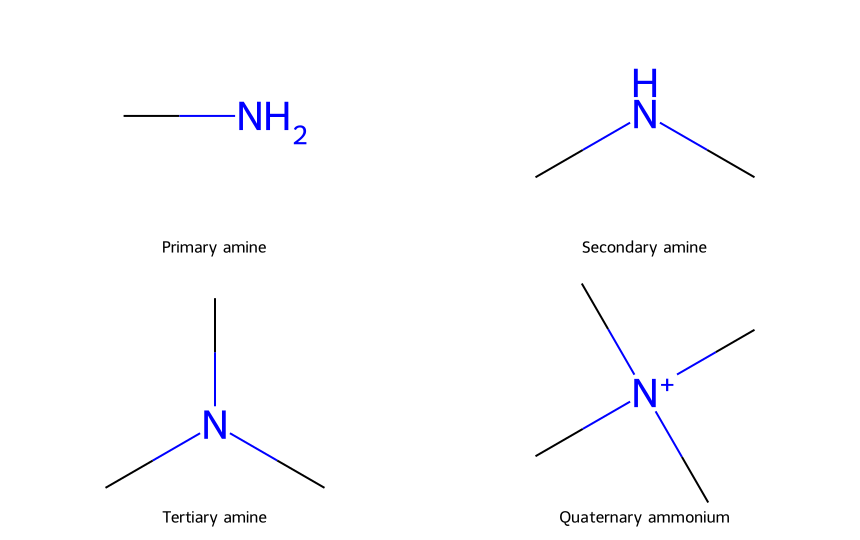
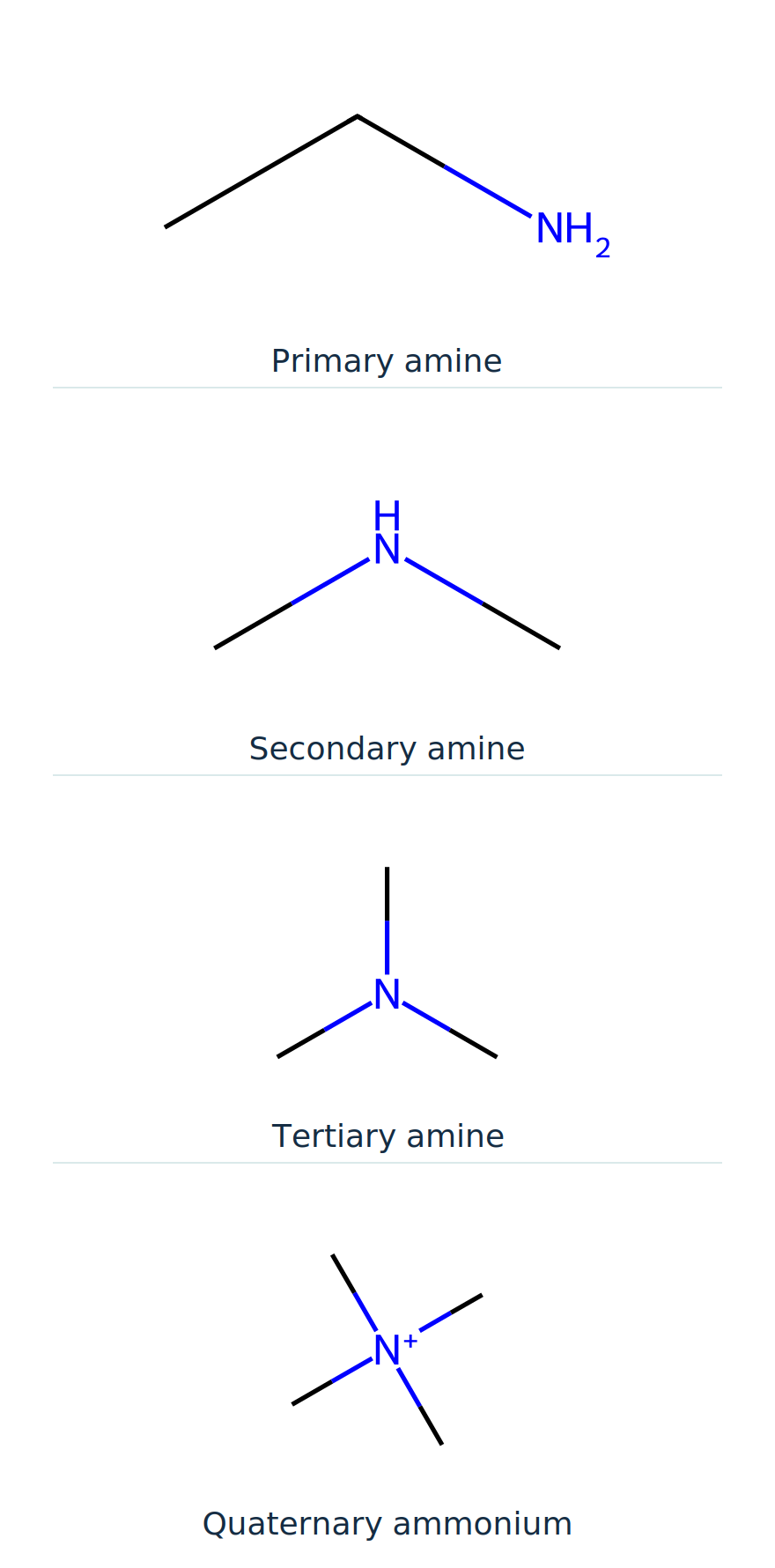
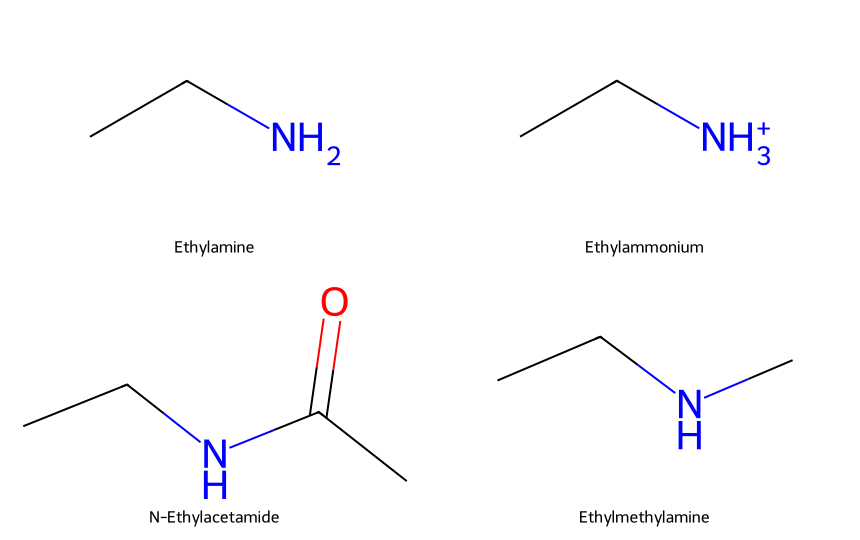
- Primary, secondary and tertiary amines have one, two or three carbon substituents on nitrogen: R–NH₂, R₂NH and R₃N. Their N–H counts are two, one and zero, respectively.
- A quaternary ammonium ion has four N–C bonds and a permanent positive charge (R₄N⁺). Amine classification counts carbon groups on nitrogen, unlike alcohol classification, which describes the carbon bearing OH.
b. Nitrogen geometry, inversion and amide conjugation
- An ordinary neutral amine usually has three σ bonds and one lone pair at a roughly trigonal-pyramidal nitrogen. The lone pair permits Lewis basicity and protonation.
- Rapid nitrogen inversion commonly interconverts pyramidal configurations. Ordinary amines with three different nitrogen substituents are therefore generally not configurationally stable at room temperature, and chirality at that nitrogen alone often does not permit isolation of enantiomers.
- An amide differs: conjugation of the nitrogen lone pair with C=O favors a more planar, less basic nitrogen environment.

c. Systematic naming
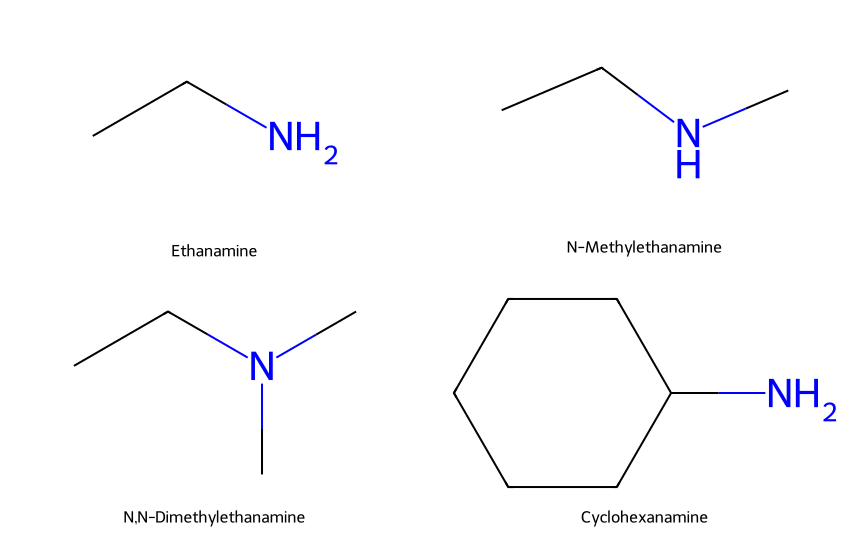
- For primary amines, replace the terminal -e of a parent alkane with -amine and specify its position when needed.
- When the nitrogen bears additional alkyl groups, identify those substituents with N- and N,N- prefixes.
- When an amine is not the highest-priority group, the prefix amino- can be used.
- Common names such as methylamine and aniline remain widely used.
d. Aromatic and heterocyclic amines
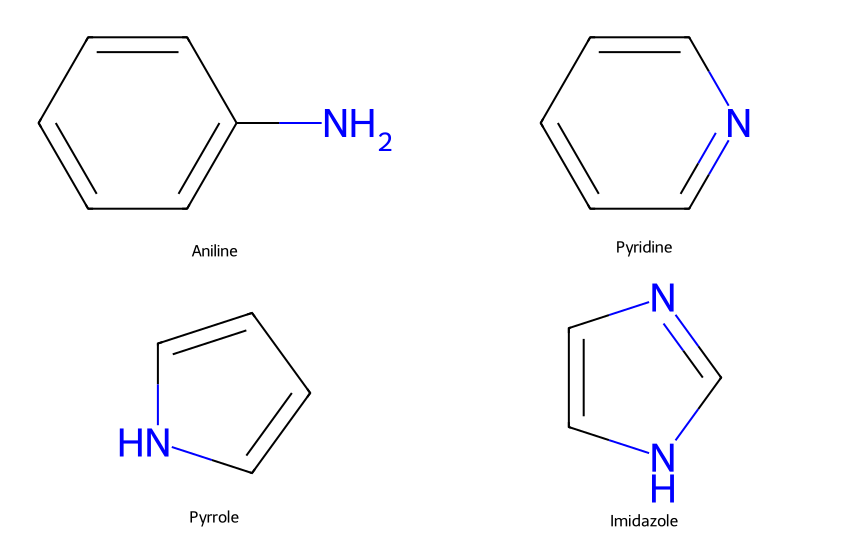
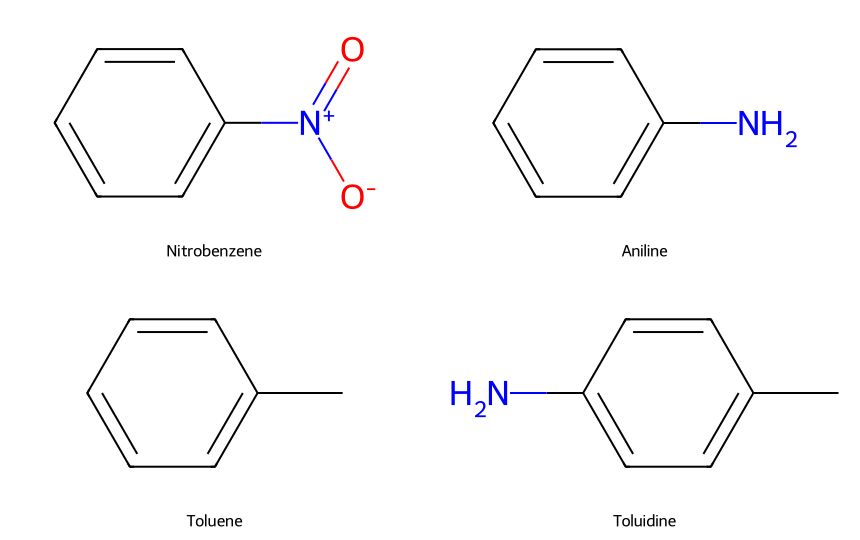
- Aniline (benzenamine) has an –NH₂ group directly attached to a benzene ring.
- Pyridine is a six-membered aromatic ring with a nitrogen lone pair outside the aromatic π system.
- Pyrrole has a nitrogen lone pair contributing to aromaticity; it is therefore much less basic than a typical aliphatic amine.
- Other nitrogen heterocycles, such as imidazole, contain nitrogen atoms with different electronic roles.
e. Hydrogen bonding and solubility
- Primary and secondary amines can donate and accept hydrogen bonds; tertiary amines can accept hydrogen bonds but lack N–H bonds to donate.
- Small amines are commonly miscible or substantially soluble in water, whereas solubility decreases as nonpolar carbon content increases.
- Amines generally boil at higher temperatures than comparable nonpolar hydrocarbons, but N–H hydrogen bonding is weaker than O–H hydrogen bonding in corresponding alcohols.
f. Acylation
- Primary and secondary amines can undergo nucleophilic acyl substitution with reactive carboxylic acid derivatives to form amides.
- For example, CH₃COCl + CH₃CH₂NH₂ → CH₃CONHCH₂CH₃, with the liberated HCl typically neutralized by base or excess amine.
- Tertiary amines lack an N–H proton and cannot directly give a neutral N-acylated amide through this simple route.

g. Imine formation
- A primary amine and an aldehyde or ketone can form an imine with loss of water under suitable acid-catalyzed conditions.
- A secondary amine reacts differently because it lacks a second N–H bond; when an α-hydrogen is available, an enamine may form instead.
- These carbonyl–amine transformations are equilibria and are sensitive to water and pH.

h. Salt formation and alkylation
- Treatment with acid produces ammonium salts; treatment of suitable salts with base can recover the neutral amine.
- Alkylation forms additional C–N bonds, but may yield mixtures because the product amine can be alkylated again.
i. Aniline and related compounds
- Aniline’s nitrogen lone pair interacts with the benzene π system, affecting both basicity and electrophilic aromatic substitution.
- Reduction of an aromatic nitro group can furnish an aromatic amine under suitable conditions.
- In electrophilic aromatic substitution, a free amino group is usually strongly activating and directs substitution toward ortho and para positions, although strongly acidic conditions can protonate it and change its directing behavior.
j. Structure and reactivity
| Group | Formula | Property |
|---|---|---|
| Primary amine | RNH₂ | Free nitrogen lone pair; readily protonated |
| Secondary amine | R₂NH | N–H present; acylation gives tertiary amides |
| Tertiary amine | R₃N | No N–H bond; readily forms ammonium salts |
| Quaternary ammonium | R₄N⁺ | Permanent cation; no neutral nitrogen lone pair |
| Amide | RC(O)NR₂ | Nitrogen lone pair delocalized into C=O |
| Nitrile | RC≡N | sp-hybridized nitrile nitrogen |
| Pyridine | C₅H₅N | Basic lone pair outside aromatic π system |
| Pyrrole | C₄H₅N | Lone pair contributes to aromaticity |
k. Hofmann elimination
- Exhaustive alkylation can produce a quaternary ammonium salt. Suitable hydroxide/heat conditions allow β-elimination with a neutral tertiary amine as leaving group.
- The less substituted alkene is often favored, but accessible geometry and substrate structure still matter.
l. Cope elimination
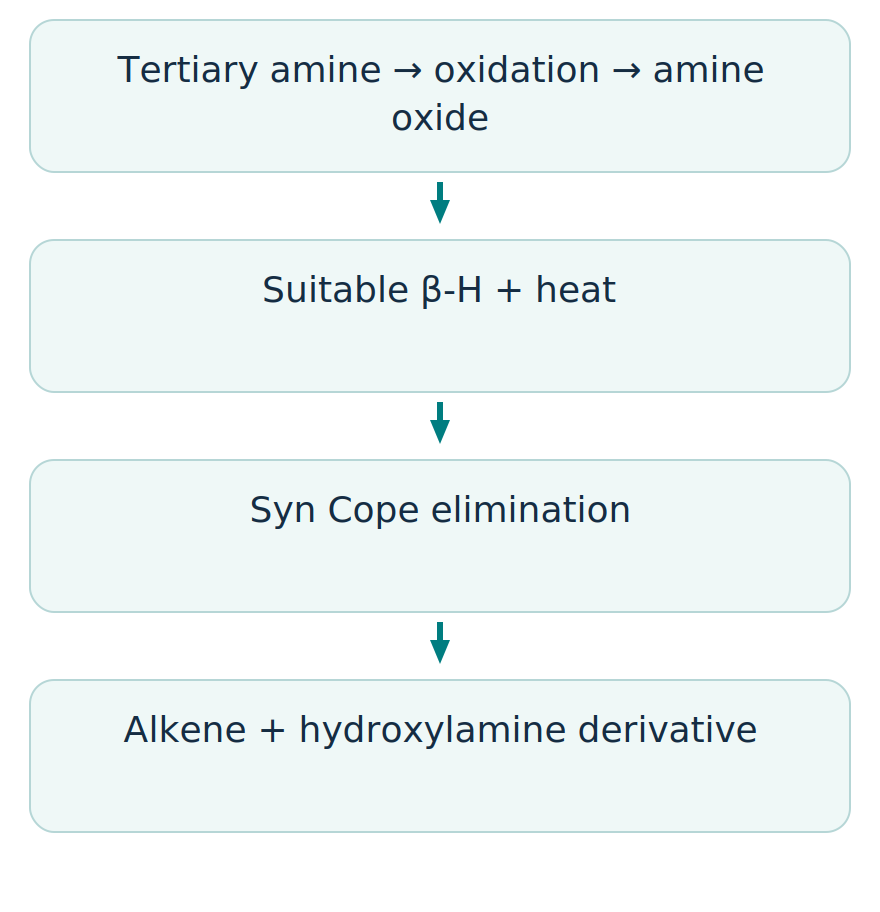
- Oxidation of a tertiary amine gives an amine oxide that can undergo thermal syn elimination when a suitable β-H is available.
- Do not assign the anti-periplanar E2 requirement of an ordinary alkyl-halide reaction to a Cope elimination; the cyclic syn geometry is different.
| Reaction | Nitrogen precursor | Characteristic |
|---|---|---|
| Hofmann | Quaternary ammonium | Often less substituted alkene |
| Cope | Amine oxide | Syn elimination |
m. Diazotization
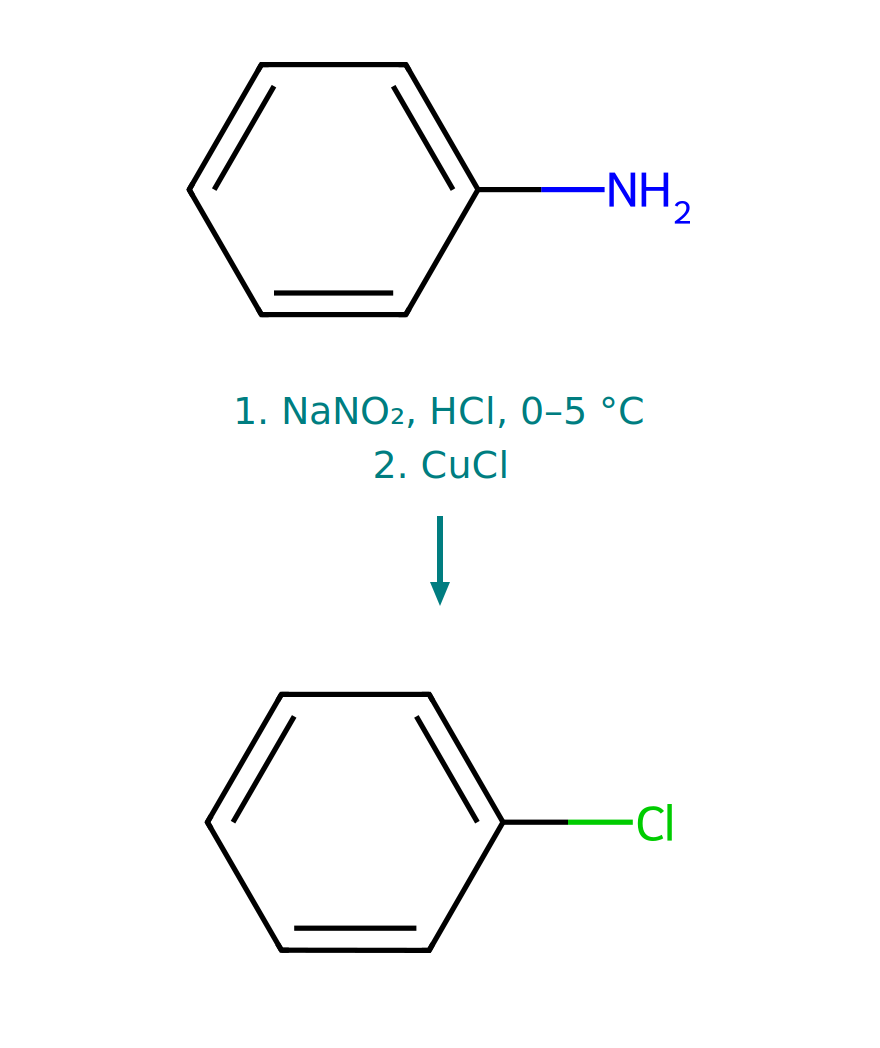
- A primary arylamine reacts with nitrous acid generated from nitrite and strong acid at low temperature to form an arenediazonium salt.
- Aliphatic diazonium species are generally much less stable and should not be treated as equivalent isolable synthetic intermediates.
n. Replacement and coupling
- Suitable diazonium transformations replace the diazonium group with Cl, Br, CN, I, OH or H, depending on reagents. Loss of N₂ is an important driving force.
- Arenediazonium ions can couple with strongly activated aromatic rings to give azo compounds. Control activation and pH when applying this chemistry.
o. Amino-acid, peptide and carbohydrate context
- Classify amino-acid ionic forms and peptide linkage; carbohydrate anomer, mutarotation, reducing vs nonreducing sugars.
- Relate amino-acid ionic forms to pH and pKa (CH 2), peptide bonds to amide chemistry (CH 9), and reducing-sugar behavior to carbonyl chemistry (CH 8). This retained source scope is introductory rather than a complete biomolecule chapter.
- Retained source coverage includes amino acids, carbohydrate reducing behavior and peptide linkages; these subjects are introductory and remain a scope check for the next review.
- For an α-amino acid with a primary amino group, H₃N⁺–CH(R)–COO⁻ is a zwitterionic form. Protonation depends on pH relative to each group’s pKa; ionizable side chains contribute separately to the net charge. A zwitterion contains opposite formal charges within the same molecule.
- A peptide bond is the amide C(=O)–N linkage between one amino-acid residue’s carboxyl carbon and another residue’s nitrogen. Resonance gives this C–N bond partial double-bond character, restricts rotation, and makes the peptide group approximately planar; its nitrogen is much less basic than a free amine.
- Read a linear peptide sequence from the N terminus to the C terminus. Hydrolysis cleaves peptide C(=O)–N bonds; the resulting protonation states and the reaction rate depend on the conditions. A peptide linkage is distinct from a disulfide bond between sulfur-containing side chains.
- A cyclic aldose contains a hemiacetal, and a cyclic ketose contains a hemiketal. The former carbonyl carbon becomes the anomeric center; anomers differ in configuration only at that center. α and β are relative configurations, not synonyms for R/S or positive/negative optical rotation. In a conventional Haworth drawing of a D-aldohexopyranose, the anomeric substituent is trans to the reference CH₂OH group in the α anomer and cis in the β anomer.
- Mutarotation is a change in optical rotation as anomer proportions approach equilibrium. A free cyclic hemiacetal or hemiketal can open to the carbonyl form and reclose to either anomer. An intact glycosidic acetal or ketal does not undergo this ring-opening equilibrium in neutral water; hydrolysis requires suitable conditions.
- A reducing sugar can reduce a suitable oxidant under the test conditions. A free anomeric hemiacetal can expose an aldehyde by ring opening; some ketoses also give positive alkaline Tollens or Benedict tests after tautomerization to aldoses. If every anomeric center is locked as a glycosidic acetal or ketal, the intact sugar is generally nonreducing in those tests. Hydrolysis can change this classification.
- This subsection provides introductory chemical principles. Specific carbohydrate and peptide structures are not supplied, so molecule-specific anomer, reaction-pathway, reducing-sugar, and peptide structural assignments require the actual structures and conditions.
B. Amine Synthesis and Basicity
1. Basicity, preparation and ionization
a. Protonation equilibrium
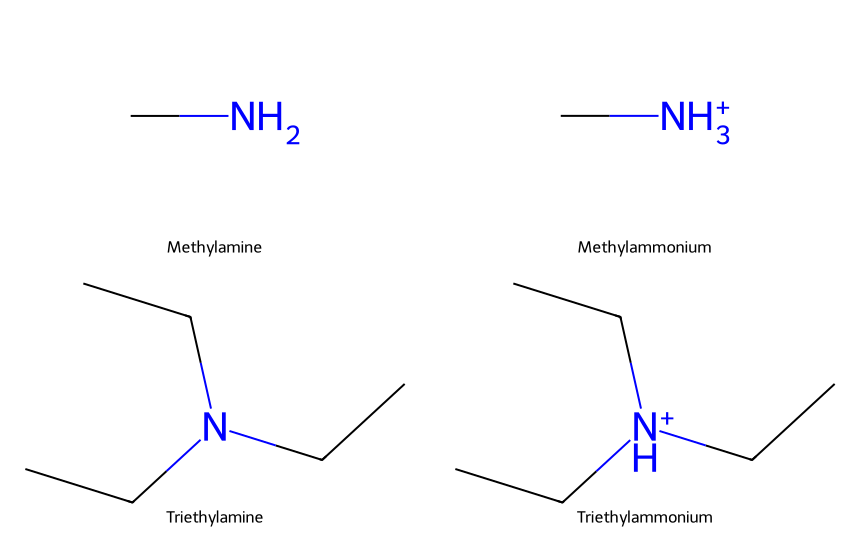
- An amine accepts a proton to form its conjugate acid: RNH₂ + H₃O⁺ ⇌ RNH₃⁺ + H₂O.
- For B + H₂O ⇌ BH⁺ + OH⁻, the equilibrium constant is Kb = [BH⁺][OH⁻]/[B]; pKb = −log Kb.
- A stronger base has a larger Kb and a smaller pKb under comparable conditions.
- The conjugate acid pKa is often more intuitive for comparison: a larger pKa(BH⁺) generally indicates a stronger parent base B in the same solvent.
b. Resonance and electronic effects
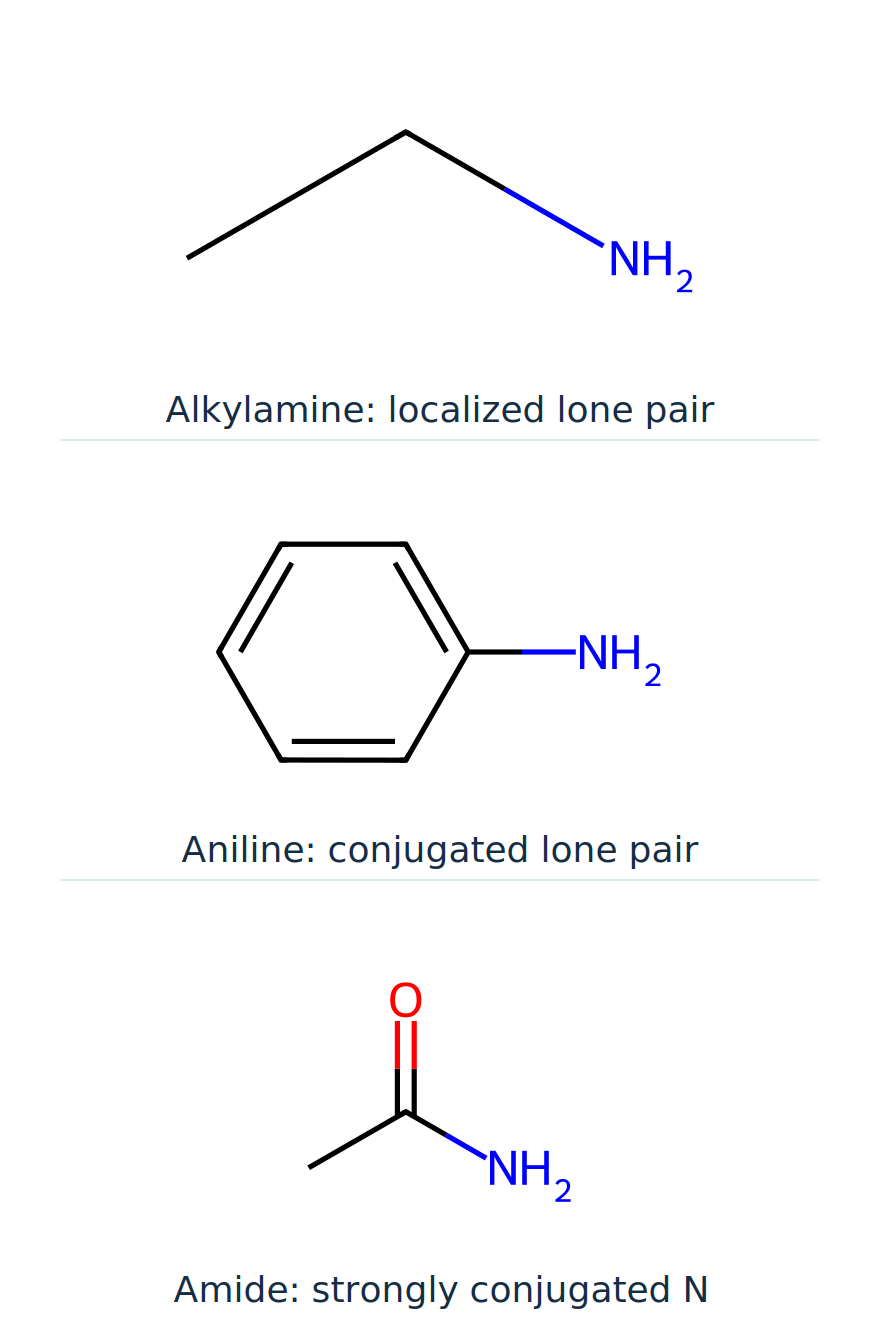
- Aliphatic amines are generally more basic than aniline in water, because the lone pair of aniline is delocalized into its aromatic ring.
- An amide is substantially less basic at nitrogen than an ordinary amine; its nitrogen lone pair is delocalized toward the carbonyl group.
- Basicity also depends on inductive effects, solvation, steric hindrance, and solvent, so the exact ordering of primary, secondary, and tertiary alkylamines is not universal.
- Pyridine readily protonates at its ring nitrogen; the pyrrole lone pair participates in aromaticity and is much less available for protonation.
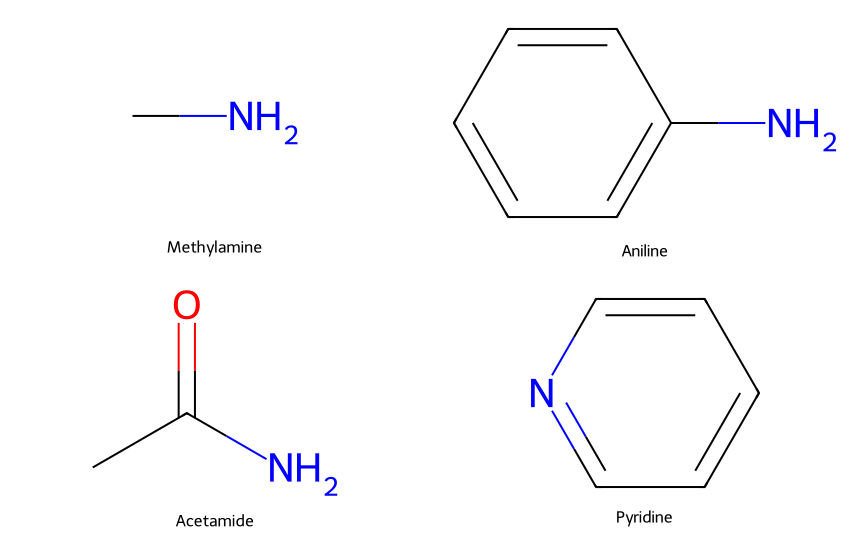
| Nitrogen type | Lone-pair relationship |
|---|---|
| Alkylamine | Usually available for basicity |
| Aniline | Delocalized into aromatic ring |
| Amide | Delocalized into carbonyl |
| Pyrrole | Part of aromatic sextet |
c. Acid–base extraction
- Acid converts a neutral amine to a water-soluble ammonium salt when conditions permit: R₃N + HCl → [R₃NH]⁺Cl⁻.
- After separating the aqueous salt from neutral organic material, a sufficiently strong base regenerates the uncharged amine.
- This reversible change in charge and solubility provides a useful separation method.
d. Nitrile reduction
- Reduction of a nitrile provides a primary amine: R–C≡N → R–CH₂NH₂.
- LiAlH₄ followed by aqueous workup or appropriate catalytic hydrogenation may accomplish this conversion.
- If a nitrile is made by SN2 substitution of a primary alkyl halide with CN⁻, the overall sequence introduces one additional carbon before reduction.
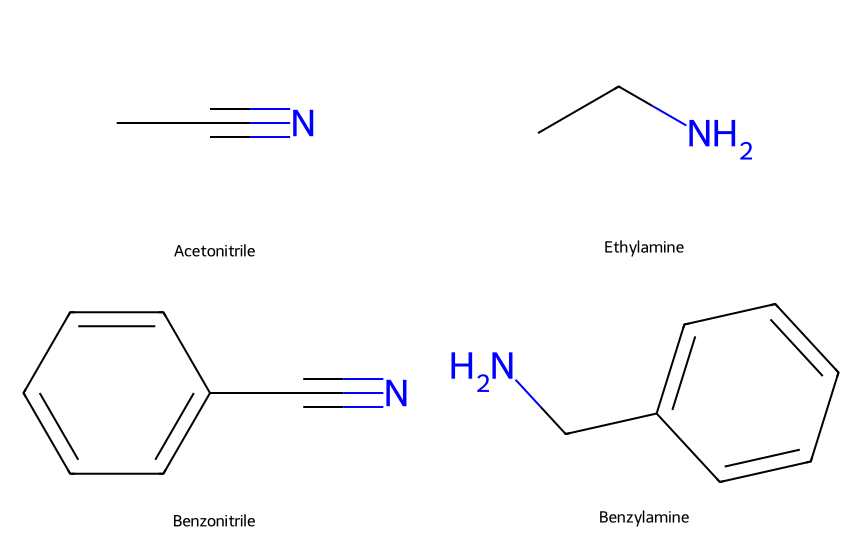
- Nitro-group reduction provides another amine route; amide reduction retains the C–N bond while converting C=O into CH₂.
e. Amide reduction
- LiAlH₄ can reduce an amide carbonyl to a methylene group while retaining the C–N connection: R–C(O)–NR′R″ → R–CH₂–NR′R″.
- This reaction differs from simple hydrolysis, which breaks an amide bond.
- The substituents originally attached to nitrogen remain attached in the reduced amine.
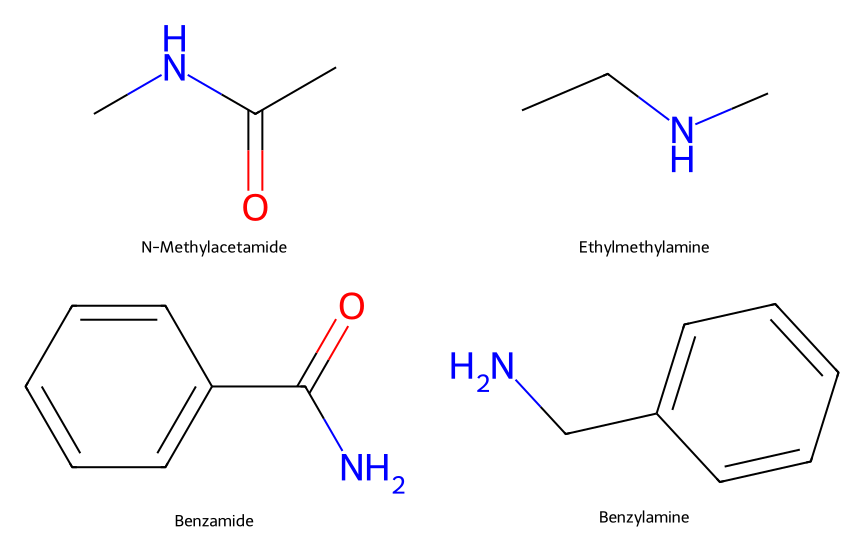
f. Alkylation of ammonia and amines
- An amine can attack an unhindered alkyl halide through SN2 substitution, introducing a new N–C bond.
- Repeated alkylation can continue to secondary and tertiary amines and eventually a quaternary ammonium salt.
- Because overalkylation is possible, direct alkylation is not always a selective preparation of a primary amine.
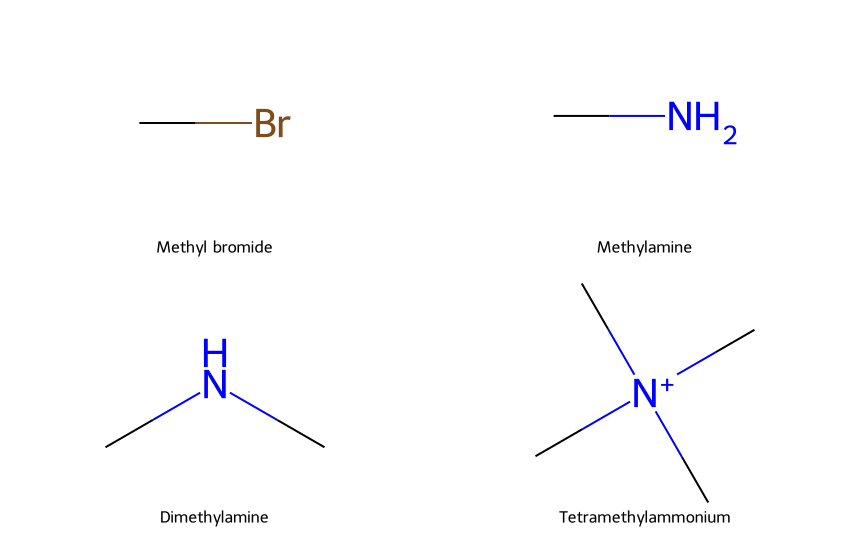
- Ammonia can also act as the nucleophile. Aryl and vinyl halides are not ordinary SN2 partners, and strongly hindered electrophiles may favor elimination.
g. Azide route
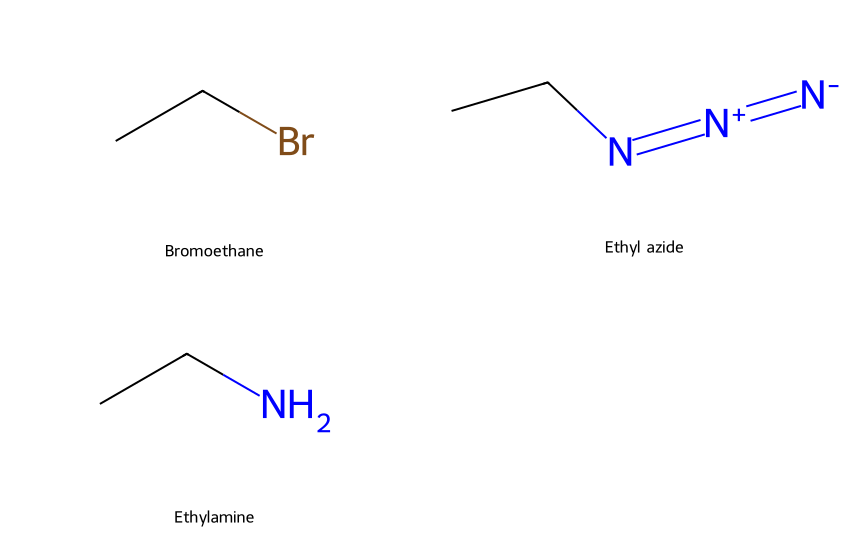
- Azide ion (N₃⁻) can replace a suitable leaving group by SN2, giving an organic azide.
- Reduction of the organic azide yields a primary amine while avoiding the successive alkylation of an amine nucleophile.
- Organic azides require appropriate safety controls; this Summary treats the transformation conceptually.
h. Reductive amination
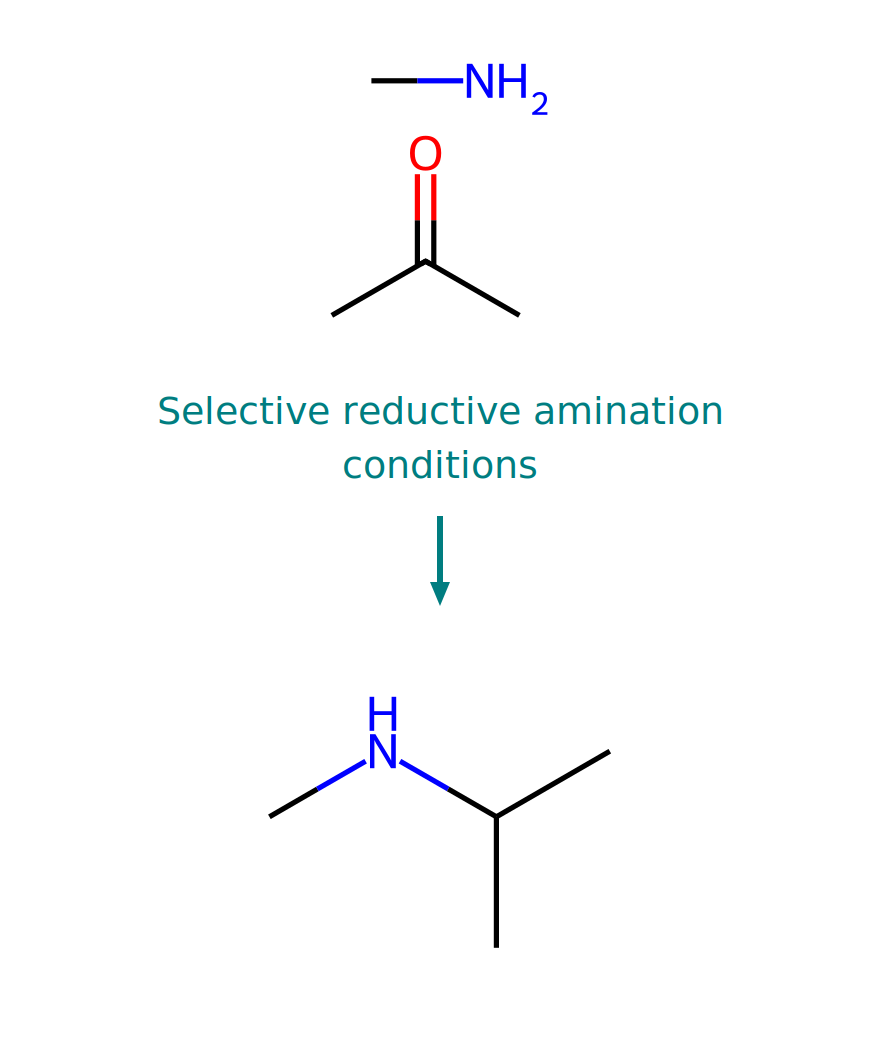
- An aldehyde or ketone reacts with ammonia or an amine to form an imine or iminium intermediate under suitable conditions.
- Subsequent reduction of that intermediate generates an amine with a newly formed C–N bond.
- The final amine substitution pattern depends on whether ammonia, a primary amine, or a secondary amine is used.
- The reaction is distinct from direct hydride reduction of a carbonyl, which gives an alcohol.
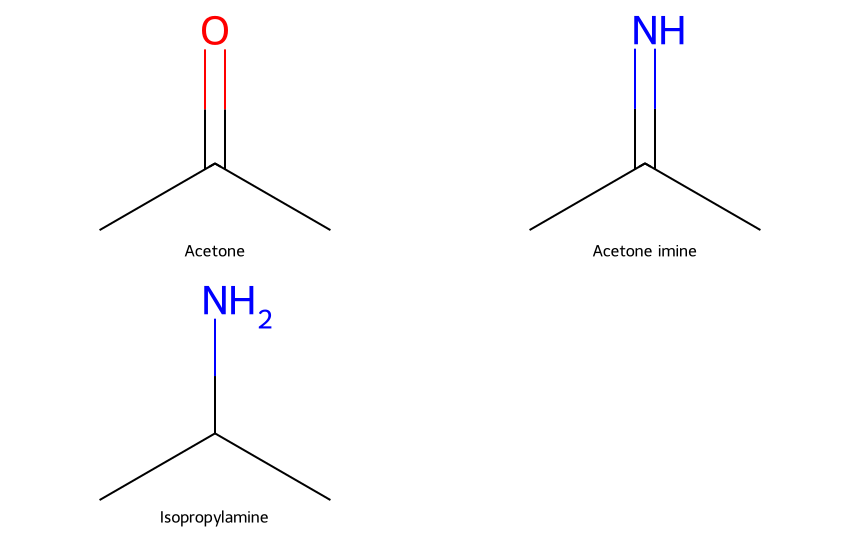
- Ammonia can give a primary amine, a primary amine a secondary amine, and a secondary amine a tertiary amine. Select conditions that reduce the imine/iminium intermediate rather than simply reducing the starting carbonyl to an alcohol.
i. Gabriel route
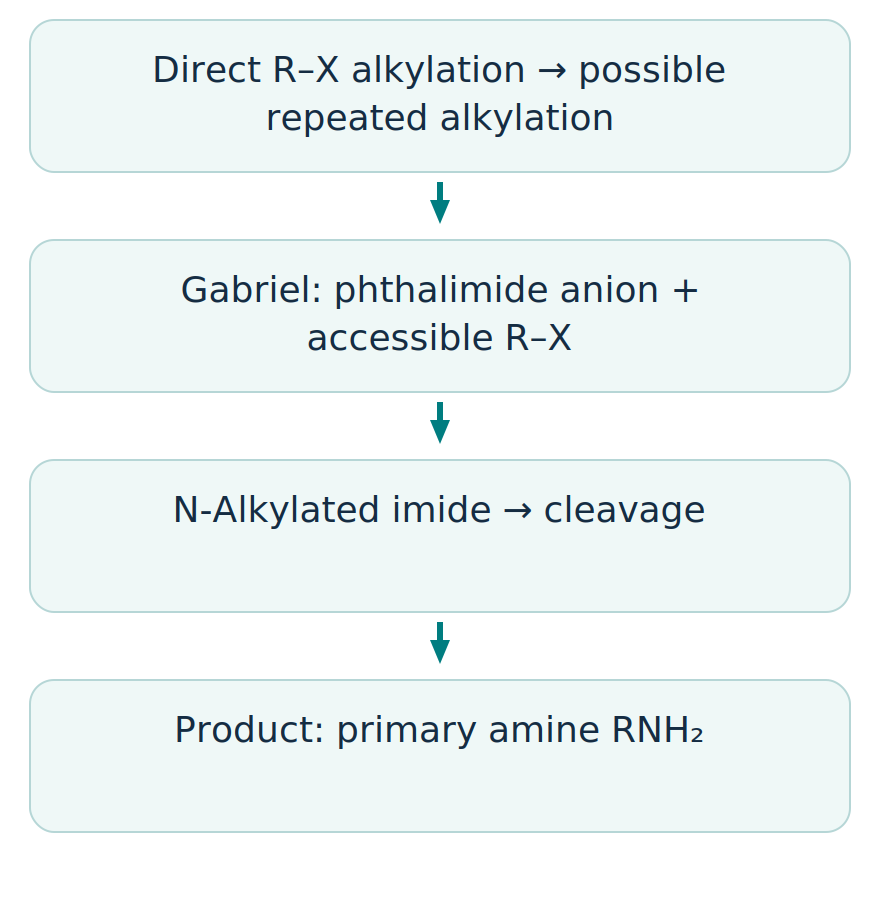
- A phthalimide anion alkylates a suitable methyl/primary electrophile; cleavage releases a primary amine.
- The route avoids ordinary repeated alkylation at the final amine but has substrate limitations and does not provide a general SN2 route to arylamines.
C. IR, UV–Vis and Mass Spectrometry
1. Vibrational, electronic and mass evidence
a. Mass-to-charge separation and molecular ions
- A mass spectrometer separates ions according to mass-to-charge ratio (m/z).
- Electron ionization can form a molecular radical cation, M⁺•, and smaller fragment ions.
- The molecular-ion peak can reveal molecular mass, but it may be weak or absent for unstable ions.


b. Interpreting peaks
- The base peak is the most intense ion signal and is assigned 100% relative abundance.
- A fragment peak identifies an ion, not necessarily an isolated neutral fragment.
- The nominal molecular mass and plausible fragmentation patterns help constrain candidate formulas.
c. Characteristic isotope distributions
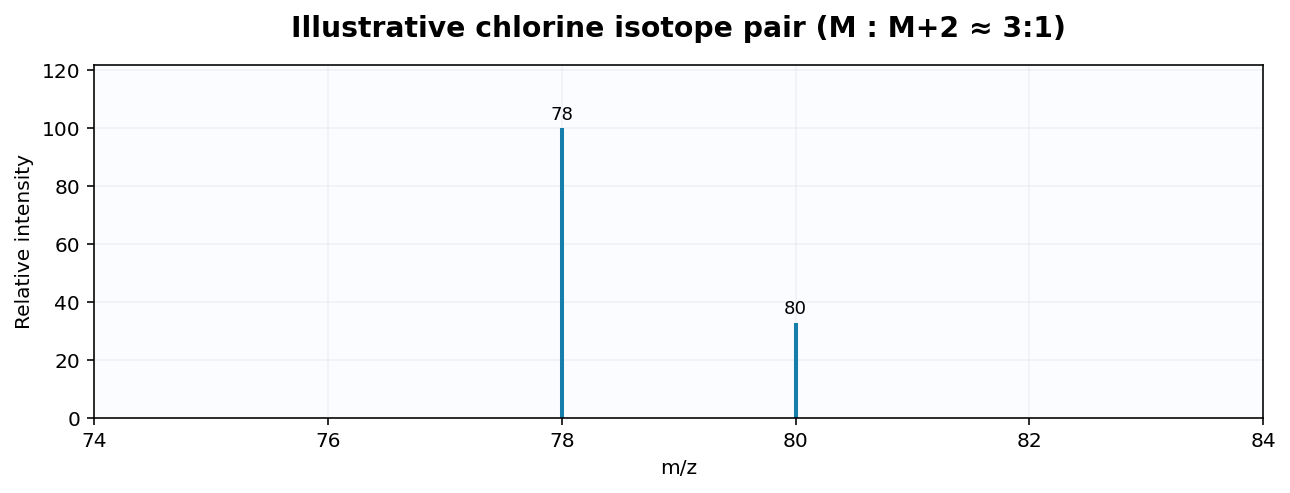
- A single chlorine atom commonly produces M and M+2 signals with an approximate 3:1 ratio.
- A single bromine atom commonly produces an approximate 1:1 M:M+2 pattern.
- The isotope pattern depends on elemental composition, charge state, and ion species.
d. Absorption of infrared radiation
- IR absorption occurs when a vibration changes the molecular dipole moment.
- Peak position is reported as wavenumber in cm⁻¹.
- The functional-group region is approximately 4000–1500 cm⁻¹; the fingerprint region is below approximately 1500 cm⁻¹.
- IR excites molecular stretching and bending vibrations. Wavenumber increases with photon energy; within comparable bond families, stronger bonds and lighter atoms often give higher stretching frequencies.
- The fingerprint region supports spectral comparison but rarely provides a unique standalone structure assignment.
e. O–H, N–H, and C–H stretching
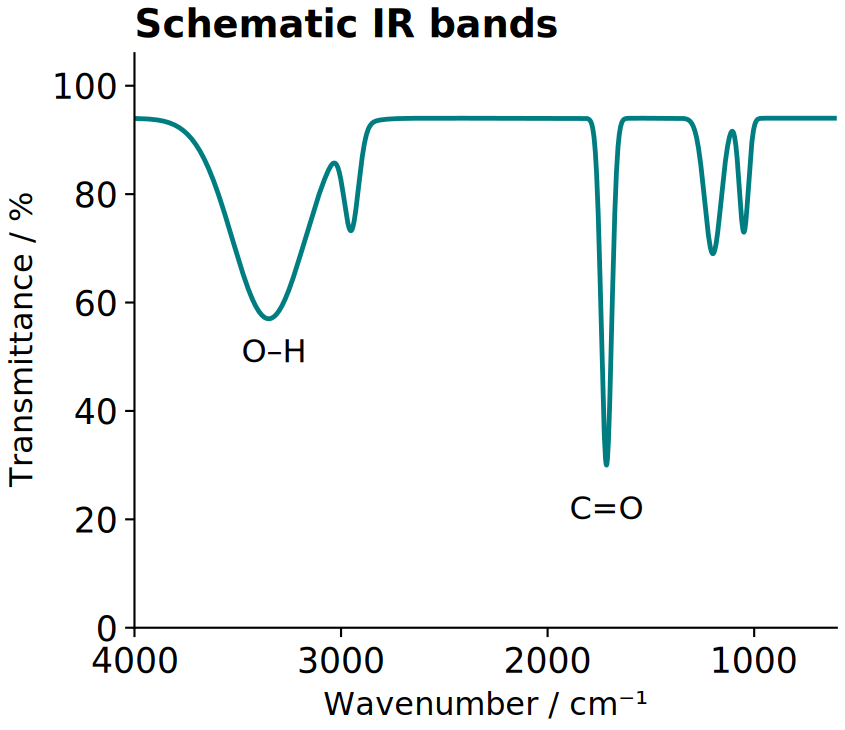
- Alcohol O–H often gives a broad absorption around 3200–3600 cm⁻¹, depending on hydrogen bonding.
- Carboxylic-acid O–H is often extremely broad, extending approximately 2500–3300 cm⁻¹.
- N–H stretches commonly appear near 3300–3500 cm⁻¹; terminal alkyne ≡C–H near 3300 cm⁻¹.
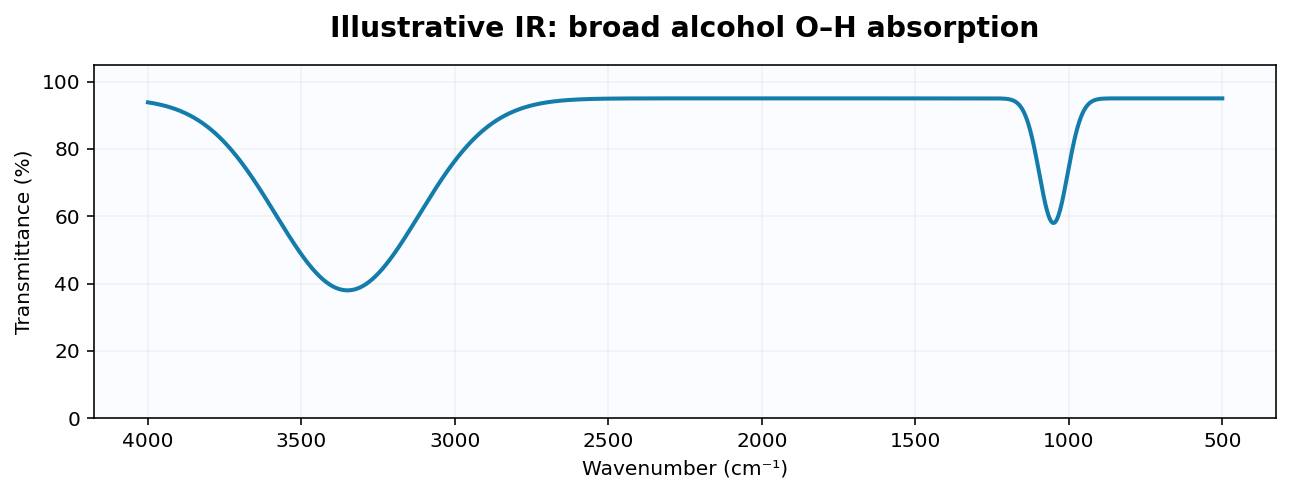
- A carboxylic acid also has a C=O absorption; interpret its broad OH band together with the carbonyl evidence.
- The N–H band shape depends on substitution and hydrogen bonding.
| Bond / group | Approximate cm⁻¹ |
|---|---|
| Alcohol O–H | 3200–3600; often broad |
| Carboxylic acid O–H | 2500–3300; very broad |
| N–H | about 3300–3500 |
| C≡N | about 2210–2260 |
| C=O family | about 1650–1850 |
| C=C | about 1620–1680 |
f. Carbonyl and multiple bonds
- Many C=O stretches occur around 1650–1800 cm⁻¹; the precise position varies with functional group and conjugation.
- C≡N commonly absorbs around 2210–2260 cm⁻¹; C≡C may be weaker near 2100–2260 cm⁻¹.
- C=C absorption often occurs around 1600–1680 cm⁻¹ but may be weak.
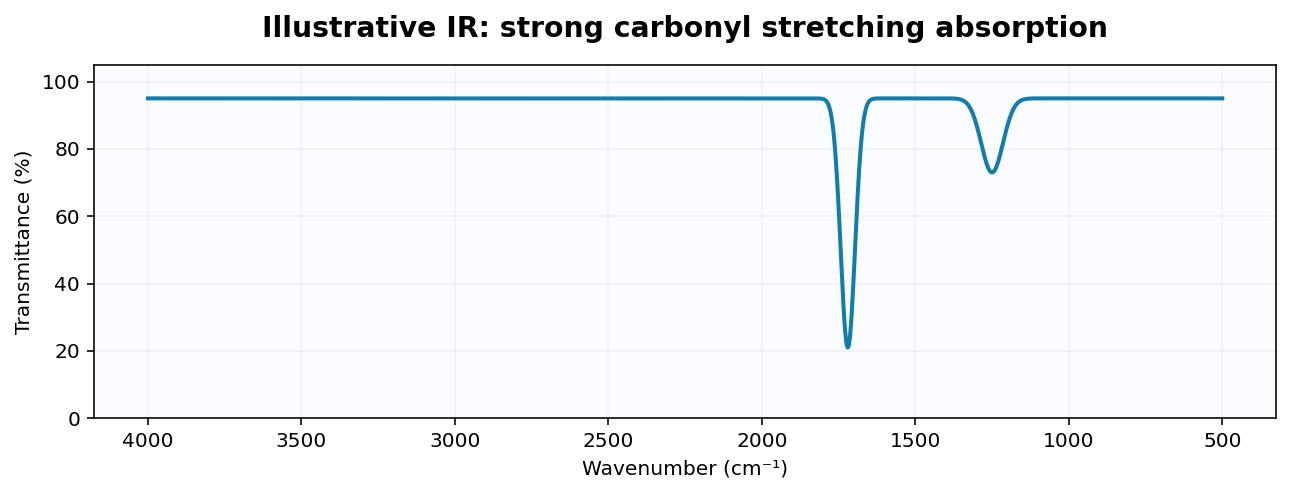
- Conjugation, ring strain and functional-group identity change the exact C=O position.
g. Carbonyl differences
- Conjugation often lowers a carbonyl stretching frequency. Acid chlorides usually absorb at higher frequency than ordinary ketones, and amides commonly absorb lower because of resonance donation.
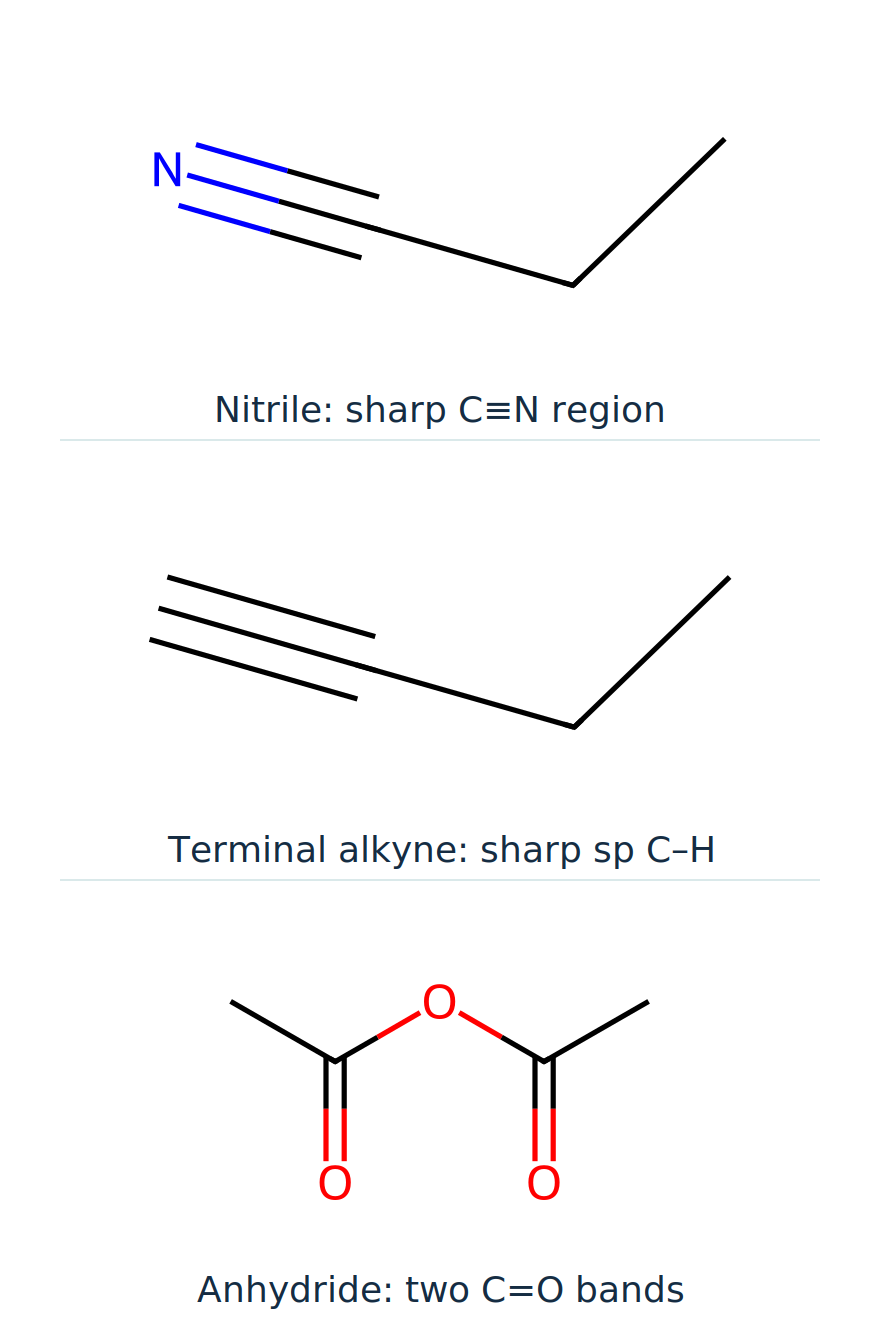
- Anhydrides commonly show two carbonyl stretching bands. Do not force every carbonyl into one exact peak value.
h. Triple bonds and terminal C–H
- A nitrile commonly gives a relatively sharp absorption in the low-to-mid 2200 cm⁻¹ region. An alkyne C≡C absorption can be weak, especially for a symmetrical internal alkyne.
- A terminal alkyne can show a sharp sp C–H absorption near 3300 cm⁻¹. This differs from a broad hydrogen-bonded alcohol band.
i. Conjugation and absorption
- UV–Vis spectroscopy probes electronic transitions such as π→π* and n→π*.
- Extended conjugation often reduces the energy gap and shifts absorption toward longer wavelength.
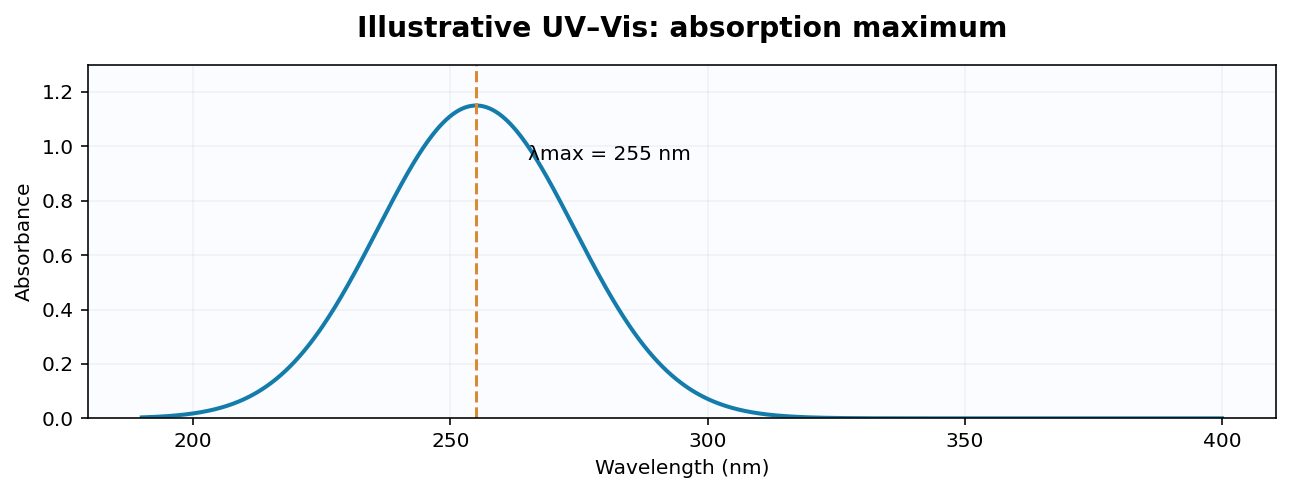
- The wavelength of maximum absorbance is λmax; absorbance may be related to concentration by Beer–Lambert law, A = εlc.
D. ¹H and ¹³C NMR
1. Equivalence, shifts, integration and coupling
a. Nuclear spin and resonance
- NMR-active nuclei such as ¹H and ¹³C absorb radiofrequency energy in an applied magnetic field.
- Chemical shift δ (ppm) reports a resonance relative to a reference, usually TMS for many organic-solvent spectra.
- Shielded nuclei generally resonate at lower δ; deshielded nuclei at higher δ.
b. Counting signals
- Chemically equivalent protons share a chemical shift under the measurement conditions. Molecular symmetry can make distant protons equivalent.
- Enantiotopic protons can be equivalent in an achiral medium; diastereotopic protons can be nonequivalent even on the same CH₂ carbon. Rapid motions can average environments.
c. Chemical shift
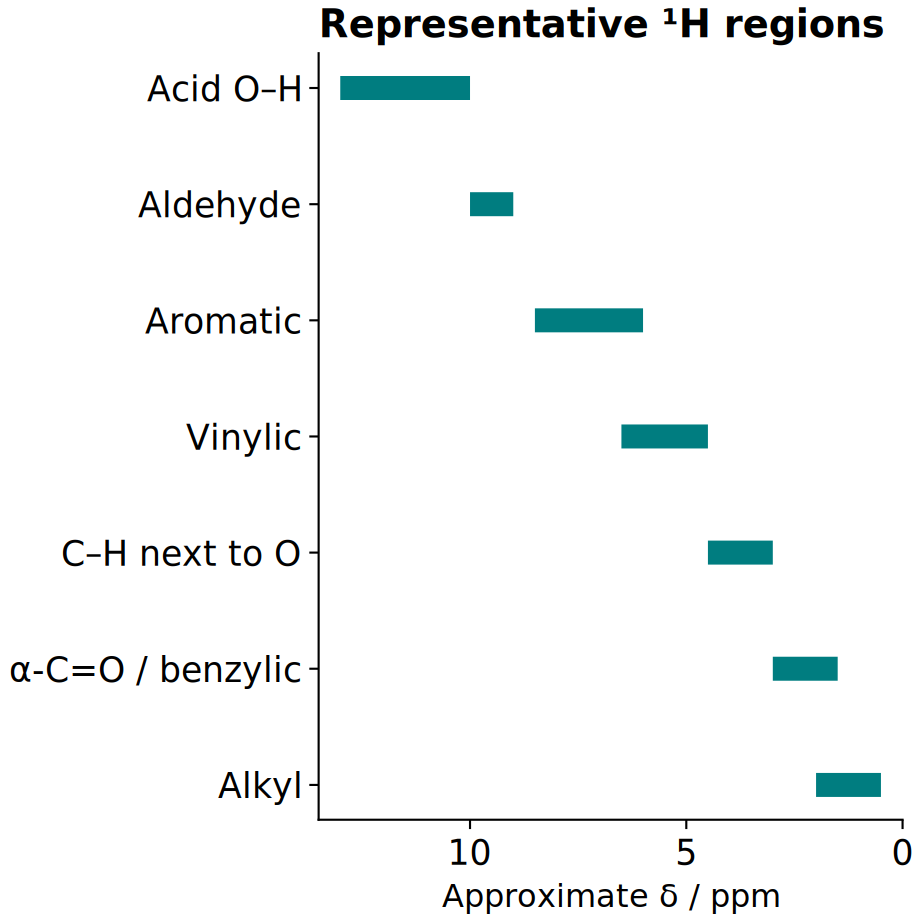
- The chemical-shift scale δ is reported in ppm relative to a reference. Electron withdrawal and anisotropic pi systems alter shielding.
- Approximate regions: simple alkyl 0.5–2; allylic/benzylic or α-carbonyl about 1.5–3; C–H next to O often 3–4.5; alkene 4.5–6.5; aromatic 6–8.5; aldehyde 9–10; acid O–H often 10–13 ppm.
| Environment | Typical δ / ppm |
|---|---|
| Alkyl | 0.5–2 |
| Allylic / benzylic / α-C=O | about 1.5–3 |
| H on C attached to O | about 3–4.5 |
| Vinylic | about 4.5–6.5 |
| Aromatic | about 6–8.5 |
| Aldehyde | about 9–10 |
| Carboxylic acid OH | often 10–13; variable |
- Many aromatic protons occur near δ 6.5–8.5 within the broader aromatic region; nearby electronegative atoms commonly deshield C–H protons.
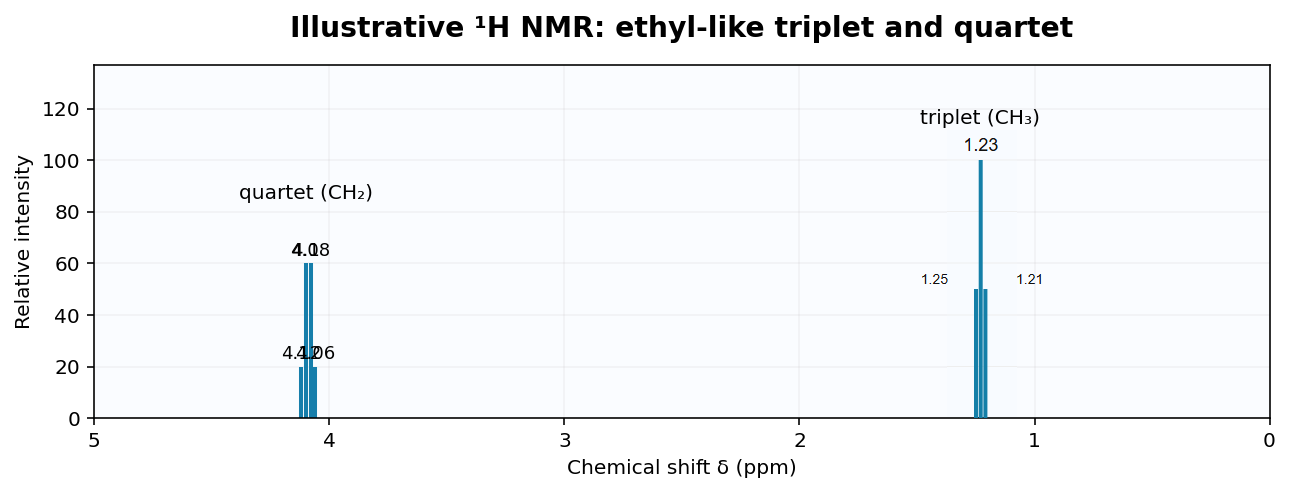
- Approximate broad alkyl descriptions may span about δ 0.8–2.5, while the detailed table separates simple alkyl from allylic, benzylic and α-carbonyl environments. O-adjacent C–H signals are often near δ 3–4.5; all ranges have exceptions.
d. Integration
- Integrated signal area is proportional to the number of contributing protons; peak height alone is not the proton count. Convert ratios to whole-number counts consistent with the formula.
- An overlapped region may contain more than one environment, and an exchangeable OH/NH signal may integrate unreliably.
e. First-order splitting
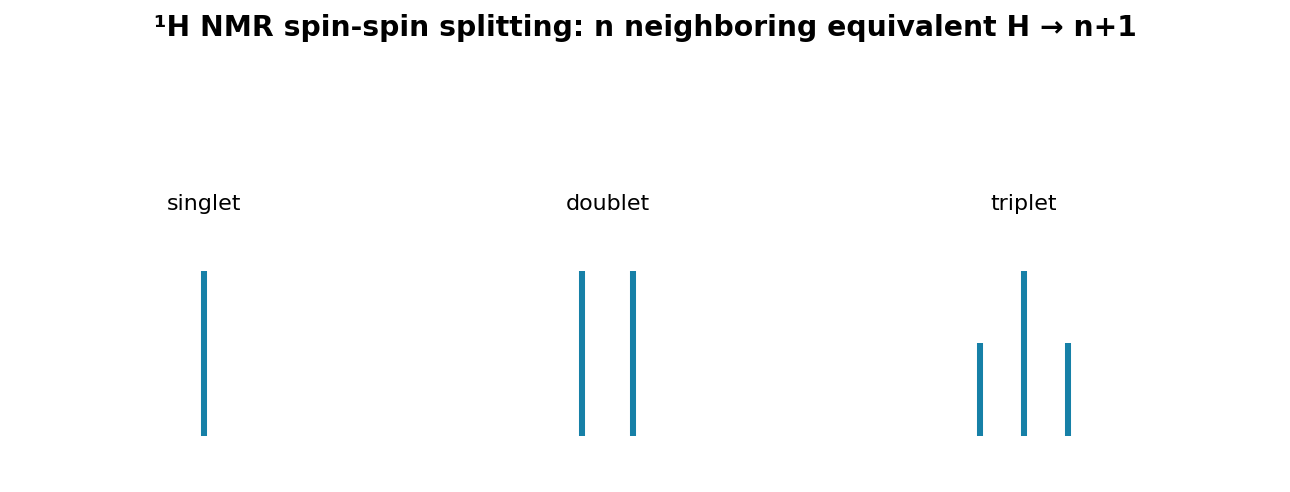
- For a simple first-order signal coupled equally to n equivalent spin-½ neighbors, n+1 lines are expected. Equivalent protons do not split one another in the ordinary first-order picture.
- Two nonequivalent neighbor sets can split a signal separately; the pattern may approach (n+1)(m+1) if couplings are distinct and resolved. Coupling constants are measured in Hz and can support matching partner signals.
| Neighbor count in simple case | Multiplicity | Ideal relative intensities |
|---|---|---|
| 0 | Singlet | 1 |
| 1 | Doublet | 1:1 |
| 2 | Triplet | 1:2:1 |
| 3 | Quartet | 1:3:3:1 |
f. OH and NH signals
- Exchange can broaden OH/NH signals and suppress their coupling to nearby protons. Their positions depend on solvent, concentration, temperature and hydrogen bonding.
- A D₂O exchange experiment can remove suitable exchangeable proton signals. An OH singlet does not establish that the OH has no neighboring C–H bonds.
g. Aromatic and nonequivalent protons
- Aromatic coupling can extend beyond immediate adjacent atoms. Second-order behavior occurs when chemical-shift separation in Hz is not large relative to coupling constants.
- A nominal CH₂ can contain two different protons that couple to each other and to other neighbors. Avoid treating every CH₂ as one n+1 signal.
h. Recognizable fragments
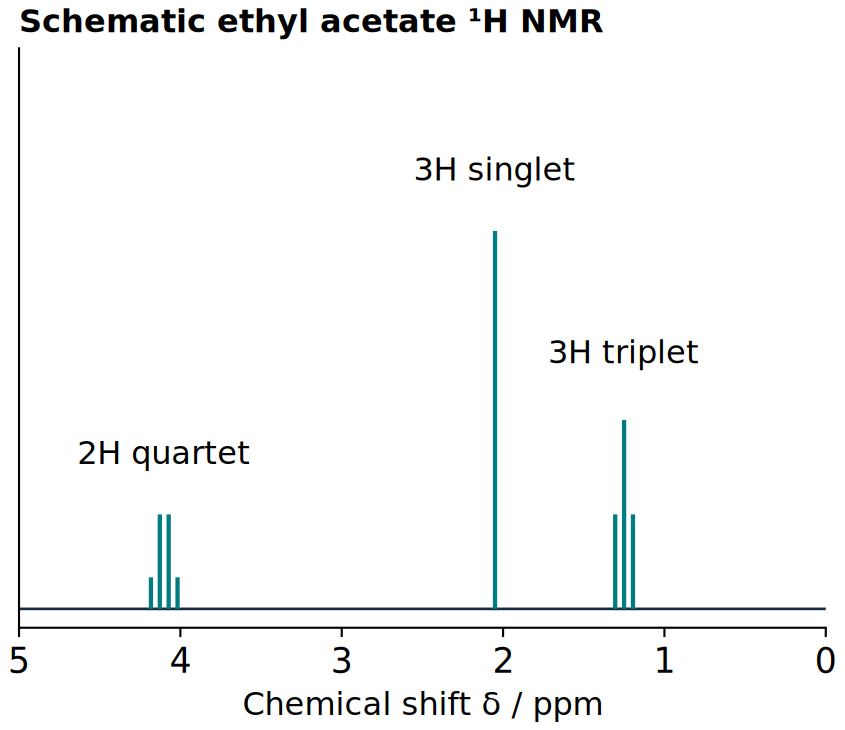
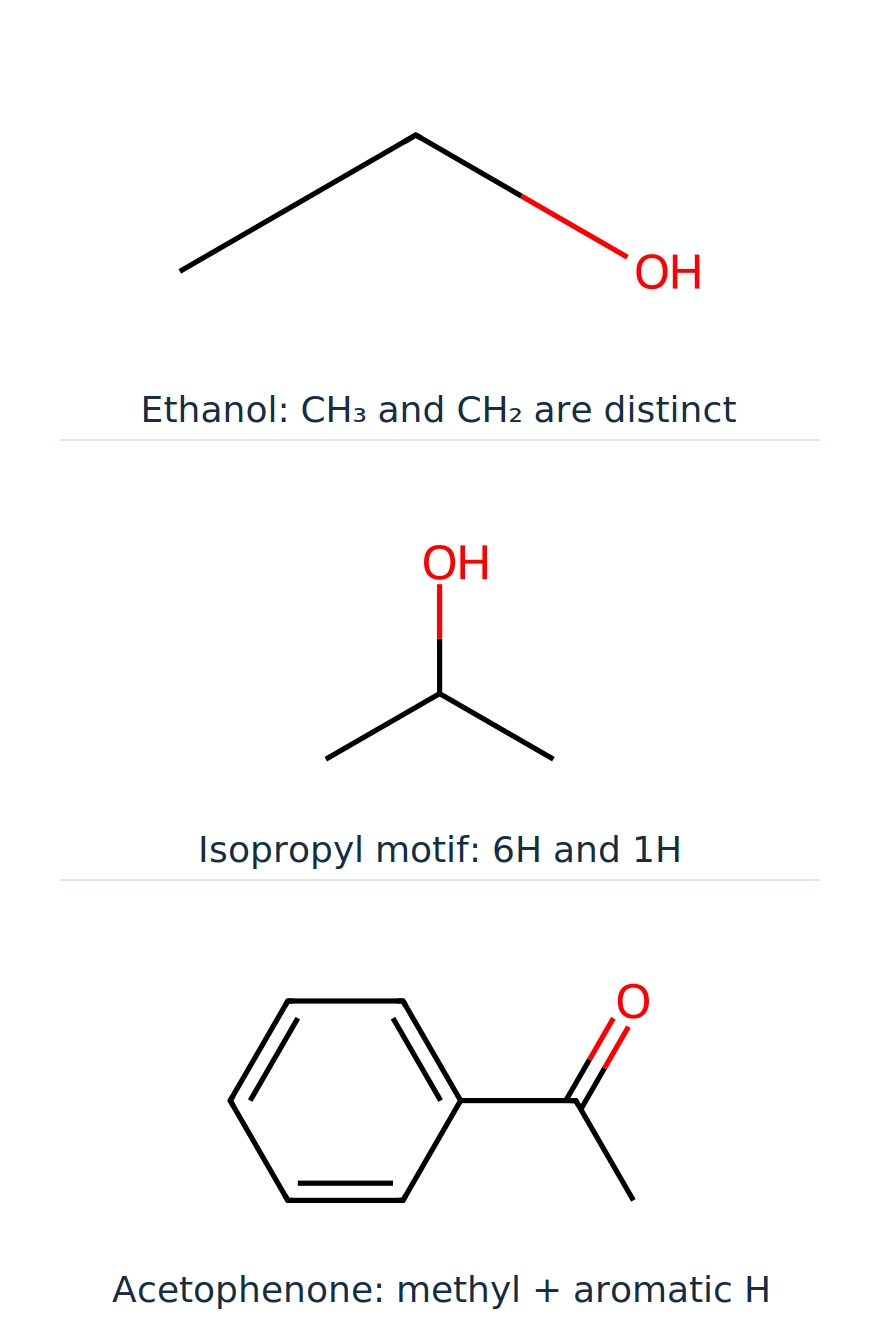
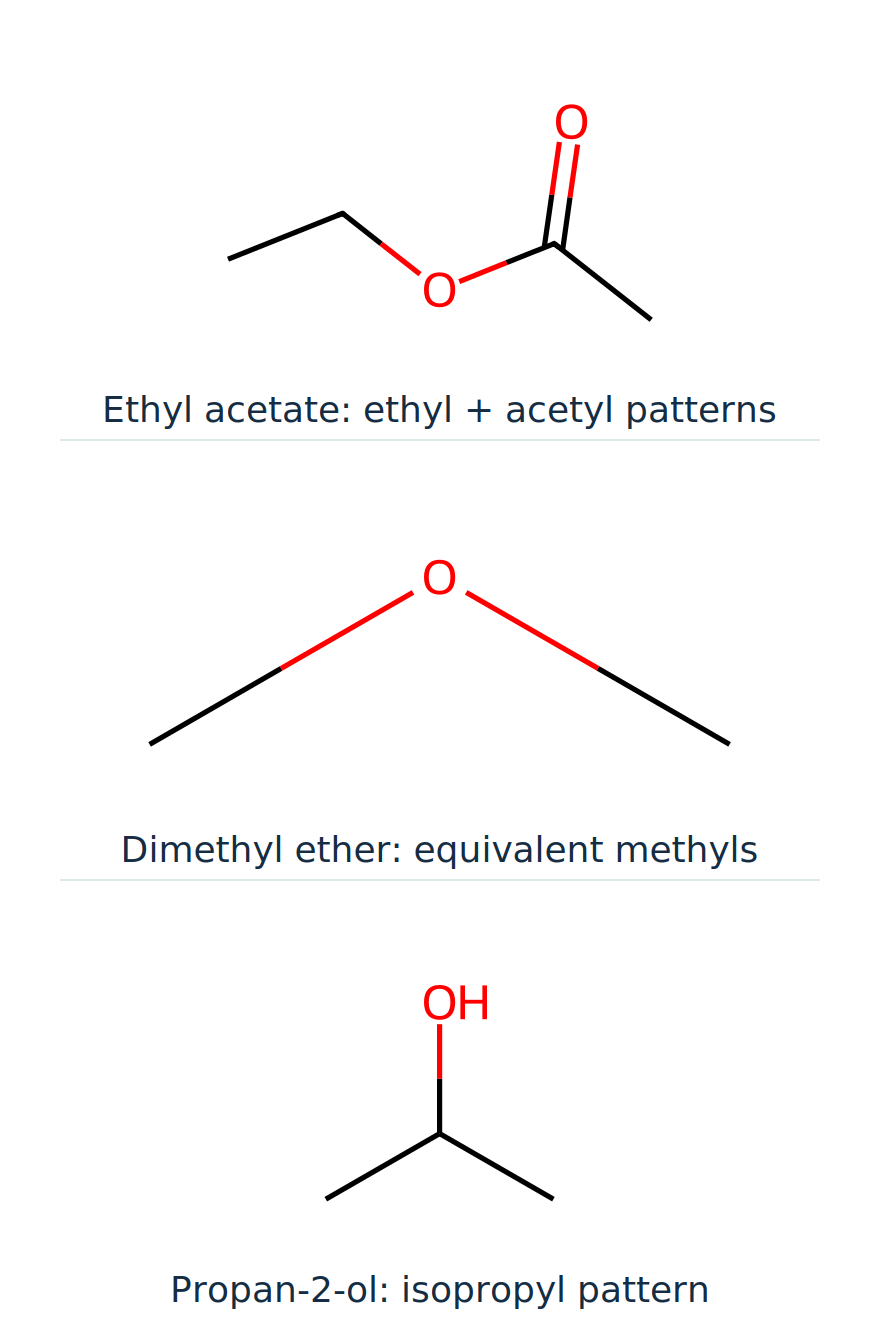
- An uncomplicated ethyl group often gives a 3H triplet and 2H quartet with matching J. A suitable isopropyl group often gives a 6H doublet and 1H septet.
- A methoxy group often appears as a 3H singlet; an acetyl methyl often gives a 3H singlet in the α-carbonyl region. These motifs depend on the actual coupling network.
i. Chemical-shift regions
- Different carbon environments produce different ¹³C resonances, subject to molecular symmetry.
- Simple alkyl carbons often occur approximately δ 0–50; oxygen-bound sp³ carbons approximately δ 50–90.
- Aromatic and alkene carbons often occur around δ 100–160; aldehyde and ketone carbonyl carbons often near δ 190–220.
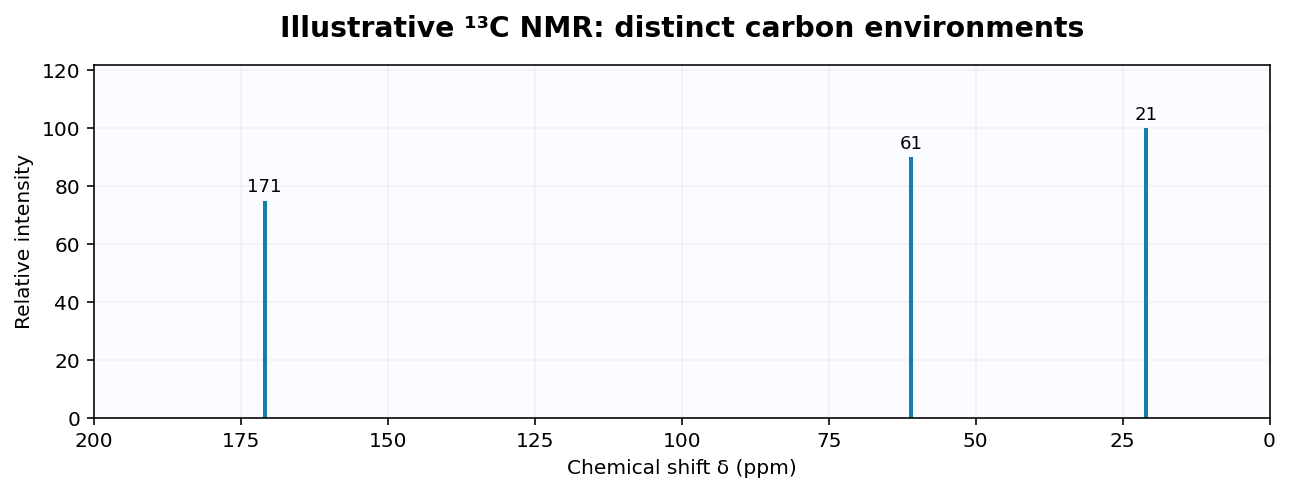
- Symmetry reduces the number of distinct carbon environments; accidental peak overlap can make separate environments appear at the same shift.
j. DEPT editing
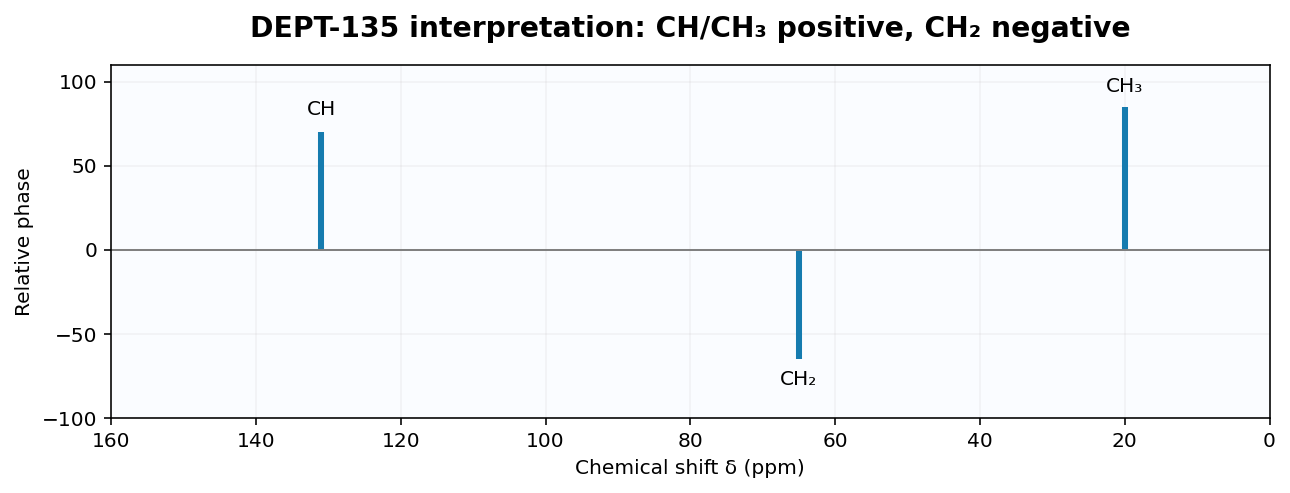
- DEPT experiments help distinguish protonated CH, CH₂, and CH₃ groups.
- In a typical DEPT-135 spectrum, CH and CH₃ appear positive while CH₂ appears negative; quaternary carbon signals are absent.
- Signal phase conventions depend on acquisition and processing.
E. Integrated Structure Determination
1. Molecular formulas and combined analytical evidence
a. Degree of unsaturation
- For a neutral closed-shell molecular formula containing C, H, N, and halogens: DBE = (2C + 2 + N − H − X)/2.
- Oxygen and sulfur do not enter this elementary DBE expression; count halogens as hydrogen equivalents.
- One ring or one double bond contributes one DBE; one triple bond contributes two.
- A benzene ring accounts for four DBE: one ring and three π bonds.

b. Consistency checks
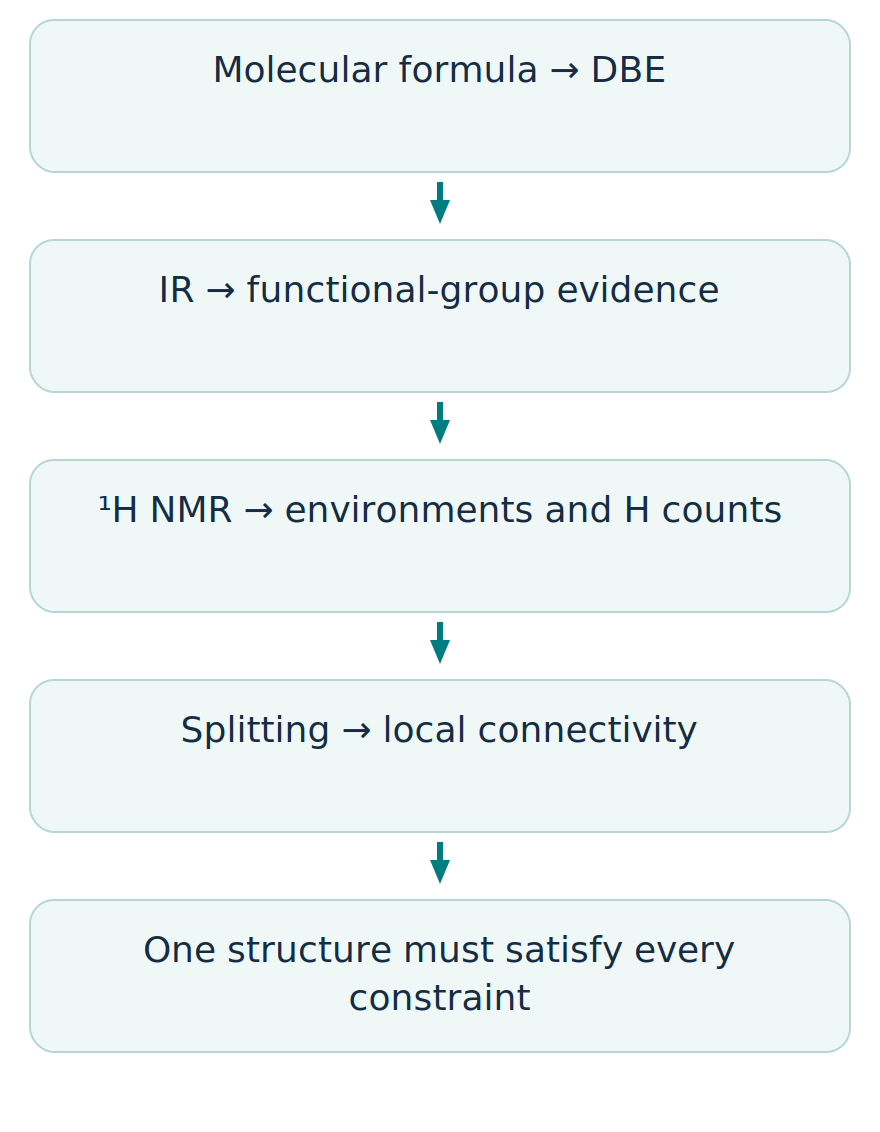
- Use molecular formula and isotope pattern to identify plausible elemental compositions.
- Use IR to recognize likely functional groups, then compare ¹H integrations and chemical shifts.
- Use ¹³C and DEPT to assign carbon environments; check the number of symmetry-distinct carbons.
- Proposed structures must satisfy the DBE, formula, chemical-shift ranges, integrations, and couplings together.
- A single peak rarely proves a unique molecular structure; multiple mutually consistent observations are required.

- Weak or absent absorptions, overlapping resonances and exchangeable protons limit simple assignments. Reject candidates that violate the molecular formula or atom count.
- The supplied spectra are schematic teaching illustrations, not measured experimental records. Their positions are representative rather than reproductions of a particular source spectrum.
c. Selected observations
| Group | IR observation | NMR observation |
|---|---|---|
| Alcohol O–H | IR broad 3200–3600 cm⁻¹ | OH proton variable |
| Ketone C=O | IR commonly ~1705–1725 cm⁻¹ | ¹³C often δ 190–220 |
| Aldehyde | IR C=O often ~1720–1740 cm⁻¹ | ¹H CHO ~δ 9–10 |
| Nitrile C≡N | IR ~2210–2260 cm⁻¹ | No directly attached C≡N proton |
| Aromatic ring | IR often ~1450–1600 cm⁻¹ | ¹H often δ 6.5–8.5 |
d. Tollens / 2,4-DNP
- Aldehydes typically Tollens+; aldehydes and ketones 2,4-DNP+
- False-positive/other functional groups require caution.
- Interpret Tollens and 2,4-DNP results together with the functional groups present; atypical or false-positive behavior requires caution.
e. Atom, oxidation-state and reagent bookkeeping
- Across a reaction sequence, track new C–C bonds, carbon count, oxidation state, leaving groups, protecting groups, intermediate reactivity, regiochemistry, stereochemistry and reagent compatibility. The order of operations must remain compatible with all functional groups.
f. Lab methods
- Use acid/base extraction, chromatography TLC Rf = spot distance/front distance, and distinguish analytical tests and separations.
- On silica with a given mobile phase, a less polar compound often has a higher Rf. Eluent composition and solvent identity affect interpretation; ionized species often favor the aqueous phase during extraction.
- For TLC and acid–base extraction, check the solvent system, eluent composition and layer densities before interpreting polarity or partitioning.