
I. Atom and Ion theory
Key focus of this chapter: atomic structure
This chapter focuses on atomic structure and summarizes ions, atomic number, mass number, and nuclear reactions.
A. Atomic history
Historical scientists | Features |
Dalton | • In Dalton's historical model, atoms were indivisible solid spheres. • Elements are composed of atoms. |
Thomson | • Discovered the electron through cathode-ray experiments and determined its charge-to-mass ratio. • In Thomson's historical model, electrons were embedded in a sphere of positive charge. |
Millikan | • Determined the elementary electric charge using the oil-drop experiment. |
Rutherford | • Discovered the small, dense, positively charged atomic nucleus through the gold-foil alpha-particle scattering experiment. • In Rutherford's historical model, electrons surrounded the nucleus. |
Bohr | • Proposed quantized electron energy levels and successfully explained the hydrogen atom's line spectrum. • In Bohr's historical model, electrons occupied allowed orbits. |
B. Atomic structure
1. Atom
- An element consists of atoms with the same number of protons. Atoms contain subatomic particles.
- Chemical reactions involve the rearrangement of atoms and their electrons.
- An atom consists of a nucleus containing protons and, except for ordinary hydrogen-1, neutrons, surrounded by electrons.
Fig. 1 Structure of an atom
2. Classification of atom
Classification | Features |
Proton | • Positive charge. • Number of protons determines atomic number. • Distinguishes one element from another. |
Electron | • Negative charge. • Determines the charge of an ion when electrons are gained or lost. |
Neutron | • No charge. • Changes the mass number and distinguishes isotopes. |
C. Ion
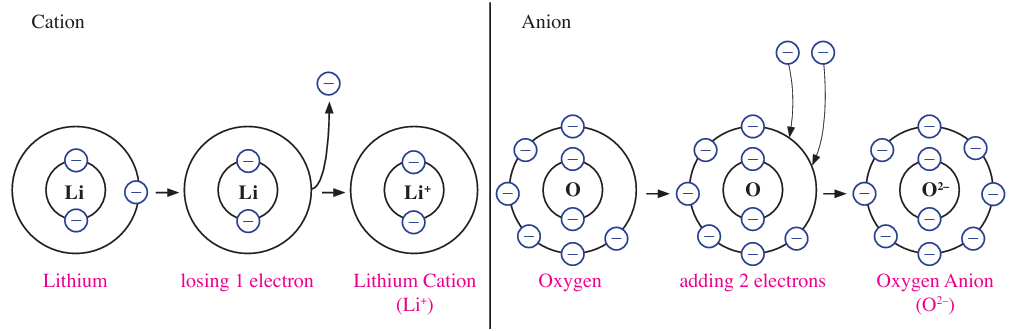
An ion is an atom or group of atoms that has gained or lost electrons and carries a net electric charge.
1. Cation and anion
- Cation: positively charged ion formed by electron loss.
- Anion: negatively charged ion formed by electron gain.
Fig. 2 Cation and anion
2. Isoelectronic
- Atoms or ions that contain the same number of electrons are isoelectronic.
- K+ and Ar: 18 electrons each.
- F− and Mg2+: 10 electrons each.
3. Isotopes
- Isotopes are atoms of the same element with the same number of protons but different numbers of neutrons.
- Isotopes generally have similar chemical properties but different masses and some different physical properties.
- Radiometric dating requires an appropriate radioactive isotope for the material and age range being studied.
D. Atomic number and mass number
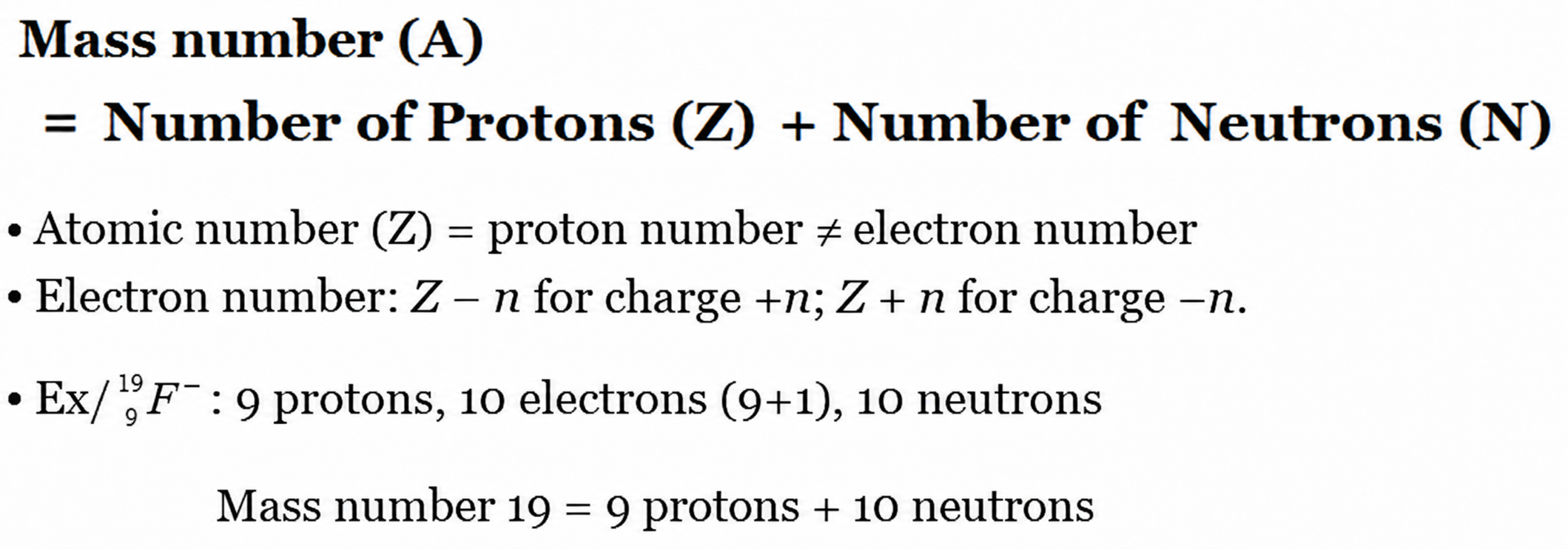
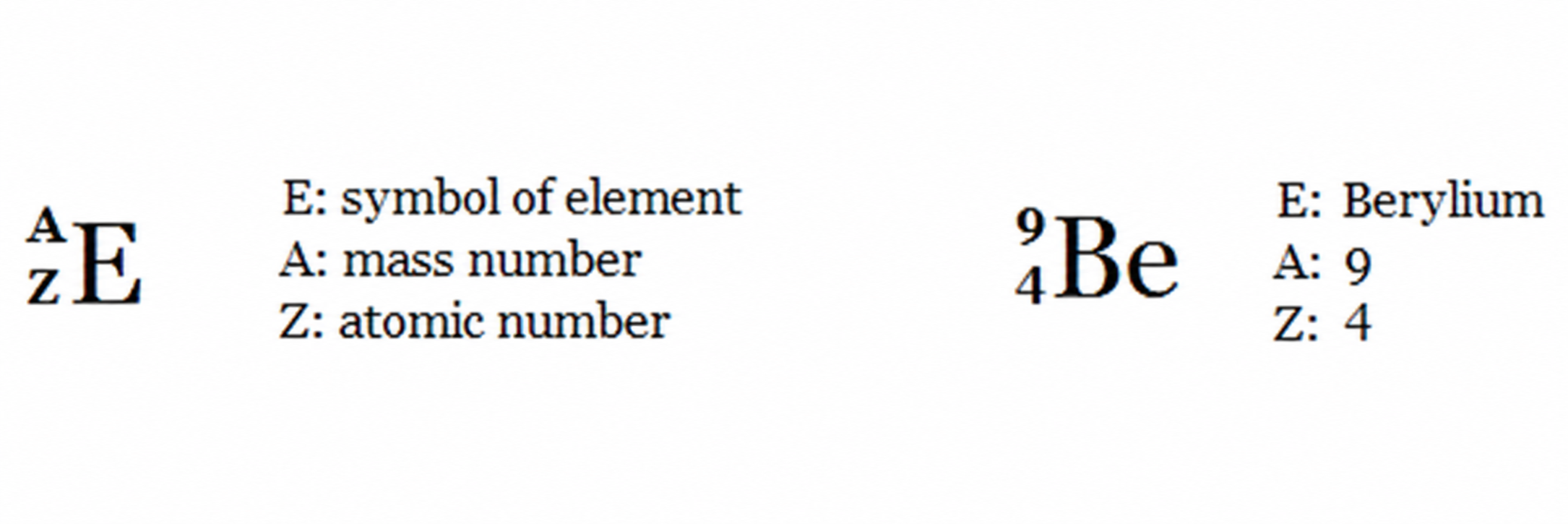
- Atomic number (Z) = number of protons.
- Mass number (A) = number of protons + number of neutrons.
- Number of neutrons = A − Z.
- Neutral atom: electrons = Z.
- Cation with charge +n: electrons = Z − n.
- Anion with charge −n: electrons = Z + n.
- Mass number is a unitless integer; atomic mass is the actual mass of an atom, expressed in u.
Classification | Equations and features |
Neutral atom | ![]() |
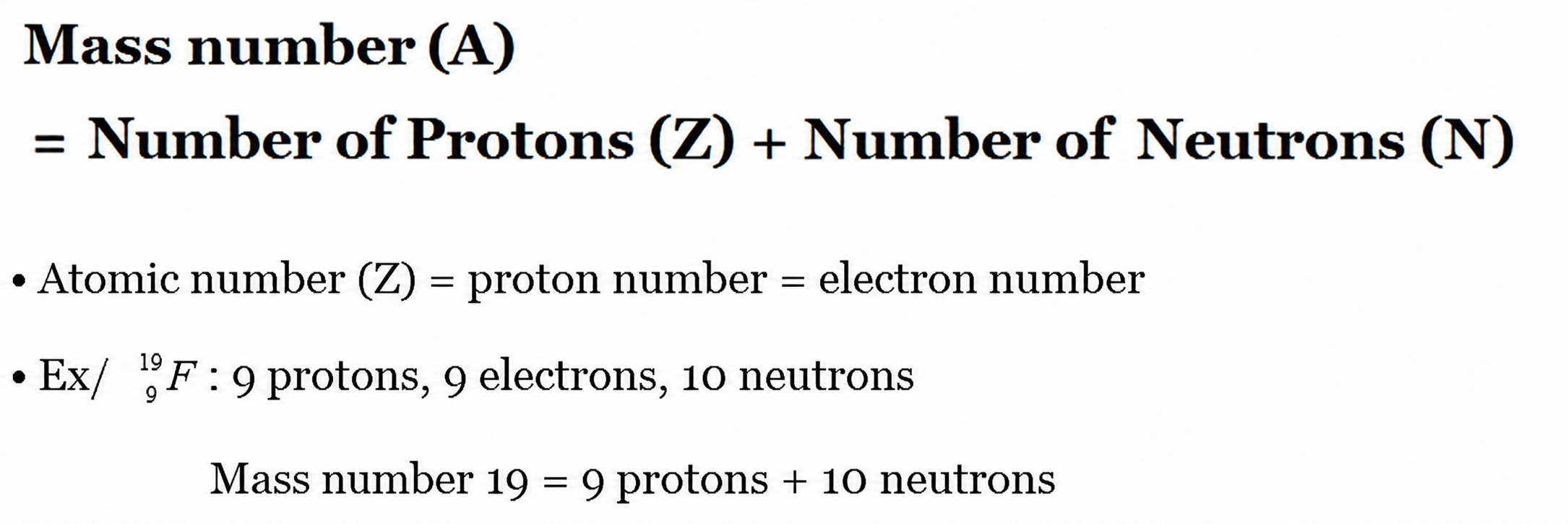
Ionic atom | ![]() |
E. Nuclear reactions
- Many nuclides are radioactive.
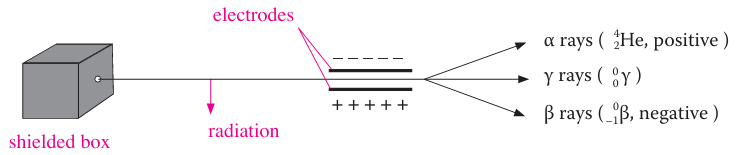
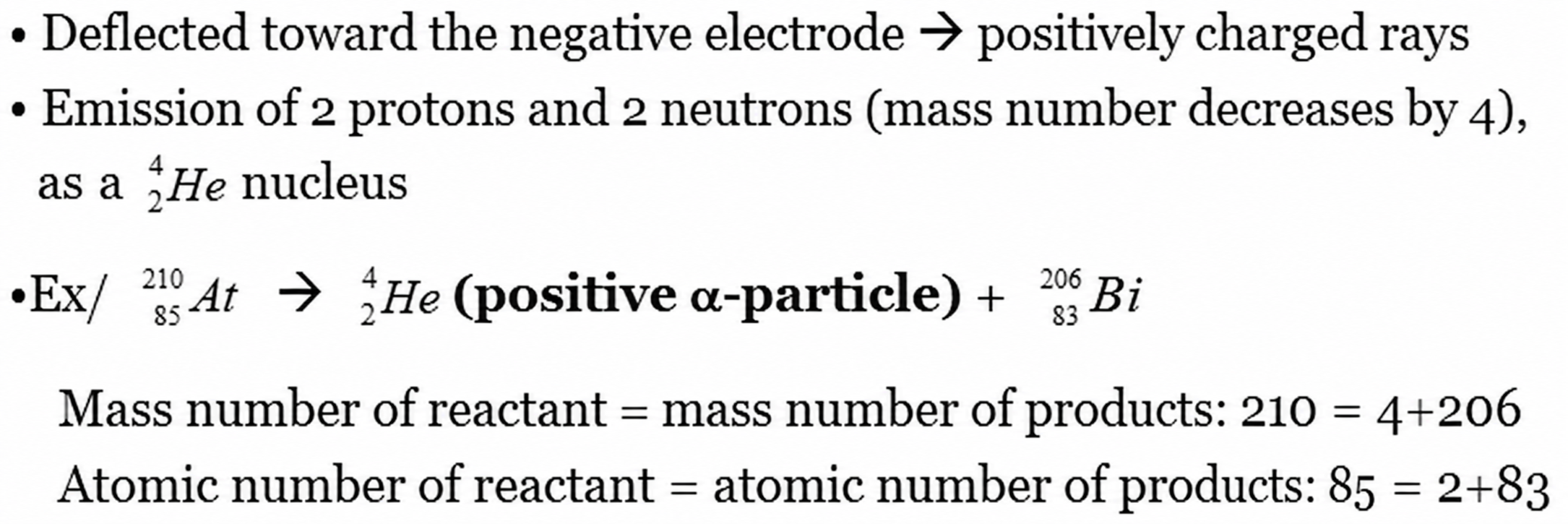
- In an electric field, alpha (α) radiation is deflected toward the negative electrode, beta-minus (β−) radiation toward the positive electrode, and gamma (γ) radiation is not deflected.
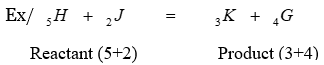
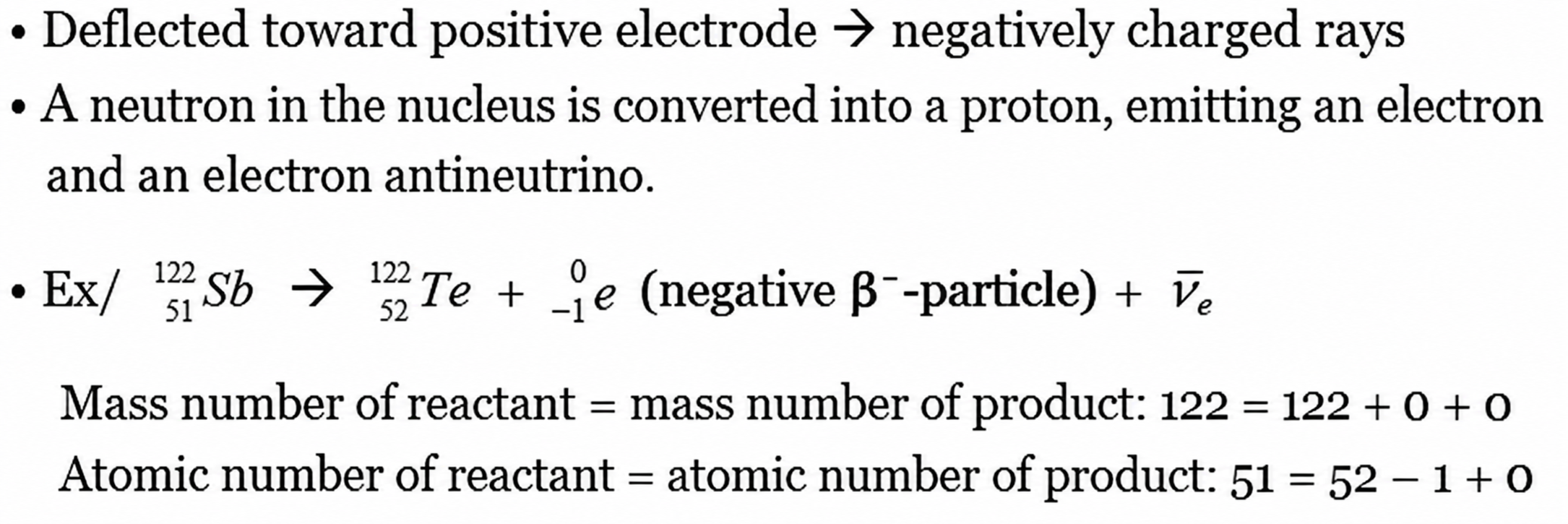
- The sum of the reactant mass numbers is equal to the sum of the product mass numbers.
- Total electric charge is conserved in nuclear reactions, including the charges of emitted or absorbed particles.
Fig. 3 Radiation emitted from the shielded box
Radioactive decay | Features |
Alpha(α) decay | ![]() |
Beta-minus (β−) decay | ![]() |
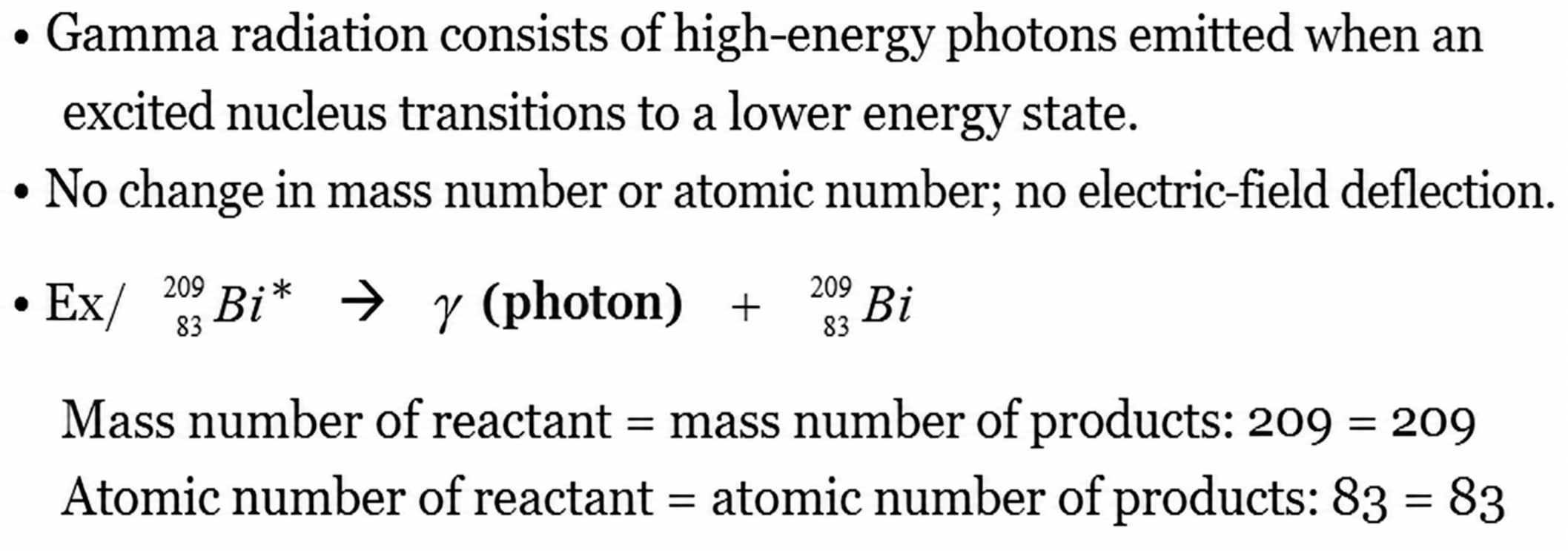
Gamma(γ) decay | ![]() |